
Personalized Gym Schedule Builder
Your Customized Plan
Select your preferences above and click generate to see your recommended weekly schedule.
Walking into the gym with no plan is like driving across Australia without a map. You might end up somewhere interesting, but you’ll likely waste time, fuel, and sanity along the way. A good gym schedule isn’t about copying an influencer’s Instagram post; it’s about aligning your body’s recovery needs with your life’s demands. Whether you have two hours on Saturday or thirty minutes before work, structure turns random effort into measurable progress.
The Foundation: Frequency and Consistency
Before picking exercises, you need to decide how often you can realistically show up. Most people overestimate their availability in January and crash by February. Let’s look at what actually works based on commitment levels.
If you are new to lifting, three days a week is the sweet spot. It allows enough stimulus for growth while giving your muscles 48 to 72 hours to repair. This is often called a "full-body" split because you train every major muscle group each session. For those with more time, four to five days allows for specialization, such as focusing heavily on legs one day and upper body another. Six days is usually reserved for advanced lifters who have years of experience and strict sleep hygiene. Seven days straight is rarely sustainable for natural athletes and often leads to burnout or injury.
Consistency beats intensity. A mediocre workout done consistently for six months will outperform a perfect workout done sporadically for two weeks. Pick a number of days you can hit even when you’re tired, busy, or unmotivated, and stick to it.
Choosing Your Training Split
A "split" refers to how you divide your muscle groups across the week. There is no single best split, but some fit certain lifestyles better than others. Here are the most common approaches:
- Full Body (3 days/week): Ideal for beginners and busy professionals. You hit chest, back, legs, shoulders, and arms in every session. Example: Monday, Wednesday, Friday. This maximizes frequency, which is key for learning movement patterns.
- Upper/Lower (4 days/week): Great balance of volume and recovery. You train upper body twice and lower body twice. Example: Upper (Mon), Lower (Tue), Rest (Wed), Upper (Thu), Lower (Fri). This is highly efficient for building strength and size.
- Push/Pull/Legs (PPL) (6 days/week): Popular among intermediate lifters. Push includes chest, shoulders, triceps. Pull includes back, biceps, rear delts. Legs include quads, hamstrings, glutes. Example: PPL rest PPL rest. High volume, high fatigue, requires serious recovery management.
- Bro Split (5-6 days/week): One muscle group per day (e.g., Chest Monday, Back Tuesday). While popular in bodybuilding culture, research suggests hitting muscles twice a week yields better hypertrophy for most people unless volume is extremely high.
For most readers asking "what is a good gym schedule," the Upper/Lower or Full Body splits offer the best return on investment regarding time spent versus results gained.
| Split Type | Frequency | Best For | Recovery Demand | |
|---|---|---|---|---|
| Full Body | 3 days | Beginners, Busy schedules | Low-Medium | |
| Upper/Lower | 4 days | Intermediate, Balanced goals | Medium | |
| Push/Pull/Legs | 6 days | Advanced, High volume seekers | High | |
| Bro Split | 5-6 days | Bodybuilders, Specialization | Variable |
Structuring the Individual Workout
Once you have your weekly split, you need to build the daily sessions. A solid workout follows a logical flow to maximize performance and minimize injury risk.
- Warm-up (5-10 minutes): Never skip this. Start with light cardio to raise body temperature, followed by dynamic stretches (arm circles, leg swings) and activation exercises (glute bridges, band pull-aparts). This prepares your nervous system for heavy loads.
- Compound Movements (First): These are multi-joint exercises like squats, deadlifts, bench presses, and overhead presses. They require the most energy and coordination, so do them while you are fresh. Aim for 3-4 sets of 6-12 reps.
- Accessory Work (Middle): Isolation exercises target specific muscles. Think bicep curls, lateral raises, or lunges. These help address weak points and add size. Aim for 2-3 sets of 10-15 reps.
- Core and Conditioning (Last): Finish with planks, hanging leg raises, or short bursts of HIIT. Your core is already engaged during compound lifts, so save dedicated ab work for the end.
- Cool Down (Optional but recommended): Static stretching or foam rolling can help reduce soreness and improve flexibility over time.
Keep total workout time between 45 and 90 minutes. Going beyond an hour often leads to "junk volume"-extra sets that add fatigue but little benefit.

Periodization: Avoiding Plateaus
If you do the exact same workout with the same weights forever, your progress will stall. This is where periodization comes in. It means planning variations in your training over time.
You don’t need complex spreadsheets. A simple approach is the "linear progression" model. If you squat 60kg for 10 reps this week, aim for 62.5kg next week. When you can no longer add weight, change the rep range. Drop to 8 reps with heavier weight, then cycle back up to 12 reps with lighter weight. Every 8-12 weeks, take a "deload" week where you reduce volume or intensity by 50% to let your joints and nervous system fully recover.
Another strategy is undulating periodization, where you vary intensity within the week. For example, Monday is heavy strength (low reps, high weight), Wednesday is hypertrophy (moderate reps, moderate weight), and Friday is endurance/metabolic (high reps, low weight). This keeps things interesting and attacks muscles from different angles.
Integrating Life and Recovery
Your gym schedule doesn’t exist in a vacuum. It interacts with your sleep, diet, and stress levels. In Melbourne, where coffee culture is strong, be mindful of caffeine timing. Having espresso too close to bedtime can ruin sleep quality, which directly impacts muscle recovery and hormone regulation.
Sleep is non-negotiable. Aim for 7-9 hours. During deep sleep, your body releases growth hormone and repairs micro-tears in muscle fibers. If you’re sleeping 5 hours, no amount of protein powder will fix your stalled gains.
Nutrition supports the schedule. Eat enough protein (around 1.6-2.2 grams per kilogram of body weight) spread across meals. Time your largest meal around your workout window if possible, either pre-workout for energy or post-workout for recovery. Hydration matters too; even mild dehydration reduces strength output by up to 10%.
Listen to your body. Some days you’ll feel unstoppable; other days, everything hurts. On bad days, consider active recovery-a light walk, yoga, or swimming-instead of pushing through pain. Injury stops your schedule entirely, while rest keeps it going long-term.
Sample Schedules for Different Goals
To make this practical, here are two concrete examples based on common scenarios.
Scenario A: The Busy Professional (3 Days/Week)
- Monday: Full Body A - Squat, Bench Press, Row, Plank
- Tuesday: Rest or Light Walk
- Wednesday: Full Body B - Deadlift, Overhead Press, Pull-ups, Lateral Raises
- Thursday: Rest
- Friday: Full Body C - Lunges, Incline Dumbbell Press, Lat Pulldown, Bicep Curls
- Weekend: Active leisure (hiking, sports, family activities)
Scenario B: The Fitness Enthusiast (4 Days/Week)
- Monday: Upper Body Strength - Heavy Bench, Weighted Pull-ups, Barbell Rows
- Tuesday: Lower Body Strength - Heavy Squat, Romanian Deadlifts, Leg Press
- Wednesday: Rest
- Thursday: Upper Body Hypertrophy - Dumbbell Press, Cable Flys, Face Pulls, Tricep Pushdowns
- Friday: Lower Body Hypertrophy - Leg Extensions, Hamstring Curls, Calf Raises, Core Circuit
- Weekend: Rest or Optional Cardio
Adjust these templates based on your equipment access and personal preferences. The goal is to create a rhythm that feels challenging but manageable.
Common Mistakes to Avoid
Many people sabotage their own progress with poor planning habits. Watch out for these pitfalls:
- Too much variety: Changing exercises every week prevents you from mastering form and tracking progress. Stick to core movements for at least 8-12 weeks.
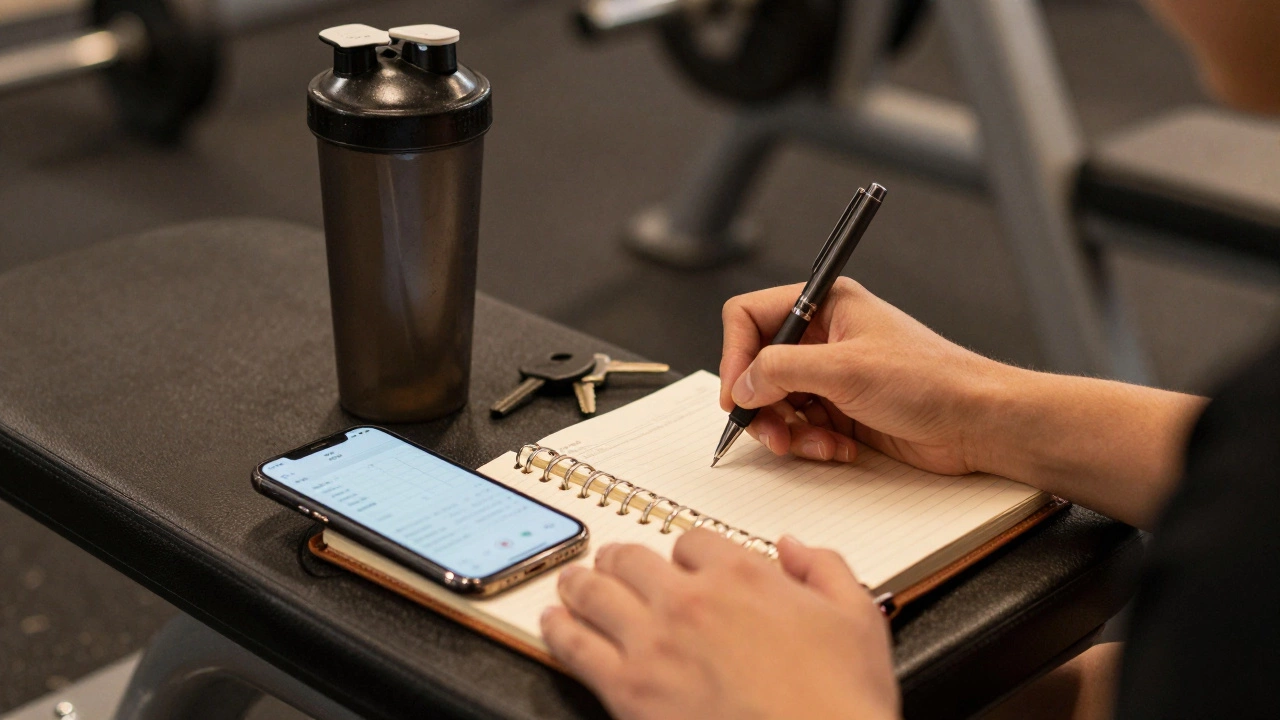
- Ignoring progressive overload: If you’re not trying to lift slightly more, do more reps, or move faster over time, you won’t adapt. Keep a logbook or use an app.
- Overtraining: More is not always better. Junk volume wastes time and increases injury risk. Focus on quality sets near failure rather than endless repetitions.
- Neglecting mobility: Tight hips and shoulders limit your range of motion, reducing the effectiveness of exercises. Incorporate stretching regularly.
- Inconsistency due to rigidity: If you miss a day, don’t quit the whole week. Adapt. Do a shorter session, swap days, or just get back on track the next day.
A good gym schedule is flexible enough to survive real life but structured enough to drive results. Start simple, track your data, and adjust based on feedback from your body. Within three months, you’ll see changes not just in the mirror, but in your energy levels, confidence, and overall health.
How many days a week should I go to the gym?
For most people, 3 to 4 days a week is optimal. Beginners benefit from full-body workouts 3 times a week, while intermediates may prefer an upper/lower split 4 times a week. Consistency is more important than frequency; choose a number you can sustain long-term.
Is it better to train every day or take rest days?
Rest days are crucial for muscle recovery and growth. Training the same muscle groups every day prevents adequate repair and increases injury risk. Most effective schedules include at least 1-2 full rest days or active recovery days per week.
What is the best gym schedule for weight loss?
Weight loss primarily depends on calorie deficit, but a combination of strength training (3-4 days) and cardiovascular exercise (2-3 days) is ideal. Strength training preserves muscle mass while losing fat, improving metabolism. Consider circuits or supersets to keep heart rate elevated during lifting sessions.
Can I build muscle with only 2 days a week?
Yes, you can build muscle with 2 days a week using full-body workouts. Focus on compound movements and ensure high intensity. However, progress will be slower compared to 3+ day schedules. Prioritize protein intake and sleep to maximize adaptation.
How long should each workout session last?
Aim for 45 to 90 minutes per session. Longer workouts often lead to diminishing returns and increased fatigue. Include warm-up, main lifts, accessory work, and cool-down within this timeframe. Efficiency matters more than duration.
Should I follow a push/pull/legs split?
PPL is excellent if you can train 6 days a week and handle high volume. For most people, 3-4 day splits like Full Body or Upper/Lower are more sustainable and equally effective for general fitness and muscle gain. Choose based on your available time and recovery capacity.