
Boxing Match Scoring Simulator
Set up a hypothetical bout by defining the number of rounds and simulating judge decisions for each round. This tool helps visualize how close fights are decided.
Match Setup
| Round | Judge Decision | Score A-B | Notes |
|---|
Fighter A Total
0
Fighter B Total
0
Result:
You’ve seen the highlights. Two fighters circle each other in a square ring, throwing punches while a referee watches like a hawk. But if someone asked you to define exactly what is called a boxing match, could you give them a precise answer beyond "two guys punching each other"? It’s more than just brawling; it’s a regulated combat sport with strict rules, specific time limits, and complex scoring systems that decide who walks away with the belt.
Understanding the structure of a fight changes how you watch it. Whether you’re tuning in for the heavyweight championship or watching your local club night, knowing the difference between a three-round amateur bout and a twelve-round professional title fight helps you appreciate the strategy. This guide breaks down the anatomy of a boxing match, from the bell that starts the action to the scorecards that end it.
The Core Definition: What Makes It a Match?
Boxing is defined as a combat sport involving two competitors who throw punches at each other for a predetermined amount of time within a roped-off square ring. A boxing match is the formal contest itself, governed by a set of rules designed to protect fighters and ensure fair play. Unlike street fights, which have no rules, a sanctioned boxing match requires officials, protective gear, and a structured timeline.
The term "match" distinguishes the organized event from a casual sparring session. In a match, the outcome is determined either by knockout (KO), technical knockout (TKO), disqualification, or judges’ scorecards. If there’s no clear winner after the final round, it can also end in a draw. The International Boxing Association (AIBA) and various professional commissions like the WBC or IBF oversee these regulations globally, ensuring that every bout follows a standardized framework.
Rounds and Time Limits: How Long Does a Fight Last?
One of the biggest differences between types of boxing matches lies in the duration. You might wonder why some fights feel quick while others drag on. Here is the breakdown:
- Professional Matches: Traditionally, men’s professional bouts last up to 12 rounds. Each round lasts 3 minutes, followed by a 1-minute rest period. Championship fights are almost always scheduled for 12 rounds, while non-title bouts may range from 4 to 10 rounds.
- Amateur/Olympic Matches: These are shorter to prioritize speed and technique over endurance. Men typically fight three rounds of 3 minutes, while women’s Olympic bouts also follow this format. The focus here is on accumulating points rather than knocking out the opponent.
- Women’s Professional Matches: Historically, women’s pro fights were limited to 10 rounds. However, many major organizations now allow 12-round championship bouts for women, mirroring the men’s format to recognize equal competitive intensity.
Why the change from 15 to 12 rounds? In the early 1980s, safety concerns led to the reduction. Data showed that fatigue significantly increased the risk of serious injury in the later rounds. By cutting the maximum length, promoters aimed to keep fighters fresher and reduce long-term health risks.
The Officials: Who Controls the Ring?
A boxing match isn’t just about the two fighters. It relies on a team of officials to enforce rules and determine the winner. Without them, chaos would ensue.
| Official Role | Primary Responsibility | Authority Level |
|---|---|---|
| Referee | Enforces rules inside the ring, counts knockdowns, stops fights due to inability to defend. | Can stop the fight immediately (TKO) or disqualify a fighter. |
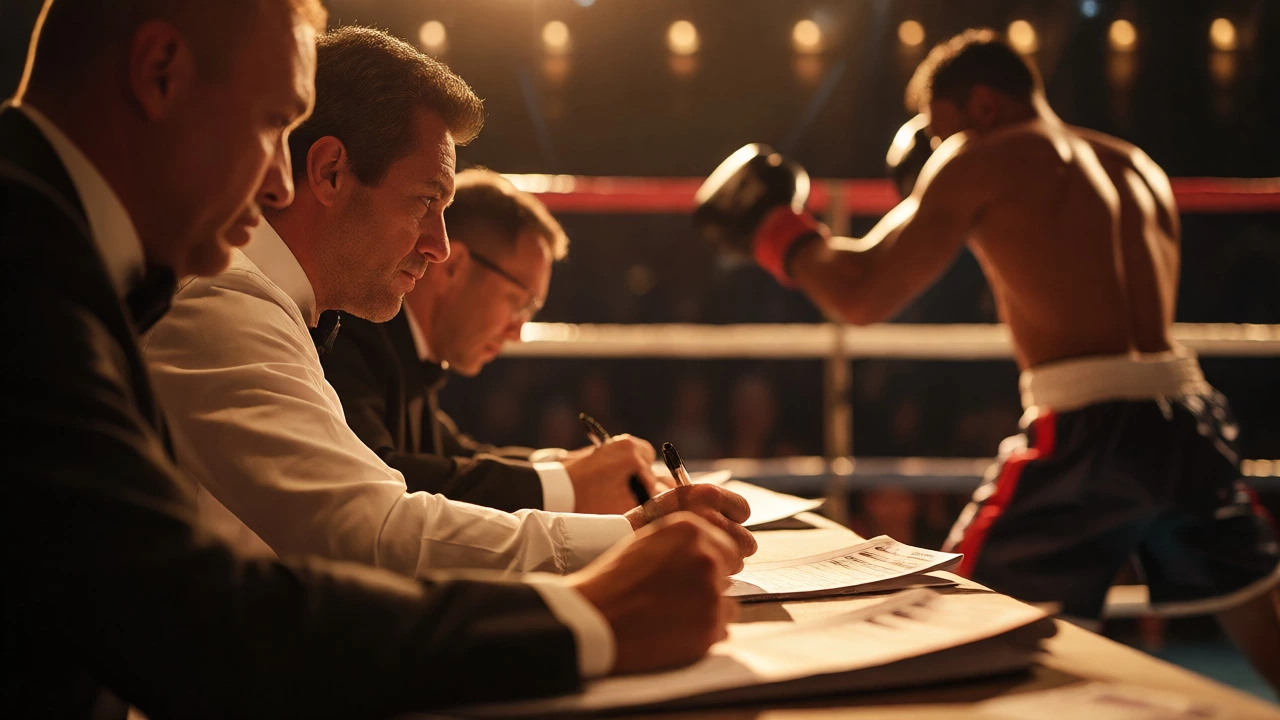
| Judges | Score each round based on clean punches, effective aggression, defense, and ring generalship. | Determine the winner via scorecards if the fight goes the distance. |
| Timekeeper | Manages the clock for rounds and rest periods. | Signals start/end of rounds with bells. |
| Commission Inspector | Ensures compliance with state/national athletic commission regulations. | Can halt the event if safety standards aren’t met. |
The referee is the most visible official. They don’t score the fight, but they hold immense power. If a fighter is getting pummeled without defending themselves, the referee will step in and wave off the fight. This is called a Technical Knockout (TKO). It’s not a judgment of skill, but a safety measure. Conversely, judges sit outside the ring, often far from the action, scoring each round independently. Their decisions are private until announced after the final bell.
Scoring System: How Do Judges Decide the Winner?
If neither fighter gets knocked out, the result depends on the judges’ scorecards. Most modern professional boxing uses the 10-Point Must System. Here’s how it works in practice:
- The judge awards 10 points to the winner of the round.
- The loser receives 9 points.
- If a fighter is knocked down, they lose an additional point (e.g., 10-8).
- If both fighters are knocked down, or if one dominates completely, scores can vary (10-7 is rare but possible).
But what constitutes a "winning round"? Judges look for four main criteria, prioritized in this order:
- Clean Punching: Hitting hard, accurate shots to the front or side of the head and torso. Glancing blows or blocked punches don’t count.
- Effective Aggression: Moving forward and landing punches. Just walking forward without hitting doesn’t count.
- Ring Generalship: Controlling the pace and location of the fight. Cutting off the ring to trap an opponent is key.
- Defense: Avoiding damage through slipping, blocking, or counter-punching.
This system is subjective. Two judges might see the same round differently. That’s why controversial decisions happen so often. Remember the Mayweather vs. Pacquiao fight? Many fans felt Pacquiao won, but the judges scored it for Mayweather based on their interpretation of "clean punching."
Outcomes: How Can a Match End?
Not every boxing match goes the full distance. There are several ways it can conclude before the final bell:
Knockout (KO)
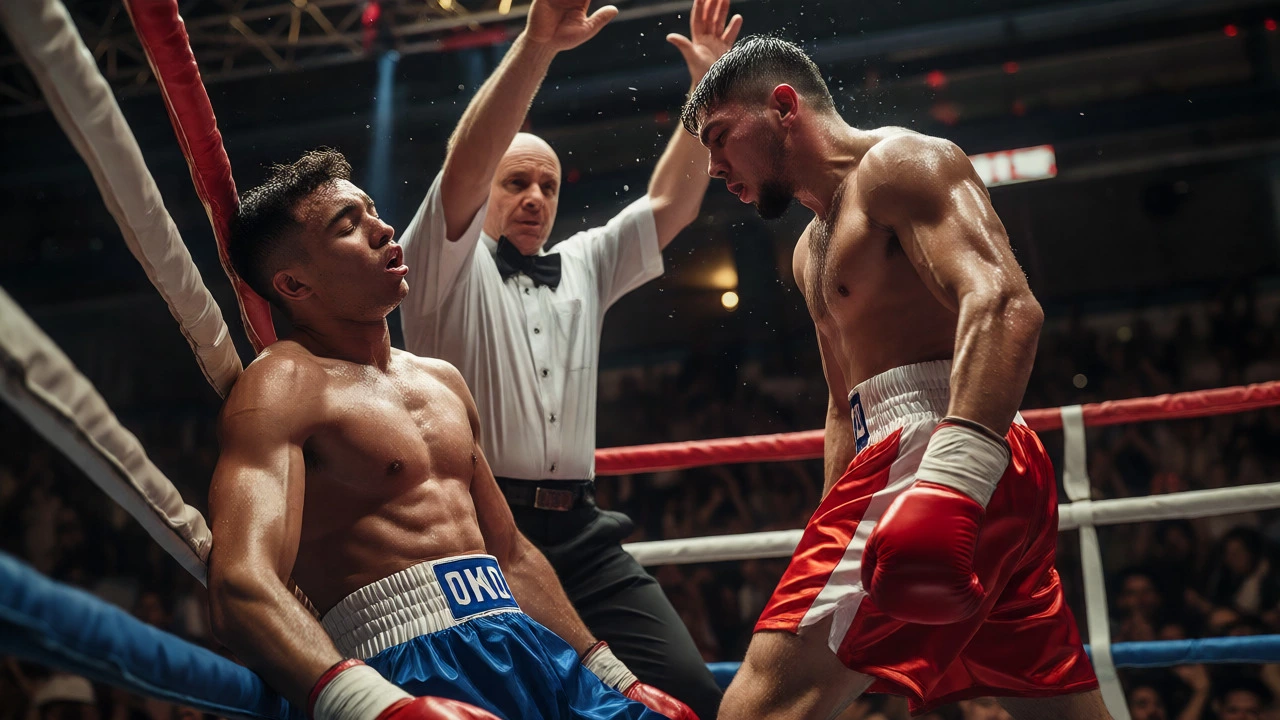
A fighter falls to the canvas due to legal punches and cannot rise within 10 seconds. The referee counts aloud. If the fighter stays down, it’s a KO. This is the most dramatic ending.
Technical Knockout (TKO)
The referee stops the fight because a fighter is taking too much punishment and cannot intelligently defend themselves. Or, a corner throws in the towel, signaling surrender. TKOs are common when one fighter is overwhelmed but still conscious.
Disqualification (DQ)
A fighter breaks the rules severely, such as hitting below the belt repeatedly, using illegal techniques, or refusing to obey the referee. If a foul causes an accidental head clash that prevents continuation, the fight might go to the scorecards, but intentional fouls lead to DQ.
No Contest (NC)
If an accidental foul occurs early in the fight (usually before round 4) and the injured fighter cannot continue, the result is a No Contest. It’s as if the fight never happened officially.
Decision
The fight goes the scheduled distance. The winner is decided by unanimous decision (all judges agree), split decision (two judges favor one, one favors the other), or majority decision (two judges favor one, one scores a draw).
Equipment and Attire: What Do Fighters Wear?
You might notice fighters wear gloves, shorts, and shoes. Each piece serves a specific purpose in a boxing match.
Gloves are heavily padded to protect the hands and reduce facial cuts. Professional bouts use 10-ounce gloves, while lighter weights might use 8 ounces. Amateur bouts often use 10-ounce gloves with thumb locks to prevent eye gouging. Headgear was removed from men’s Olympic boxing in 2016 to encourage more aggressive fighting, though it remains mandatory in many amateur tournaments.
Shoes provide ankle support and grip on the canvas. They have thin soles to allow pivoting. Shorts are loose-fitting to allow high kicks (though kicks aren’t allowed in boxing, flexibility matters) and comfort during intense movement.
Common Myths About Boxing Matches
Let’s clear up some misconceptions people have when they first learn about the sport.
Myth 1: Boxers try to knock each other out every punch.
False. Knockouts are rare. Most rounds are tactical battles of positioning and accumulation. Trying to land a haymaker every second leads to exhaustion.
Myth 2: All hits count equally.
No. Judges value clean, forceful punches. Pushing punches or slapping motions score poorly. Body shots matter, but head shots usually carry more weight in scoring perception.
Myth 3: Referees score the fight.
Referees only stop the fight. They don’t submit scorecards. Sometimes a ref stops a fight that the judges had scored close, leading to fan outrage. This disconnect is part of the drama.
How to Watch a Boxing Match Like a Pro
Now that you know the rules, how do you actually enjoy the spectacle? Start by focusing on footwork. Notice how fighters cut off the ring. Are they backing up or moving sideways? Next, watch the hands. Don’t just look for big punches; look for jabs setting up combinations. Finally, listen to the corners. Between rounds, trainers give instructions. Hearing them shout "slip the jab!" or "attack the body!" gives you insight into the strategy unfolding.
Boxing is a game of chess played at high speed. Understanding what is called a boxing match-and the intricate rules behind it-turns a simple brawl into a fascinating display of athleticism and intellect.
How many rounds are in a professional boxing match?
Most professional championship bouts are scheduled for 12 rounds. Non-title fights can range from 4 to 10 rounds. Each round lasts 3 minutes, with a 1-minute rest period in between.
What is the difference between a KO and a TKO?
A Knockout (KO) occurs when a fighter falls and fails to stand up within the 10-second count. A Technical Knockout (TKO) happens when the referee stops the fight because a fighter cannot safely continue, even if they are still standing, or if their corner throws in the towel.
Who decides the winner if the fight goes the distance?
Three judges score each round using the 10-Point Must System. After all rounds, the total scores are added up. The fighter with the highest total wins. Results can be a Unanimous Decision, Split Decision, or Majority Decision depending on whether all judges agree.
Are headbutts allowed in boxing?
Headbutts are generally considered fouls. Accidental headbutts that cause cuts are common and often lead to the fight going to the scorecards if it cannot continue. Intentional headbutts can result in point deductions or disqualification.
Why did boxing change from 15 rounds to 12 rounds?
The change occurred in the late 1980s primarily for safety reasons. Medical data indicated that fatigue in the 13th, 14th, and 15th rounds significantly increased the risk of severe brain injury and death. Reducing the limit helped preserve fighter health.