
Marathon Time Estimator
Estimate Your Realistic Marathon Time
Your Estimated Marathon Time
Key Factors
Running a marathon isn’t just about crossing the line-it’s about knowing what’s actually possible for someone who trains smart, not just hard. If you’ve ever looked at elite runners and thought, "That’s not me," you’re right. And that’s okay. A realistic marathon time isn’t about what the pros do. It’s about what your body, your schedule, and your experience can handle.
What Does "Realistic" Even Mean?
Realistic doesn’t mean slow. It means sustainable. It means you didn’t crash at mile 20 because you tried to run 6-minute miles when your longest training run was 18 miles at 8-minute pace. Realistic is the time you can hit without injury, burnout, or regret.
Most first-time marathoners aim for 4 to 5 hours. That’s not a failure. That’s a win. Around 60% of first-timers finish between 4:00 and 5:00. For men, the average is about 4:20. For women, it’s closer to 4:45. These aren’t just numbers-they’re backed by data from major races like Boston, London, and Melbourne Marathon over the last five years.
Your Training History Matters More Than Your Age
Age doesn’t decide your marathon time. Your training does. Someone who’s been running 3-4 times a week for two years will likely finish faster than a 30-year-old who just started last month, even if the younger person is naturally faster.
Here’s the simple math: if you can run a 10K in under 50 minutes, a 4:00 marathon is within reach. If your 10K time is between 50 and 65 minutes, aim for 4:00-4:30. Over 65 minutes? A 4:30-5:00 finish is realistic and still impressive.
Why does this work? Because marathon pace is roughly 1.5 to 2 times your 10K pace. It’s not perfect, but it’s close enough to plan by. Use this as a starting point, not a rule.
Training Consistency Beats Weekly Mileage
People think you need to run 80 kilometers a week to run a good marathon. That’s not true. You need consistency. Run four days a week for 12 weeks straight-no missed long runs, no skipping recovery-and you’ll be better prepared than someone who runs 100 kilometers one week and takes two weeks off because they’re "too sore."
Most people who hit a 4:30 marathon do it with this basic plan:
- Three easy runs (6:30-8:00 min/km pace)
- One long run every weekend (growing from 16km to 32km over 12 weeks)
- One weekly strength or core session
- One rest day
You don’t need speed work to hit 4:30. You don’t need fancy shoes or a coach. You need to show up. That’s it.
Weather and Course Are Bigger Factors Than You Think
Did you know a 2°C drop in temperature can improve your marathon time by 2-3 minutes? That’s not a myth. Melbourne’s marathon in 2025 had a 12-minute average difference between runners who raced in 18°C versus those who ran in 26°C. Same people. Same training. Just different weather.
And elevation? A net downhill course like Boston can shave 8-10 minutes off your time. A hilly course like the Sydney Harbour Bridge marathon? Add 10-15 minutes. If you’re aiming for a personal best, pick your race wisely. Don’t just sign up for the first one that pops up.
What About Pace Targets?
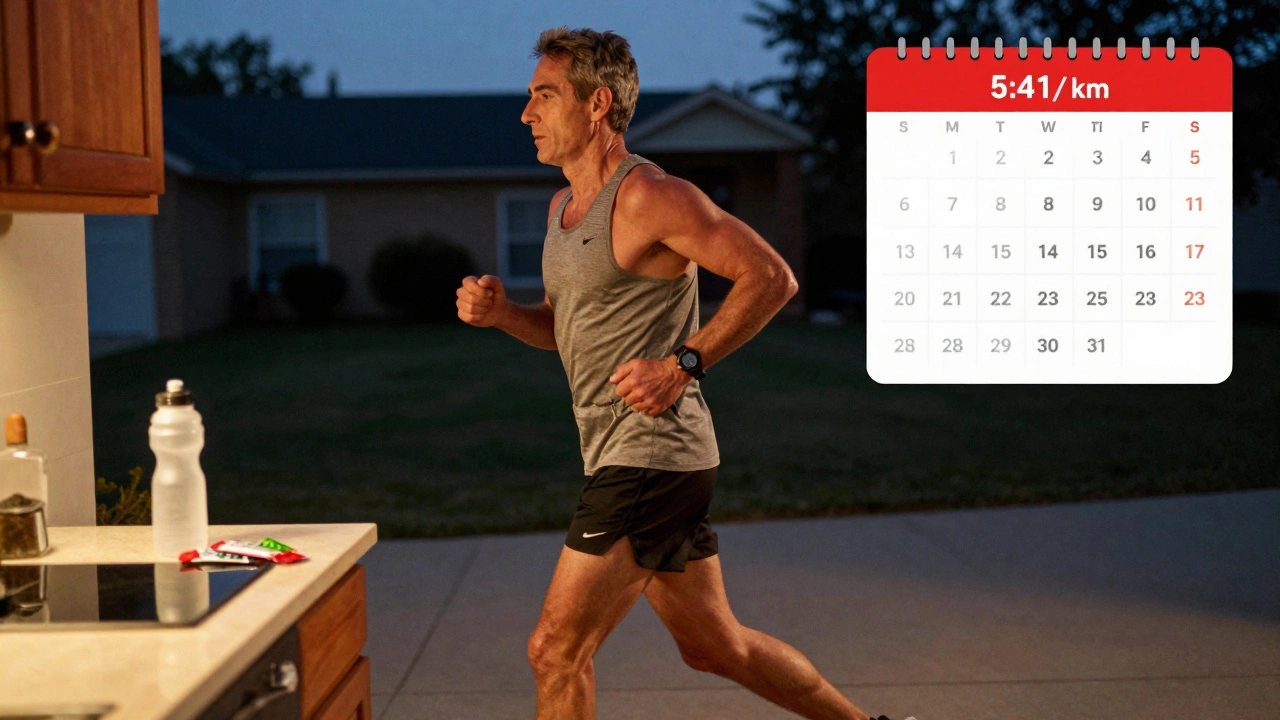
Forget trying to hit a specific time on race day without practicing it. If you want to finish in 4 hours, you need to run 5:41 per kilometer. That’s not fast. But can you hold it for 32 kilometers? Most people can’t.
Here’s how to train for it:
- Do one long run every two weeks at your goal pace (e.g., 5:41/km) for 8-12km.
- Run your last 3-5km of your 30km long run at goal pace.
- Practice drinking water and eating gels at the same pace you’ll use on race day.
If you can do 10km at goal pace in training, you can do 42km. If you’ve never held that pace for more than 3km? Don’t expect to hold it for 42. Adjust your goal.
Why People Miss Their Goals (And How to Avoid It)
Most people who blow up at mile 30 didn’t fail because they’re weak. They failed because they started too fast. The race starts with crowds, music, adrenaline. Everyone runs 30-60 seconds per kilometer faster than they should. By mile 15, they’re already burning through their fuel. By mile 30, they’re walking.
Here’s how to avoid it:
- Start the first 5km 15-20 seconds slower than your goal pace.
- Use a GPS watch with a pace alert. Set it to vibrate if you go too fast.
- Ignore the people around you. Your race. Your pace.
Running the first half slower than the second half isn’t a flaw-it’s the smartest strategy. That’s called negative splitting. And it’s how most people who hit their goals do it.
What’s a Good Time for Your Age Group?
Age group times aren’t about being fast. They’re about being competitive within your group. Here are realistic targets based on data from 2024-2025 races:
| Age Group | Men (Realistic) | Women (Realistic) |
|---|---|---|
| 18-34 | 4:00-4:30 | 4:30-5:00 |
| 35-44 | 4:15-4:45 | 4:45-5:15 |
| 45-54 | 4:30-5:00 | 5:00-5:30 |
| 55-64 | 4:50-5:30 | 5:30-6:00 |
| 65+ | 5:30-6:30 | 6:00-7:00 |
These aren’t targets to chase. They’re benchmarks to help you set expectations. If you’re 58 and finish in 5:45? That’s a huge accomplishment. Don’t compare it to a 25-year-old’s 3:15. They’re different races.
Final Thought: Your Time Is Yours
There’s no such thing as a "bad" marathon time. Only unprepared ones. If you trained, showed up, and finished, you did better than 90% of the people who signed up but never ran a single mile.
Some people measure success by speed. Others measure it by courage. If you ran 42 kilometers after months of early mornings, sore legs, and rainy runs-you’ve already won.
What’s the fastest realistic marathon time for a beginner?
For someone with no prior running experience, a realistic goal is 5:00-5:30. That means running 7:00-7:30 per kilometer. It’s slow, but it’s sustainable. Most beginners who finish under 5 hours have trained consistently for at least 6 months. Pushing for 4:30 without experience leads to injury or burnout.
Can I run a marathon without doing long runs over 30km?
Yes. Many people finish marathons with a longest training run of 28-30km. The key isn’t distance-it’s consistency. If you’ve done 8-10 long runs between 20-30km over 12 weeks, your body adapts. Running 35km once doesn’t help if you skip the rest. Quality over quantity always wins.
Is a 4-hour marathon good?
Yes. A 4-hour marathon means you ran 5:41 per kilometer. That’s faster than 80% of all marathon finishers worldwide. It’s a solid achievement, especially if you’re not a former athlete. Most people who hit this time train 4-5 days a week for 4-6 months.
Why do I hit a wall at mile 30 even if I trained?
You likely didn’t train your fueling strategy. Most runners run out of energy because they didn’t practice eating gels or drinking fluids during long runs. Your body has about 2,000 calories of stored glycogen. A marathon burns 2,600-3,000. If you didn’t practice refueling during training, you’ll crash on race day. Start taking in carbs after 45 minutes of running, every 30-45 minutes.
Should I walk during a marathon?
Walking isn’t quitting-it’s strategy. Many experienced runners walk for 30-60 seconds at every water station. It helps reset your breathing, reduces muscle fatigue, and prevents injury. If you’re aiming for 4:30 or slower, walking for 1 minute every 5km can actually help you finish faster and feel better.