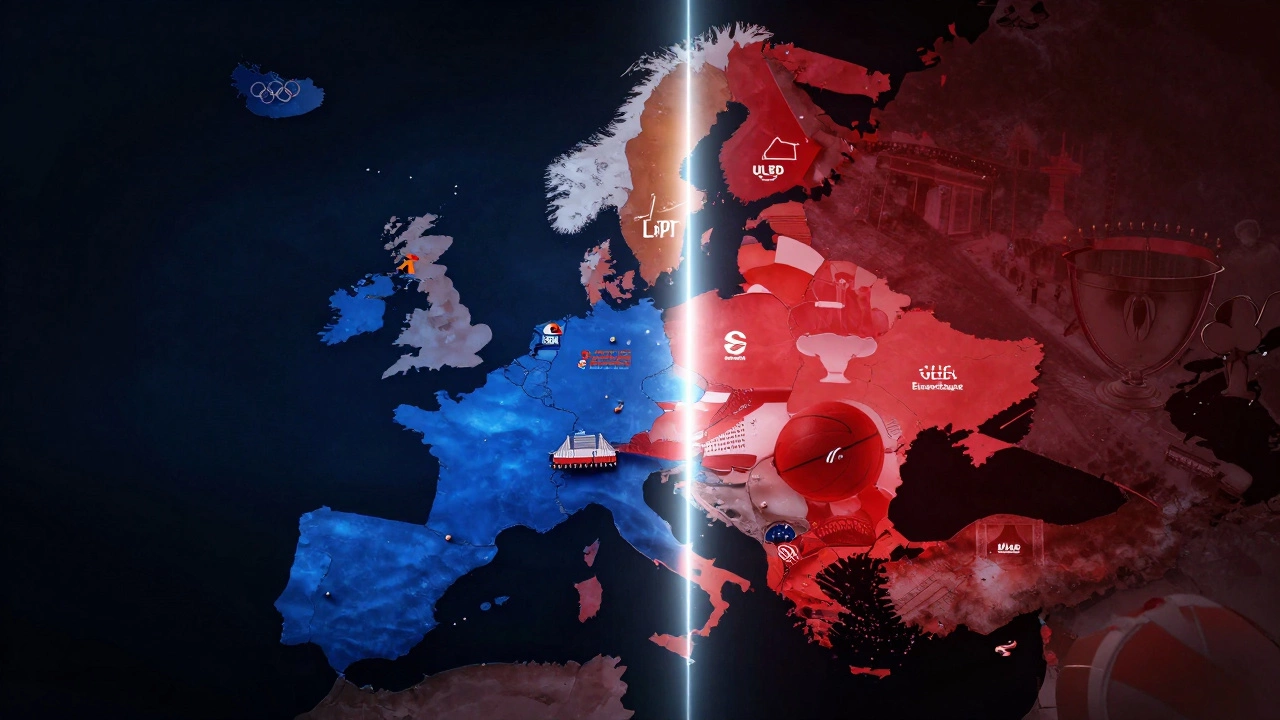
European Basketball League Explorer
Discover the landscape of European basketball. Select a league below to understand its standing, key teams, and unique characteristics.
ACB (Spain)
Tactical sophistication & coaching excellence.
GBL (Greece)
Passionate fans & physical defense.
BSL (Turkey)
Financial growth & NBA-caliber talent.
KLS (Serbia)
Deep roots & elite point guards.
Serie A (Italy)
Commercialized & fast-paced offense.
BBL (Germany)
Organizational efficiency & stability.
Pro A (France)
Academy system & marketing investment.
LKL (Lithuania)
Pure passion & cultural stakes.
EuroLeague
The premier club competition globally.
Key Characteristics
Top Teams / Rivals
League Stats & Insights
Ask anyone how many basketball leagues exist in Europe, and you’ll likely get a shrug or a vague number. The reality is messy. There isn’t just one league; there are dozens of professional tiers, hundreds of amateur divisions, and two major governing bodies pulling in different directions. If you’re trying to follow the sport, bet on it, or scout talent, understanding this landscape is crucial.
In short, if you count every recognized national top-flight division across FIBA Europe’s member nations, there are roughly 50 distinct top-tier professional leagues. But that number only scratches the surface. Add in second divisions, youth leagues, and the transnational competitions like the EuroLeague, and the ecosystem becomes a complex web of rivalries, qualifications, and financial disparities.
The Two Giants: FIBA vs. ULEB
To understand why European basketball feels fragmented, you have to look at the power struggle between two organizations. This isn’t just bureaucratic infighting; it dictates which teams play in which tournaments.
FIBA Europe is the continental arm of the International Basketball Federation. They govern the Olympic qualifiers, the World Cup spots, and the national team competitions. For club basketball, they run the FIBA Champions League and the FIBA Europe Cup.
On the other side is ULEB (Union of European Leagues of Basketball). This group represents the interests of the domestic leagues themselves. Their crown jewel is the EuroLeague, widely considered the strongest club competition in the world after the NBA.
For years, these two groups were at war. Teams couldn’t play in both. In recent years, a truce has emerged, allowing for a more integrated system, but the tension remains. When you ask "how many leagues," you’re really asking about the hierarchy within these two competing structures.
The Big Five Domestic Leagues
While there are 50+ countries, five nations dominate the conversation due to their depth, history, and financial power. These are the leagues where most international stars end up if they aren’t in the NBA.
| Country | League Name | Key Characteristics |
|---|---|---|
| Spain | ACB (Liga Endesa) | Known for tactical sophistication and high-level coaching. Home to Real Madrid and Barcelona. |
| Greece | GBL (Greek Basket League) | Famous for passionate fan culture and physical defense. Panathinaikos and Olympiacos are giants. |
| Turkey | BSL (Basketbol Süper Ligi) | Rapidly growing financially. Attracts many NBA-caliber players looking for big contracts. |
| Serbia | KLS (Basketball League of Serbia) | A basketball nation with deep roots. Produces elite point guards and forwards. Partizan and Crvena Zvezda are historic rivals. |
| Italy | Lega Basket Serie A | Highly commercialized with strong TV deals. Known for fast-paced offense and skilled shooters. |
These five leagues alone account for a significant portion of the EuroLeague participants each year. But don’t sleep on the rising powers.
The Rising Powers and Dark Horses
If you think European basketball is just Spain and Greece, you’re missing half the story. Several other countries have developed robust ecosystems that produce regular EuroLeague contenders.
Germany’s BBL (Basketball Bundesliga) has transformed over the last decade. With the rise of Alba Berlin and Bayern Munich, Germany now offers a stable, well-funded environment. The league is known for its organizational efficiency and growing attendance figures.
France’s LNB Pro A is another heavyweight. Paris Basketball and ASVEL have invested heavily in marketing and facilities. France also excels at developing young talent through its academy system, feeding players into the top tier quickly.
Lithuania might be small in population, but its basketball heart is huge. The Lithuanian Basketball League (LKL) is fiercely competitive. Every game feels like a final because the cultural stakes are so high. It’s a must-watch for anyone who appreciates pure passion.
Don’t overlook Croatia (ABA Liga), Israel (Winner League), and Belgium (BNXT League, shared with the Netherlands). These leagues often serve as stepping stones for players moving toward the bigger stages.
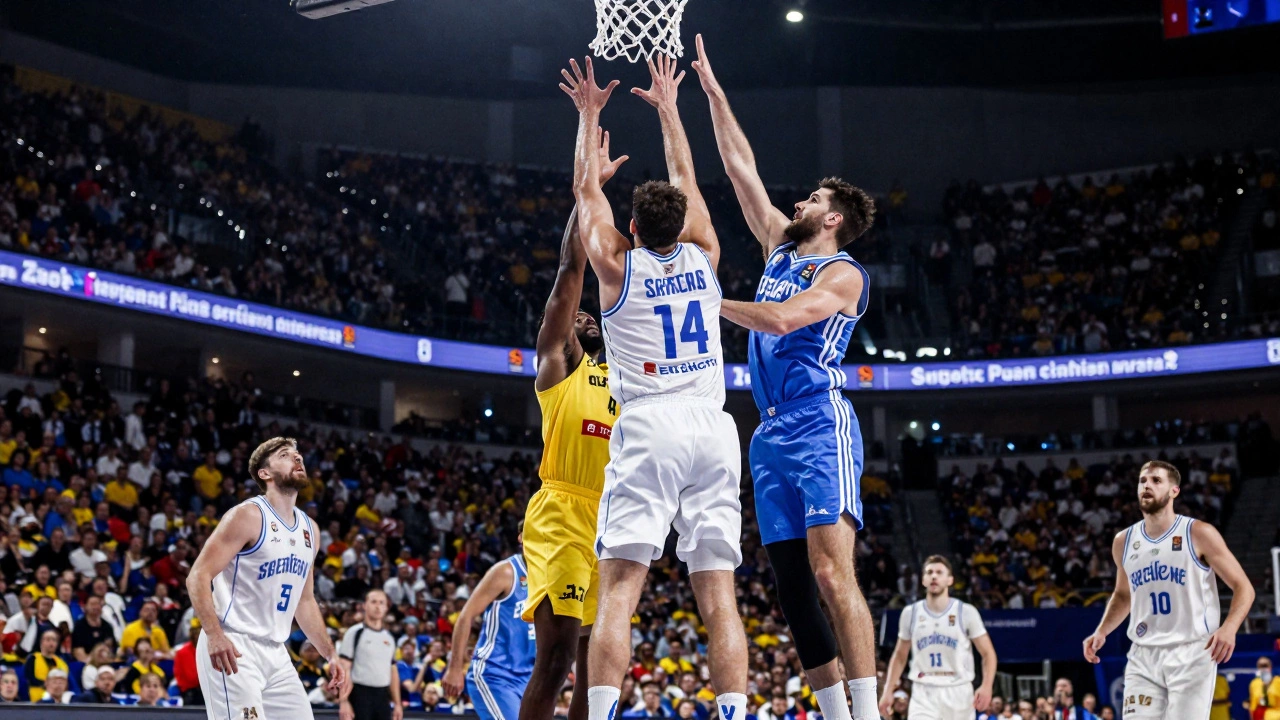
Transnational Competitions: Beyond Borders
Here’s where the "how many" question gets tricky. Some leagues cross national borders. The most famous example is the ABA Liga (Adriatic League). It features teams from Croatia, Serbia, Slovenia, Montenegro, Bosnia and Herzegovina, and North Macedonia. It operates independently of some national associations, creating a unique hybrid model.
Then there are the pan-European club tournaments:
- EuroLeague: The premier competition. 18 teams compete annually. It’s an invitation-only league for most, with automatic spots for the champions of the Big Five leagues.
- EuroCup: The second-tier competition. Often seen as a proving ground for teams aiming for the EuroLeague. High intensity, lower budgets.
- FIBA Champions League: Open to all qualified clubs from FIBA Europe members. It’s the primary route for teams from smaller nations to reach European glory.
- FIBA Europe Cup: The third tier. Crucial for development in emerging basketball markets.
So, when you count "leagues," do you include these? Technically, yes. They are organized competitions with rules, schedules, and champions. That adds at least four major transnational leagues to your count.
The Long Tail: Amateur and Regional Leagues
If we stop at the top 50 professional leagues, we ignore the foundation of the sport. Every country has multiple tiers below the top flight. In Germany, for instance, below the BBL is the ProA, then the ProB, and then regional leagues stretching down to local community courts.
Estimating the total number of leagues including semi-pro and amateur divisions is nearly impossible. However, FIBA Europe recognizes over 50 national federations. Each federation manages a pyramid structure. A conservative estimate suggests there are over 200 organized competitive leagues across Europe when you include second and third divisions.
These lower leagues are vital. They provide playing time for young athletes, retired pros extending their careers, and students balancing sports with education. Without them, the top leagues would dry up of talent.

Why Does This Matter to You?
Whether you’re a fan, a bettor, or a player, knowing the structure helps you navigate the chaos.
For fans, it explains why your favorite team might miss out on Europe despite winning their domestic league. Qualification depends on UEFA-style coefficients based on past performance in European cups.
For players, it maps out career paths. Moving from a second-division Italian league to the first division requires different skills than jumping from a Greek second tier to the EuroLeague. Understanding the league hierarchies helps agents negotiate better contracts.
For investors and sponsors, it highlights market opportunities. While Spain and Greece are saturated, markets like Poland, Romania, and the Baltic states offer growth potential with less competition for visibility.
Future Trends: Consolidation and Growth
The landscape is shifting. We’re seeing more consolidation. Smaller leagues are merging or forming stronger alliances to gain bargaining power against broadcasters. The EuroLeague is expanding its footprint, trying to lock in more long-term partners, which reduces the fluidity of qualification.
Technology is also changing how we consume these leagues. Streaming services are picking up rights to mid-tier leagues, making games from Latvia or Slovenia accessible globally. This democratization of access means the "number" of relevant leagues is effectively growing for the average viewer.
By 2027, expect even clearer stratification. The gap between the EuroLeague elite and the rest will widen financially, but the FIBA Champions League will likely strengthen as the alternative path for ambitious clubs outside the top tier.
What is the highest level of basketball in Europe?
The highest level is the EuroLeague, a transnational competition featuring the best clubs from across Europe. Below that, the top domestic leagues like Spain's ACB and Greece's GBL represent the pinnacle of national competition.
How many teams are in the EuroLeague?
The EuroLeague currently consists of 18 teams. Most secure their spot through long-term partnerships, while others qualify via domestic league performance or through qualifying tournaments.
Is the NBA better than European leagues?
In terms of individual talent concentration and salary caps, the NBA is superior. However, European leagues like the EuroLeague are highly competitive tactically and feature many former NBA players. The style of play differs significantly, with Europe emphasizing team ball movement.
Which country has the most successful basketball history in Europe?
Spain and Greece lead in recent decades with numerous EuroLeague titles. Historically, Yugoslavia (now split into several countries) dominated the 1980s and early 90s. Today, Spain's Real Madrid and Greece's Panathinaikos/Olympiacos are the most decorated modern clubs.
Can I watch European basketball online?
Yes. The EuroLeague has its own streaming service, DAZN. Many domestic leagues also stream games on platforms like YouTube, Twitch, or dedicated regional sports networks. Availability depends on your location and broadcasting rights.