Yoga vs. Pilates Matchmaker
Answer these 5 questions to find out which practice aligns best with your current needs.
Loading question...
Your Recommendation
Calculating...
Why Yoga?
Why Pilates?
Note: Many people benefit from both. Start with the one that addresses your most urgent pain point (stiffness = Yoga, Instability/Pain = Pilates).
You’re standing in the studio lobby, sweat already forming on your palms, staring at two class schedules. One says Yoga is an ancient practice combining physical postures, breathing techniques, and meditation to promote mental and physical well-being. The other says Pilates is a system of exercises using special apparatus, designed to improve physical strength, flexibility, and posture, and enhance mental awareness. Your back hurts from sitting at a desk all day. You want to look toned, but you also want to stop feeling anxious every time your phone buzzes. So, which one do you pick?
It’s not just about picking the class that ends earlier so you can grab coffee. It’s about understanding what each discipline actually does to your body and mind. People often use these terms interchangeably, but they are fundamentally different tools. Choosing the wrong one might leave you frustrated, thinking you’re "bad at exercise" when really, you just picked the wrong key for your lock.
The Core Difference: Philosophy and Origin
To understand why one might be better for you, you have to look at where they came from. Yoga dates back over 5,000 years in India. It was originally developed as a spiritual path to achieve enlightenment through breath control and meditation. The physical poses, or asanas, were created to prepare the body for long periods of sitting in meditation. Today, most Western yoga classes focus heavily on the physical aspect, but the root remains holistic-connecting mind, body, and spirit.
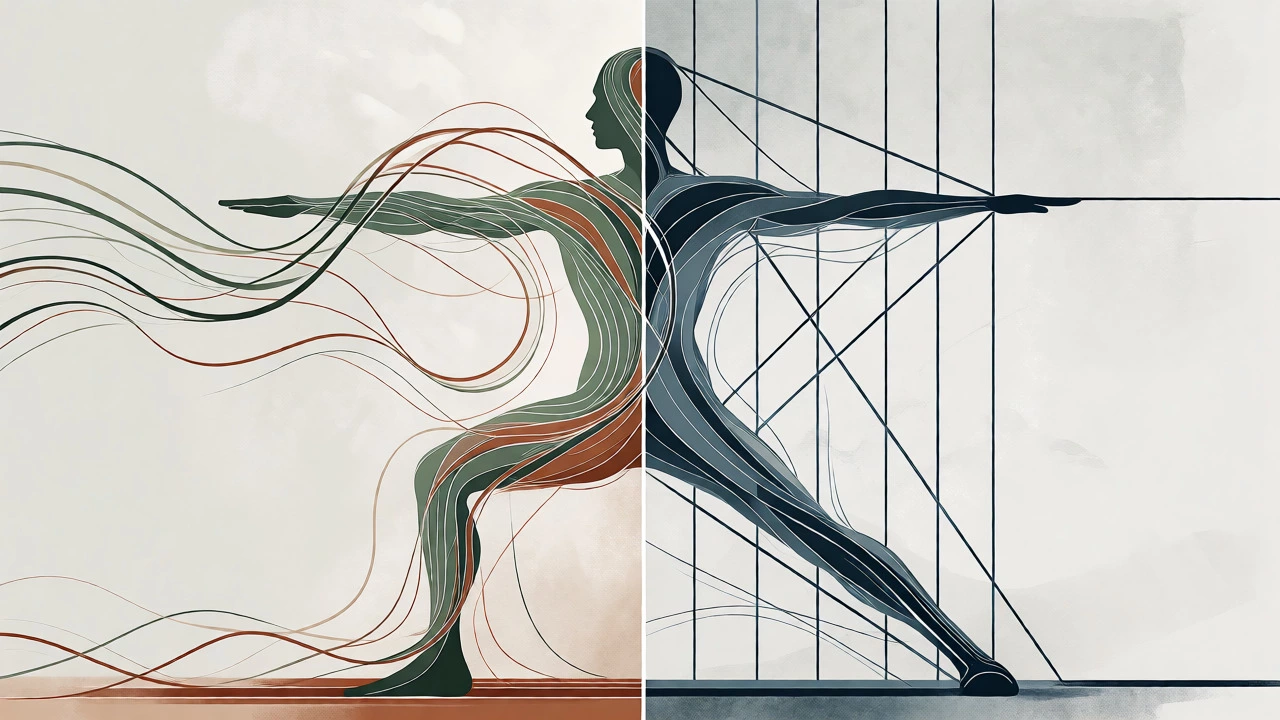
Pilates, on the other hand, was developed in the early 20th century by Joseph Pilates. He called his method "Contrology." His goal wasn't spiritual enlightenment; it was rehabilitation. He wanted to help injured dancers and soldiers regain strength and alignment. Pilates focuses intensely on the "powerhouse"-your core muscles, including the abdomen, lower back, hips, and buttocks. If yoga is about flow and expansion, Pilates is about control and precision.
Physical Benefits: Flexibility vs. Stability
This is where the rubber meets the road. Do you need to touch your toes? Or do you need to stabilize your spine while lifting groceries? These are different problems with different solutions.
Yoga excels at improving flexibility and range of motion. Classes like Vinyasa or Hatha involve moving through sequences that stretch muscles deeply. If you feel stiff, especially in your hamstrings, hips, or shoulders, yoga will likely give you faster results in opening up those tight areas. It also builds functional strength, but it’s often distributed throughout the body rather than concentrated in one area.
Pilates is king when it comes to core stability and postural correction. Because it isolates specific muscle groups, particularly the deep stabilizers that yoga sometimes misses, it’s incredibly effective for fixing imbalances. If you have a slight pelvic tilt or rounded shoulders from computer work, Pilates targets those exact issues. It doesn’t necessarily make you more flexible in the traditional sense, but it makes your joints safer and your movement more efficient.
| Feature | Yoga | Pilates |
|---|---|---|
| Primary Focus | Mind-body connection, flexibility, balance | Core strength, posture, controlled movement |
| Breathing Style | Nasal breathing, diaphragmatic (belly) breathing | Lateral thoracic (rib cage) breathing |
| Equipment | Mat, blocks, straps, bolsters | Mat, Reformer machine, Cadillac, bands |
| Intensity Level | Varies widely (Restorative to Power Yoga) | Consistently moderate to high intensity |
| Best For | Stress relief, general mobility, mindfulness | Injury rehab, athletic performance, posture |
Mental Health Impact: Calm vs. Focus
Both practices reduce stress, but they do it differently. Yoga tends to activate the parasympathetic nervous system-the "rest and digest" mode. The emphasis on holding poses and focusing on breath helps lower cortisol levels. Many people find that after a 60-minute Yin Yoga class, they feel emotionally lighter and calmer. It’s great if your primary struggle is anxiety or insomnia.
Pilates demands intense concentration. You cannot zone out during a Pilates session because one slip in form means you’re cheating yourself out of the benefit. This creates a state of "flow" that is mentally stimulating rather than relaxing. It’s excellent for people who find traditional meditation difficult because their minds race. Pilates gives your brain a job to do, which can be just as meditative for some.
Which One Burns More Calories?
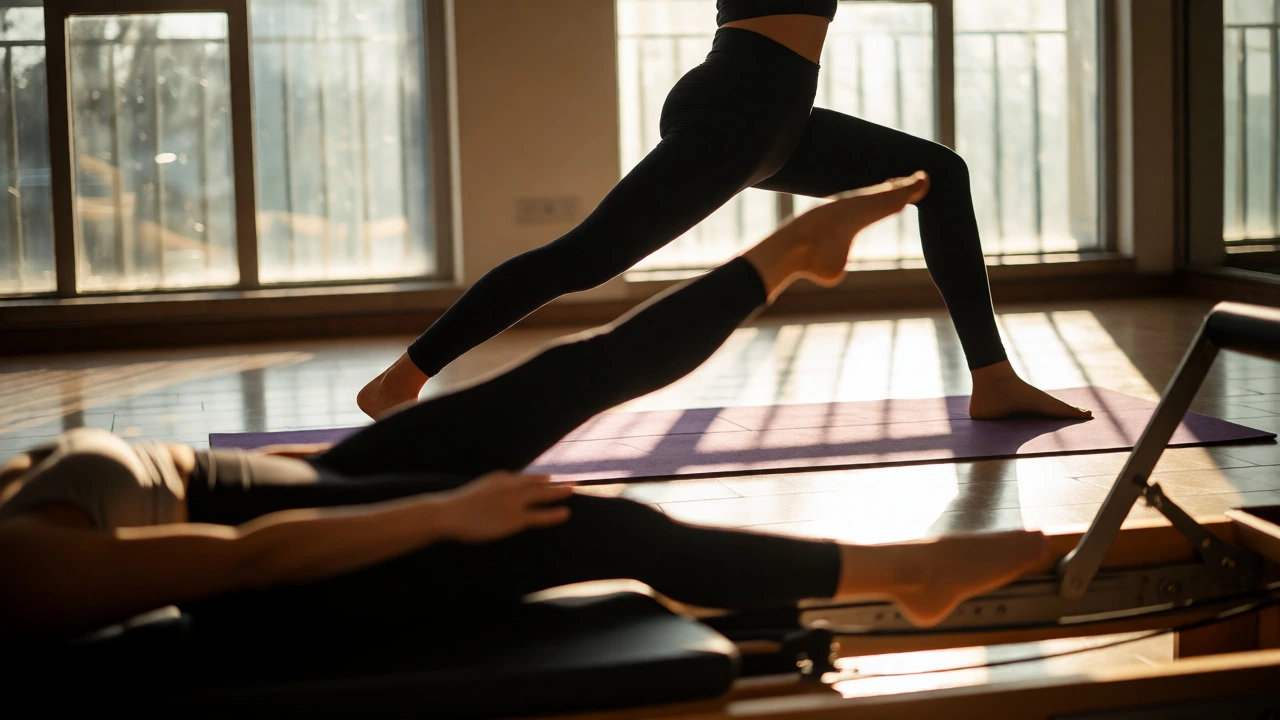
If weight loss is your main driver, neither is a direct substitute for cardio, but there is a difference. A vigorous Power Yoga or Ashtanga class can burn between 300 and 500 calories per hour, depending on your weight and effort level. Traditional Hatha or Restorative yoga burns significantly less, closer to 150-200 calories.
Pilates mat classes typically burn 200-300 calories per hour. However, Pilates Reformer classes, which use resistance springs, can push calorie burn higher due to the added muscular endurance required. But here’s the truth: neither will melt belly fat alone. You need a calorie deficit from diet and consistent activity. That said, building lean muscle through Pilates increases your resting metabolic rate slightly more than the flexibility-focused aspects of gentle yoga.
Choosing Based on Your Body Type and Goals
Let’s get specific. Who should choose which?
- Choose Yoga if: You want to improve overall flexibility, manage stress, enjoy variety (there are dozens of yoga styles), or prefer a community-focused, spiritual atmosphere. It’s also better if you have joint pain that limits high-impact movement, as many yoga poses are low-impact.
- Choose Pilates if: You have chronic back pain, poor posture, or are recovering from an injury. Athletes often add Pilates to their routine to prevent injuries by strengthening weak links. If you dislike the idea of chanting or closing your eyes for five minutes, Pilates’ clinical approach might suit you better.
What if you want both? Honestly, many people do. In Melbourne, studios increasingly offer hybrid classes. But if you can only pick one to start, assess your biggest pain point. Is it stiffness? Go Yoga. Is it instability or weakness? Go Pilates.
Common Pitfalls to Avoid
Don’t assume all yoga is gentle. A hot Bikram class can be brutal on beginners, leading to dehydration or dizziness if you aren’t prepared. Conversely, don’t assume Pilates is easy because you’re lying down. The small, precise movements target muscles you didn’t know existed, and the fatigue sets in fast.
Also, beware of "McMeditation" or superficial classes. Look for instructors who cue alignment carefully. In Pilates, if the instructor isn’t watching your form, you might be doing hundreds of reps incorrectly, reinforcing bad habits. In Yoga, if the teacher pushes you into a pose beyond your capacity without offering modifications, you risk injury.
Frequently Asked Questions
Can I do yoga and Pilates on the same day?
Yes, but be mindful of intensity. Doing a heavy Pilates Reformer session followed immediately by a vigorous Power Yoga class might exhaust your core too much, compromising your form in yoga. A common strategy is alternating days or pairing a gentle restorative yoga class with a Pilates session to allow recovery while maintaining activity.
Is Pilates better for back pain than yoga?
Generally, yes, for mechanical back pain caused by instability or poor posture. Pilates strengthens the deep transverse abdominis and multifidus muscles, which act as a natural corset for the spine. Yoga can help if the pain is tension-related, but certain forward folds can aggravate disc issues if not done carefully.
Do I need equipment for Pilates?
Not always. Mat Pilates requires only a mat and perhaps small props like rings or balls. However, Reformer Pilates requires a specialized machine found in studios. Mat Pilates is more accessible for home practice, while Reformer offers greater resistance options and support for those with limited mobility.
How quickly will I see results?
You may feel better after one session due to improved breathing and circulation. Visible changes in posture and muscle tone typically appear after 4-8 weeks of consistent practice (2-3 times per week). Flexibility gains in yoga can happen faster, sometimes within a few weeks, whereas strength gains in Pilates take longer to manifest visibly.
Is yoga religious?
Modern secular yoga is generally not religious. While it has roots in Hindu philosophy, most Western classes focus on the physical and mental benefits. Some classes may include chants like "Om," but participation is usually optional. If spirituality bothers you, look for "fitness yoga" or "athletic yoga" classes that minimize cultural elements.