Tennis Scoring Simulator
Click the buttons to award points and see the official terminology change.
Did you know?
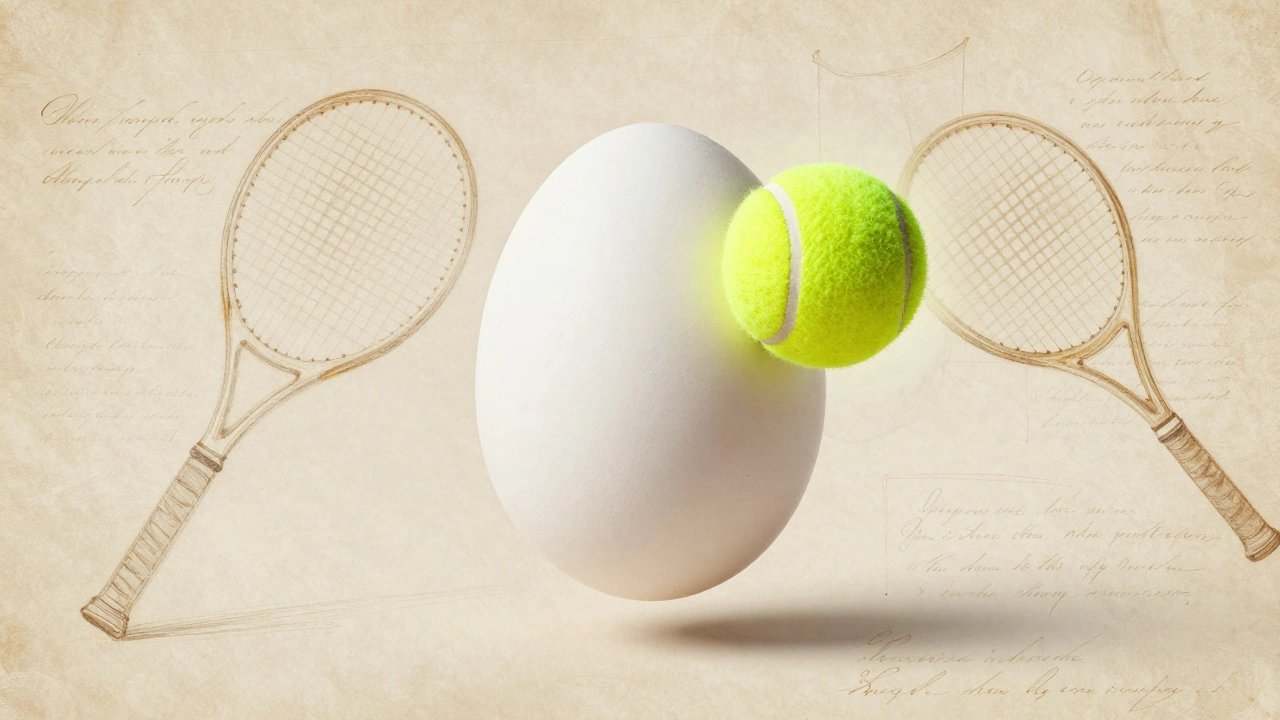
"Love" represents 0. It likely comes from the French word l'oeuf (the egg) because of its shape!
Love in tennis is the term used to denote a score of zero. It's a weird habit, right? Why not just say zero, or nil, or nothing? The answer isn't found in a single rulebook but in a mix of French influence, egg-shaped metaphors, and the evolution of how we keep track of points. To understand why we say it, we have to look at where the game came from and how language shifts over centuries.
The French Connection: L'oeuf and the Egg
The most widely accepted theory is that "love" is a corruption of the French word l'oeuf, which means "the egg." Think about it: an egg looks remarkably like a zero. Tennis has deep roots in France, and as the game migrated and became formalized, the French term for zero likely crossed over into English. Over time, English speakers probably mispronounced l'oeuf until it sounded like "love," and the term stuck because it felt natural in a social setting.
It's a common pattern in sports history. We often take a visual cue-like the shape of an egg-and turn it into a technical term. If you've ever played billiards or snooker, you'll see similar logic in how certain shots are named based on their appearance or origin. In tennis, the "egg" became the "zero," and the zero became "love." This linguistic shift happened long before the era of digital scoreboards and electronic line calling, when the game relied on the verbal calls of an umpire.
The 'Love' for the Game Theory
While the egg theory is the frontrunner for historians, there's a more sentimental theory that some fans prefer. This idea suggests that a player who has zero points is still playing because they simply "love the game." It's a poetic way of looking at a losing score-essentially saying that even though you're getting beat, your passion for the sport keeps you on the court.
While this makes for a great story at a sports bar, it's unlikely to be the actual origin. Language usually evolves from practical descriptions or phonetic mistakes rather than philosophical statements about passion. However, the fact that this theory persists shows how much the sport's culture embraces its own eccentricities. Whether it's the white dress code at Wimbledon or the specific terminology of a "let," tennis loves its traditions.
Breaking Down the Tennis Scoring Logic
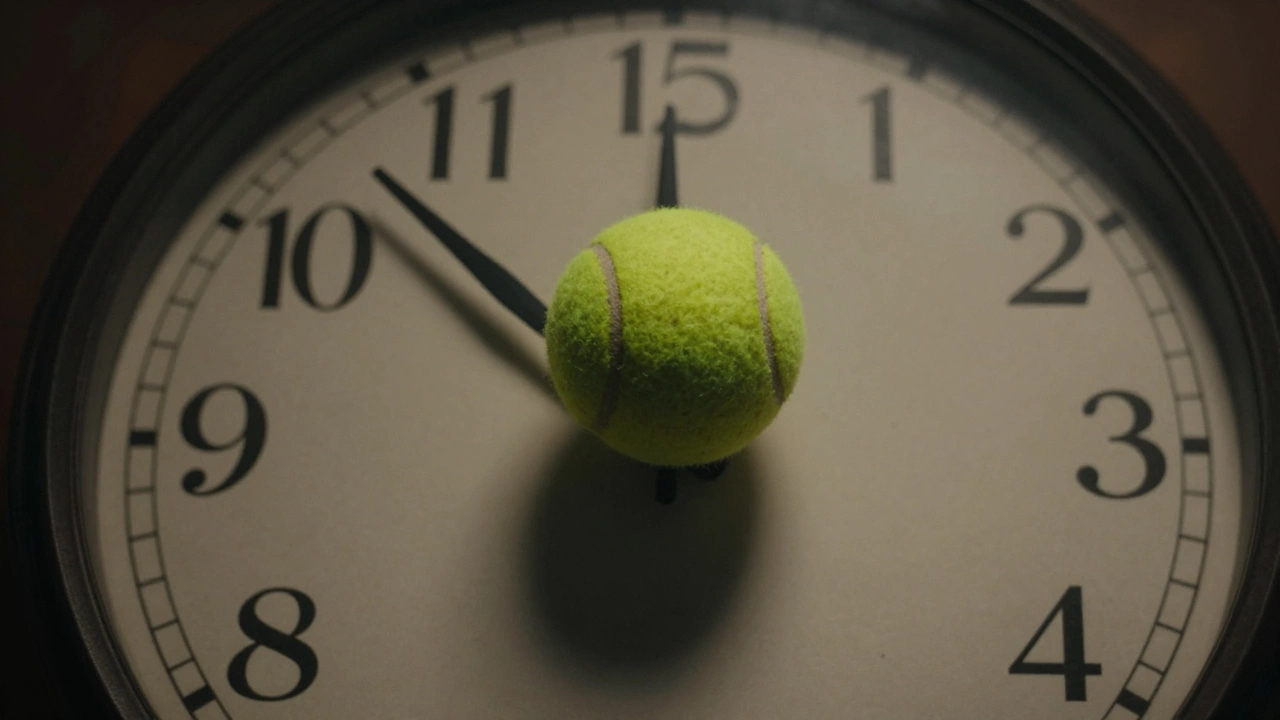
To understand why "love" fits into the game, you have to look at the rest of the scoring system, which is just as strange. Most sports count linearly (1, 2, 3, 4), but tennis uses a 15, 30, 40 sequence. This doesn't happen by accident. Many believe this comes from the old practice of using a clock face to track points. A clock has 60 minutes; dividing it into quarters gives you 15, 30, 45. The "45" eventually got shortened to "40" for ease of speech, but the structure remained.
When you combine "love" (0) with 15, 30, and 40, you get a scoring language that is entirely unique to the sport. This creates a rhythmic flow to the match. When an umpire calls out "15-love," they are establishing the current state of the game using a code that identifies the players' progress without needing to use basic integers. This specialized language helps separate the professional atmosphere of a match from a casual game of catch in the park.
| Tennis Term | Numerical Value | Context/Origin |
|---|---|---|
| Love | 0 | Possible derivation from French 'l'oeuf' (egg) |
| 15 | 1 | Based on 1/4 of a 60-minute clock |
| 30 | 2 | Based on 2/4 of a 60-minute clock |
| 40 | 3 | Modified from 45 for brevity |
| Deuce | 40-40 | From 'deux' (two), meaning two more points needed |
Why the Tradition Still Matters in 2026
You might wonder why we don't just change it. In a world of data-driven analytics and ATP Tour rankings, using a word like "love" for zero seems inefficient. However, tennis is a sport that thrives on its identity. From the specific way a Tennis Racket is strung to the etiquette of shaking hands at the net, the rituals are what give the game its prestige.
Using traditional terminology creates a bridge between the modern era and the early days of the "Real Tennis" played in courtyards. When a commentator describes a "love set" (winning a set 6-0), they are using a shorthand that is understood globally. If the sport stripped away these quirks, it would lose some of the character that attracts new players to the court. It turns a simple game of hitting a ball over a net into a cultural experience.
Common Misconceptions About Tennis Terms
Because the scoring is so unusual, a lot of myths pop up. Some people think "love" refers to the love the players have for their fans, or that it's a remnant of gambling debts from the 18th century. While betting has always been around sports, there's no historical evidence that "love" was a code for a specific wager. Most of these theories are "folk etymologies"-stories we make up to explain things when the real answer (like a mispronounced French word) feels too boring.
Another point of confusion is the transition from "love" to "15." In most games, the first point is "one." In tennis, that first jump to 15 feels like a leap. But remember, the system isn't designed to count points; it's designed to track progress toward a game. By starting at love and moving through these specific milestones, the game creates a psychological tension that builds as players approach the "game point."
Practical Application for New Players
If you're just picking up a racket, the most important thing to remember is that "love" is always the starting point. You'll hear it used in various combinations:
- Love-15: The server has 0 points, and the receiver has 15.
- Love-30: The server is struggling, and the receiver has two points.
- Love-40: The receiver is one point away from winning the game.
It's also worth noting that you'll rarely hear "zero-15" or "zero-love." The terminology is strict. Following these conventions not only makes you sound like a pro but also helps you integrate into the social fabric of the tennis community. Whether you're playing a casual match at a park or competing in a local league, using the correct terms shows a respect for the game's heritage.
Does "love" mean the same thing in all versions of tennis?
Yes, whether you are playing singles, doubles, or competing in a professional tournament on the WTA Tour, "love" always represents a score of zero.
Why isn't it just called "zero"?
It's largely due to tradition and the linguistic evolution of the game from French origins. The term "l'oeuf" (egg) likely morphed into "love" over time, and the sport has maintained this terminology to preserve its unique cultural identity.
What is a "bagel" in tennis?
A "bagel" is a slang term for winning a set 6-0. This is a modern extension of the "egg" (love) theory, as a bagel is also round like a zero. While "love" is the official term for a point, "bagel" is the informal term for a set score.
Is "love" used in other racket sports?
Some sports like squash have used similar scoring systems in the past, but the specific use of "love" is most iconic and consistently used in tennis.
How do I say the score if I'm winning?
The server's score is always called first. So, if you are serving and have 30 points while your opponent has zero, you would call the score "30-love."
Next Steps for Improving Your Game
Now that you've mastered the language, the next step is focusing on the mechanics. If you're a beginner, don't get too hung up on the score-focus on your footwork and the point of contact with the ball. Try practicing your serve for 20 minutes before every match to get the rhythm of the "love-15" transition. For those looking to advance, consider studying the patterns of professional players to see how they handle the pressure when the score is "deuce," where the "love" of the game is replaced by intense mental strategy.