Lineout Lift Simulator
Simulation Controls
Tactical Insight:
- Low: Quick throw, low risk, less gain.
- Mid: Balanced, good for mauls.
- High: Maximum reach, higher physical demand/risk.
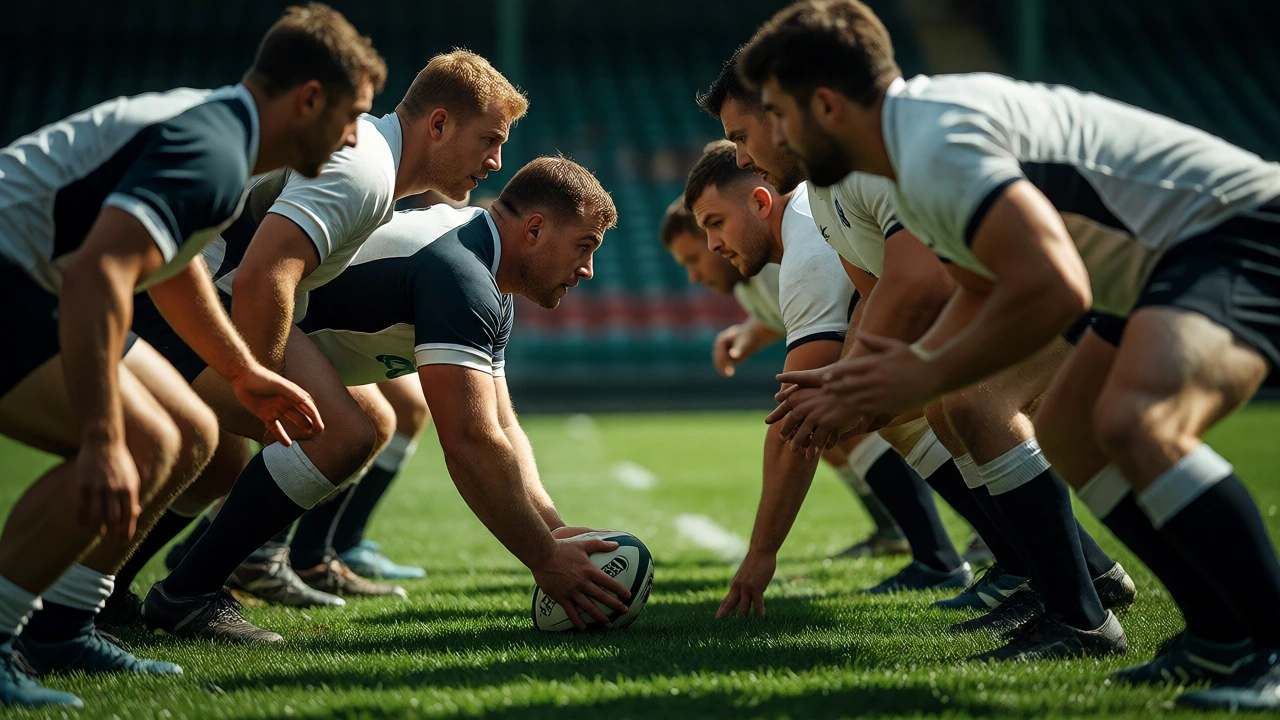
You’re watching a match, maybe at the Melbourne Cricket Ground or just on TV from your couch. The ball goes out of bounds. Both teams huddle up in two parallel lines. Then, suddenly, one guy gets hoisted into the air by his teammates, catches the ball, and lands safely. It looks like a circus act, right? But it’s not just for show. That lift is a calculated tactical move that can decide who wins possession.
If you’ve ever wondered why do rugby players lift each other up, you’re asking the right question. It’s not about showing off strength. It’s about geometry, physics, and beating the defense. Let’s break down exactly what’s happening when those forwards get airborne, why the rules allow it, and how teams use this to gain an edge.
The Core Purpose: Winning Airspace
When the ball crosses the sideline, it results in a lineout. This is a restart mechanism where the team throwing the ball back into play tries to secure possession. The problem? The opposing team stands right there, ready to intercept. If you just throw the ball to a player standing on the ground, they have to jump against defenders who are also jumping. It’s a coin toss.
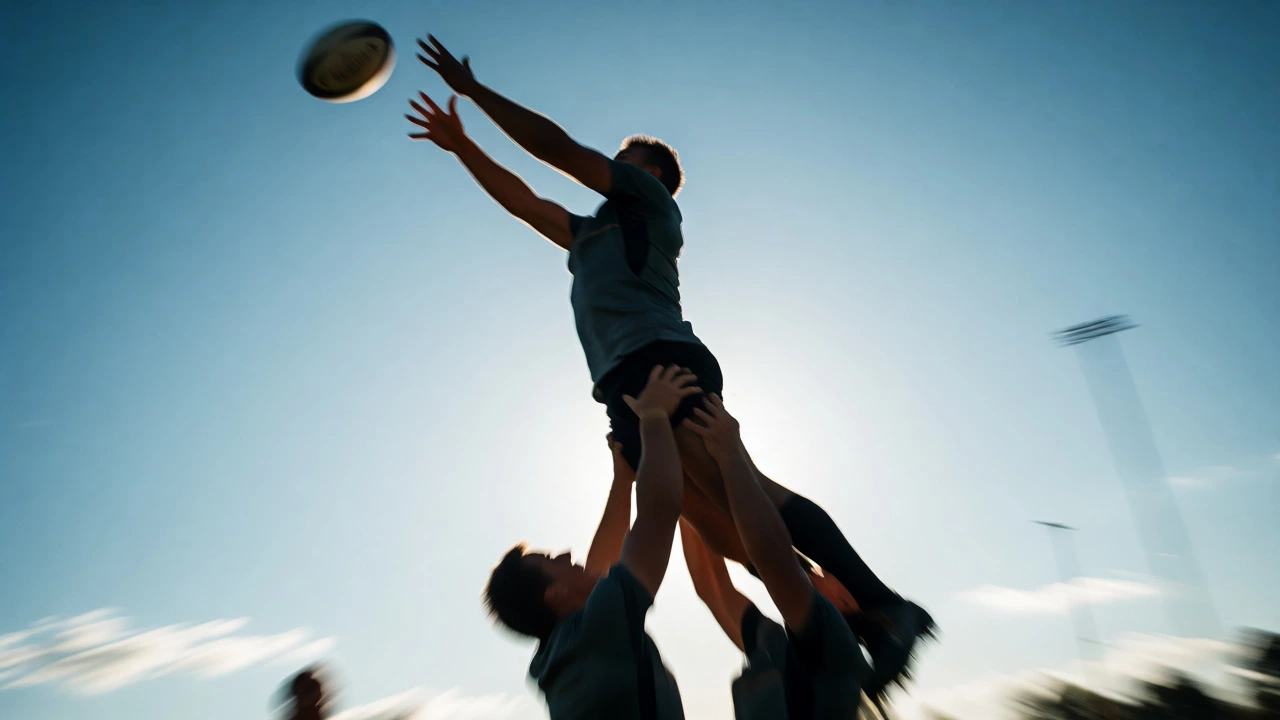
Lifting changes the equation. By elevating a jumper, the attacking team gains height advantage. A lifted player can reach balls thrown higher than any standard jump could achieve. This allows the thrower to send the ball to specific targets with precision. Without lifts, lineouts would be chaotic scrambles. With them, they become structured plays.
Think of it like basketball. You don’t just pass to anyone; you pass to the person best positioned to score. In rugby, the lift positions the catcher so they can catch cleanly without being tackled immediately upon landing. It turns a contested drop-ball situation into a controlled acquisition.
How the Lift Actually Works
A standard lift involves three people: the lifter (base), the support (middle), and the jumper (top). These roles are strictly defined by World Rugby laws to ensure safety and fairness. Here’s how the mechanics stack up:
- The Base: Usually a strong forward, often a lock or flanker. They stand firm, providing the foundation. Their job is stability. If they wobble, everyone falls.
- The Support: Stands behind or beside the base. They assist in pushing upward and help stabilize the jumper’s torso. This prevents the jumper from tipping over backward.
- The Jumper: The target. They grip the support’s shoulders or belt and wait for the throw. Once lifted, they extend their arms to catch the ball.
The timing is everything. The thrower signals a code-often a number shouted before the throw. This tells the jumper which side to look for the ball. The lift happens simultaneously with the throw. If the lift starts too early, it’s illegal. Too late, and the jumper misses the window. Teams practice these sequences thousands of times until they’re muscle memory.
Rules That Keep It Fair (And Safe)
You might think, “Can’t I just grab my friend and throw him?” Not quite. World Rugby has strict regulations to prevent chaos and injury. Understanding these helps you appreciate the skill involved.
First, only two players per side can participate in the initial lift formation during a standard lineout. You can’t stack five guys high like a pyramid unless specific conditions are met. Second, the lift must begin after the ball leaves the thrower’s hands. If you start lifting while the ball is still in the thrower’s hand, it’s a penalty. This ensures the defense has a chance to react.
Third, no interference. Defenders cannot push or pull the lifted player off balance. They can try to intercept the ball, but they can’t physically disrupt the lift structure once it’s established. If they do, the referee awards a penalty to the attacking team. These rules exist because uncontrolled lifting leads to dangerous falls. Safety isn’t just a suggestion; it’s law.
Tactical Variations: Quick vs. Long Throws
Not all lifts are the same. Coaches design different strategies based on field position and opponent weaknesses.
| Strategy | Goal | Risk Level | Best For |
|---|---|---|---|
| Quick Throw | Speed | Low | Surprising a disorganized defense near the goal line |
| Maul Drive | Power | Medium | Gaining yards through contact after securing the ball |
| Dummy Lift | Deception | High | Tricking defenders into committing to the wrong target |
A quick throw bypasses the full setup. The thrower snaps the ball to a teammate already waiting, sometimes skipping the lift entirely or using a minimal lift. This works when the opposition hasn’t formed their defensive line yet. It’s risky if the defense is ready, but devastating if they aren’t.
A maul drive uses the lift to secure the ball, then the entire group binds together and pushes forward. The lift here is just the entry point. Once caught, the team forms a maul-a rolling mass of bodies-and drives toward the try line. This relies on raw power more than aerial skill.
The dummy lift is pure psychology. Two pairs of players lift, but only one pair actually jumps. The other pretends to lift, drawing defenders’ attention. The real target catches the ball in open space. If the defense bites, it’s free yardage. If they don’t, the thrower adjusts mid-air. This requires elite communication.

Physical Demands and Injury Prevention
Don’t let the grace fool you. Lifting hurts. The base bears significant weight dynamically. When a 110kg lock jumps, the force on the lifter’s legs and back spikes momentarily. Over a season, this accumulates. Common injuries include lower back strains, shoulder dislocations, and knee ligament tears.
Teams mitigate this through conditioning. Lifters train specifically for explosive leg strength and core stability. Jumpers work on proprioception-their ability to sense body position in mid-air-to land safely. Landing incorrectly can twist ankles or knees. Modern training emphasizes soft-landing techniques to reduce impact shock.
Also, weather plays a role. Rain makes jerseys slippery. Gloves help, but wet conditions increase the risk of drops. In humid Melbourne summers, sweat adds another layer of difficulty. Teams adjust their grip tapes and throwing styles accordingly.
Why You See It More Than Ever Now
Historically, lineouts were simpler. Today, they’re complex chess matches. Video analysis allows teams to study opponents’ tendencies. Does the left flanker always signal “three”? Is the hooker predictable with his throw angle? Coaches exploit these patterns.
Furthermore, rule changes have encouraged active play. Referees penalize passive defending more strictly. This forces defenses to engage aggressively, opening gaps for clever lifts. The evolution of fitness levels means players can sustain these high-intensity bursts longer. What was a rare spectacle in the 90s is now a routine weapon.
If you watch closely next time, listen for the shout. Watch the eyes of the thrower. See the subtle shift in weight of the base. It’s a coordinated ballet of violence and precision. And yes, they lift each other up because it’s the most efficient way to win the battle for the sky.
Is it legal to push the player who is lifting?
Generally, no. Once the lift is established, defenders cannot interfere with the lifters. They can attempt to intercept the ball, but pushing or pulling the base or support players usually results in a penalty for obstruction or interference.
How high can a rugby player be lifted?
There is no specific height limit in the laws, but practical limits apply due to balance and safety. Most successful lifts elevate the jumper so their fingertips can reach 2.5 to 3 meters above the ground, depending on the player's arm length and vertical leap.
What happens if the ball is dropped during a lift?
If the ball hits the ground, it becomes live. Any player can pick it up. However, if the lift collapses due to illegal interference, the referee may award a scrum or penalty to the non-offending team. Clean drops lead to open play, which favors agile backs over heavy forwards.
Do referees stop play if a lift looks unsafe?
Yes. Referees monitor the stability of lifts. If a lift appears dangerously unstable or if a player is clearly unable to support the weight safely, the ref may blow the whistle to prevent injury, especially in youth or amateur competitions where experience varies.
Why don't backs usually get lifted?
Backs are typically lighter and less equipped for the static load-bearing required in lifts. Forwards have the muscle mass and center of gravity needed to serve as stable bases. Additionally, backs are better utilized in open-field running rather than static set-piece contests.