Portuguese vs Spanish: Brazil's Language History Quiz
Question 1: What treaty established Brazil as a Portuguese colony?
Question 2: Why did Brazil develop its own version of Portuguese instead of Spanish?
Question 3: What was the primary reason Spain didn't try to take Brazil?
Question 4: How did enslaved Africans influence Brazilian Portuguese?
Question 5: Why didn't Brazil switch to Spanish after independence?
Results
You scored:
Why do Brazilians speak Portuguese and not Spanish? It’s one of those questions that pops up when you notice Brazil is the only country in South America where people don’t say hola or gracias. Everyone else speaks Spanish. Brazil stands out-its streets, TV shows, and soccer chants all ring with Portuguese. But it’s not because Brazilians picked it randomly. The answer lies in a 500-year-old treaty, a map drawn by kings, and a colonial race that never really ended.
The Treaty That Changed a Continent
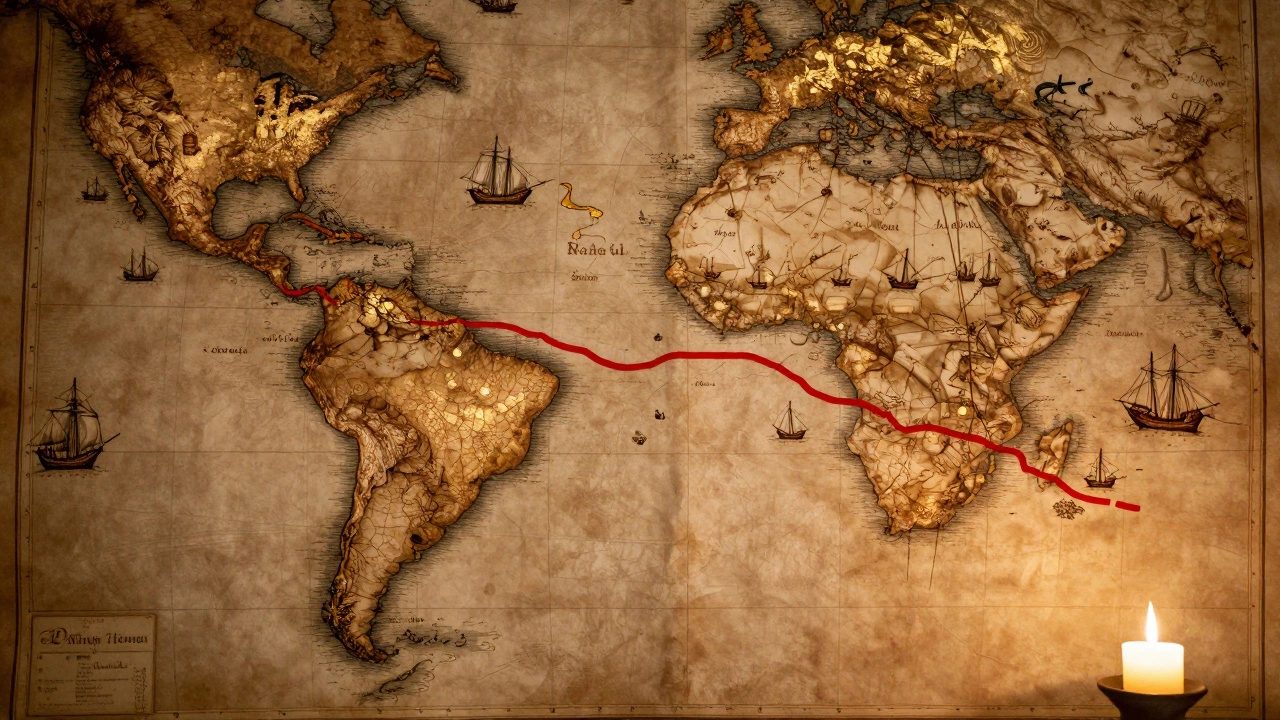
In 1494, Spain and Portugal were the two big powers racing to claim new lands after Columbus’s voyage. They didn’t have satellites or GPS. They had a pope and a line drawn down the middle of the Atlantic Ocean. The Treaty of Tordesillas split the uncharted world between them. Everything west of the line went to Spain. Everything east went to Portugal.
The line was drawn 370 leagues west of the Cape Verde Islands. That might sound random, but it was calculated to give Portugal a shot at Africa and Asia. It also accidentally gave them a huge chunk of South America-what’s now Brazil. The Portuguese didn’t even know how big the land was when they signed. When they sent explorers a few years later and found a massive, resource-rich territory, they didn’t look back. They claimed it. And they brought their language with them.
Why Not Spanish? The Colonization Race
Spain moved fast. They landed in the Caribbean, then hit Mexico, Peru, and Argentina. Their empire spread across the western half of the continent. They brought soldiers, priests, and administrators-all speaking Spanish. The indigenous populations were forced to learn it. Over time, Spanish became the default.
Brazil’s story was different. The Portuguese arrived later. They didn’t find gold or empires like the Aztecs or Incas. Instead, they found forests, rivers, and millions of native people who spoke hundreds of languages. The Portuguese didn’t come to conquer kingdoms-they came to harvest. Brazil became a sugar plantation economy. Portuguese settlers, African slaves, and indigenous workers all mixed together. And Portuguese became the common tongue-not because it was forced like in Spanish colonies, but because it was the only language everyone had to use to survive.
The Role of Slavery and Mixing
Over 4 million enslaved Africans were brought to Brazil-more than any other country in the Americas. They came from different regions, spoke different languages, and had no way to communicate with each other. The Portuguese colonizers didn’t learn African languages. The Africans didn’t learn Portuguese overnight. But they had to find a way to talk. So they blended words, sounds, and grammar. That’s how Brazilian Portuguese developed its own rhythm, slang, and flavor.
Unlike Spanish colonies, where indigenous languages were often suppressed or replaced, Brazil’s language evolved through mixing. The result? Brazilian Portuguese isn’t just European Portuguese spoken in the tropics. It’s a living mix of Portuguese, African languages, and indigenous words. Words like abacaxi (pineapple) and peteca (a shuttlecock-like game) come from Tupi-Guarani. The language didn’t just survive-it adapted.

Why Didn’t Spain Just Take Brazil?
You’d think Spain, with its massive empire, would’ve tried to grab Brazil. But they didn’t. For one, the Treaty of Tordesillas was backed by the Pope. Breaking it meant risking war with Portugal and the Church. Second, Spain was already stretched thin. They were managing mines in Peru, cities in Mexico, and the Philippines. Brazil was far away, dense with jungle, and didn’t have the silver or gold they wanted-at least not at first.
By the time Brazil started producing gold and coffee in the 1700s, it was too late. Portugal had already built towns, churches, schools, and a bureaucracy. The language was rooted. Even when Brazil declared independence in 1822, they didn’t switch to Spanish. Why? Because the people, the government, the courts, and the military all spoke Portuguese. Changing languages would’ve meant rewriting everything-from laws to textbooks.
Modern Brazil: A Language All Its Own
Today, Brazilian Portuguese is the most spoken language in Latin America. Over 215 million people speak it. And it’s not just different from European Portuguese-it’s different from Spanish too. The pronunciation? Softer. The rhythm? More musical. The grammar? Sometimes looser. Brazilians say eu falo instead of yo hablo. They drop subject pronouns more often. They use você instead of tú. And they’ve borrowed words from English, Italian, and even Japanese.
When you watch a Brazilian soccer match, you hear chants in Portuguese. You don’t hear Spanish. That’s not because Brazil hates Spanish. It’s because their language was shaped by history, not borders. The same way American English sounds different from British English, Brazilian Portuguese is its own version of the language-born from colonization, slavery, and survival.
What If the Treaty Was Drawn Differently?
Imagine if the line had been drawn 100 leagues farther west. Brazil might’ve been Spanish-speaking. Or if Portugal had lost the colonial race. But history doesn’t run on might-have-beens. The Treaty of Tordesillas set the path. Portugal held on. Brazil grew. And the language stuck.
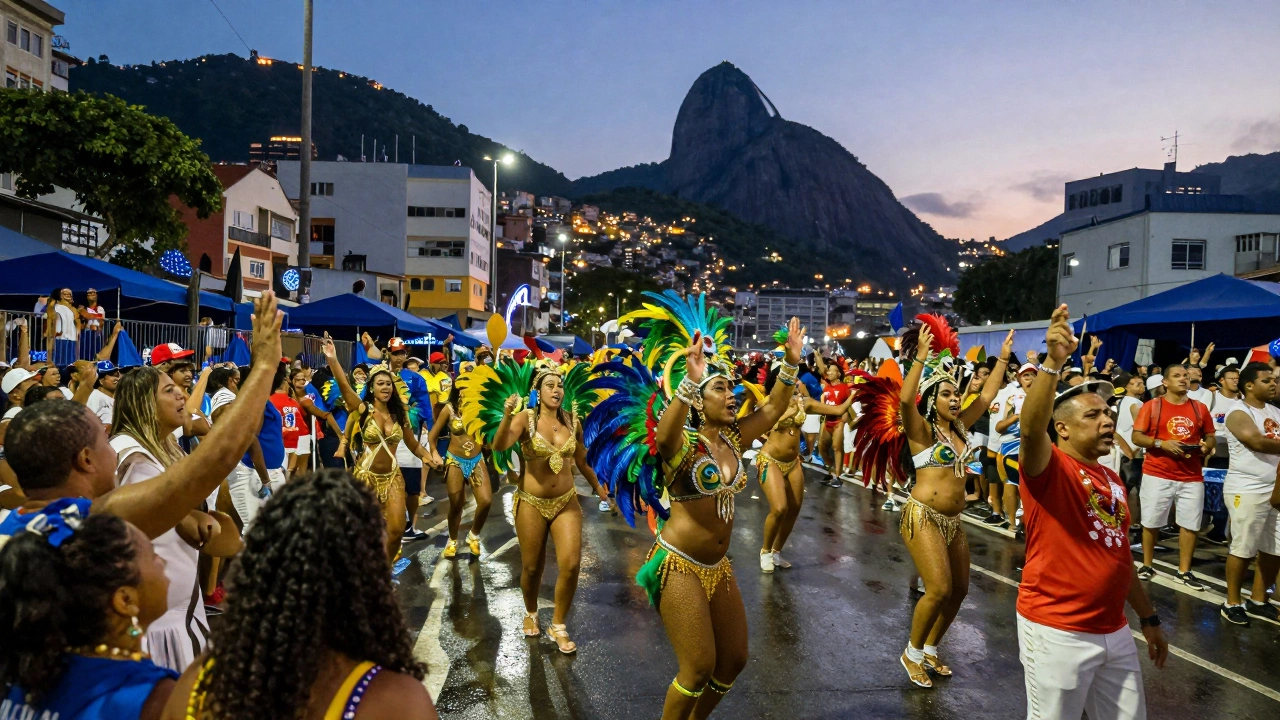
Even today, you can see the legacy in Brazil’s culture. The music, the food, the way people talk on the beach in Rio or in the favelas of São Paulo-it all carries the mark of Portuguese. Not because it was the best choice. But because it was the one that survived.
Why This Matters Beyond Language
Understanding why Brazilians speak Portuguese isn’t just about history class. It’s about how power, geography, and luck shape culture. Language doesn’t spread because it’s better. It spreads because people use it-because they have to. In Brazil, Portuguese became the glue holding together a nation made of many worlds.
That’s why, when you hear a Brazilian say obrigado, you’re not just hearing a word. You’re hearing centuries of trade, resistance, adaptation, and identity.
Why didn’t Brazil switch to Spanish after independence?
Brazil didn’t switch because Portuguese was already the language of government, law, education, and daily life. Changing it would’ve meant rewriting every official document, schoolbook, and legal code. There was no practical reason to do it-and no popular demand. The people spoke Portuguese. The elite spoke Portuguese. The military spoke Portuguese. Switching languages would’ve caused chaos, not unity.
Is Brazilian Portuguese the same as European Portuguese?
No. Brazilian Portuguese has different pronunciation, vocabulary, and even grammar rules. For example, Brazilians say você for "you," while Europeans use tu more often. Brazilians drop the "s" at the end of words more, and their rhythm is more musical. Some words are completely different: ônibus in Brazil vs. autocarro in Portugal. They understand each other, but it’s like American vs. British English-familiar, but distinct.
Did indigenous languages influence Brazilian Portuguese?
Yes, significantly. Hundreds of indigenous words became part of everyday Brazilian Portuguese. Names of animals like tamanduá (anteater), plants like mandioca (cassava), and even places like Paraná and Pará come from Tupi-Guarani. The way Brazilians use certain expressions, like adding -inho to make things sound cute, also has roots in indigenous grammar patterns. Portuguese didn’t replace native languages-it absorbed them.
Do Brazilians learn Spanish in school?
Yes, Spanish is taught in most Brazilian schools as a second language, especially since it’s the dominant language in neighboring countries. But it’s not mandatory everywhere, and many people never become fluent. Most Brazilians get by with basic phrases, especially near borders. Still, they don’t need to speak Spanish to get by at home, in business, or in sports-Portuguese handles everything.
Why do some people think Brazilians should speak Spanish?
It’s usually because people assume all of Latin America should be the same. But Latin America isn’t a single culture-it’s a collection of countries with different histories. Brazil’s colonial past was separate from Spain’s. Trying to force a linguistic uniformity ignores the real reasons why languages spread: not by logic, but by power, trade, and survival. Brazil’s language is a product of its own story, not a mistake.