
Physical Prime Estimator
Slide to see how your biological window for strength, recovery, and focus shifts as you age.
Primary Capability
Explosive / Fast Twitch
Peak PowerRecovery Speed
Rapid
Main Focus
Foundation & Volume
You've probably seen the gym veterans who look like they've been carved out of granite, or the 20-somethings who can bench press their own body weight without breaking a sweat. It makes you wonder: are you currently at your strongest, or is your best version still waiting in the wings? The truth is, your gym peak isn't a single date on a calendar, but a shifting target that depends on whether you care more about explosive speed, raw power, or long-term muscle endurance.
Quick Takeaways on Physical Peaks
- Raw Strength: Usually peaks between 25 and 35 for most people.
- Muscle Mass: Peak hypertrophy often hits in the early 30s with consistent training.
- Endurance: Aerobic capacity often reaches its zenith in the late 20s to mid-30s.
- Recovery: This is the first thing to decline, usually starting after age 30.
The Biology of Your Strength Peak
When we talk about a peak, we're really talking about the intersection of hormones, bone density, and neuromuscular efficiency. For most of us, Testosterone is the primary androgenic hormone responsible for muscle growth and bone density. In men, these levels generally peak in the late teens and early 20s, providing a massive biological window for rapid growth. However, just because your hormones are high at 19 doesn't mean you're at your strongest.
Strength is a skill. It takes years of Hypertrophy-the process of increasing muscle cell size-and nervous system adaptation. This is why most professional powerlifters don't hit their absolute heaviest lifts until their late 20s or early 30s. Your brain gets better at recruiting muscle fibers, and your tendons become thicker and more resilient. You aren't just building a bigger engine; you're upgrading the chassis to handle the power.
Breaking Down the Peak by Age Group
Your goals at 22 are wildly different from your goals at 45. Understanding where you stand helps you stop comparing yourself to the wrong people. If you're 40 and trying to recover like a 19-year-old, you're going to end up with an injury rather than a PR.
| Age Range | Primary Strength Type | Recovery Speed | Main Focus |
|---|---|---|---|
| 18-25 | Explosive/Fast Twitch | Rapid | Foundation & Volume |
| 26-35 | Maximal Strength/Power | Moderate | Peak Performance/PRs |
| 36-50 | Functional Strength | Slower | Maintenance & Mobility |
| 50+ | Stability/Endurance | Slow | Longevity & Bone Health |
The 30-Year-Old Wall: Myth or Reality?
There's a common fear that once you hit 30, it's all downhill. In reality, 30 is often where the "smart' strength begins. While you might lose a tiny bit of that effortless elasticity you had at 21, you've likely developed better form and a more disciplined approach to nutrition. Many people find they actually look better and feel stronger in their 30s because they've finally stopped ego-lifting and started training with intent.
The real change is in Cortisol, the body's primary stress hormone. As you age, your body becomes more sensitive to stress. A high-volume workout that you could bounce back from in 24 hours at age 22 might now require 48 to 72 hours of recovery. This isn't a decline in potential; it's a change in the recovery timeline. If you adjust your volume, you can still hit new peaks well into your 40s.
The Role of Muscle Memory and Neurological Adaptation
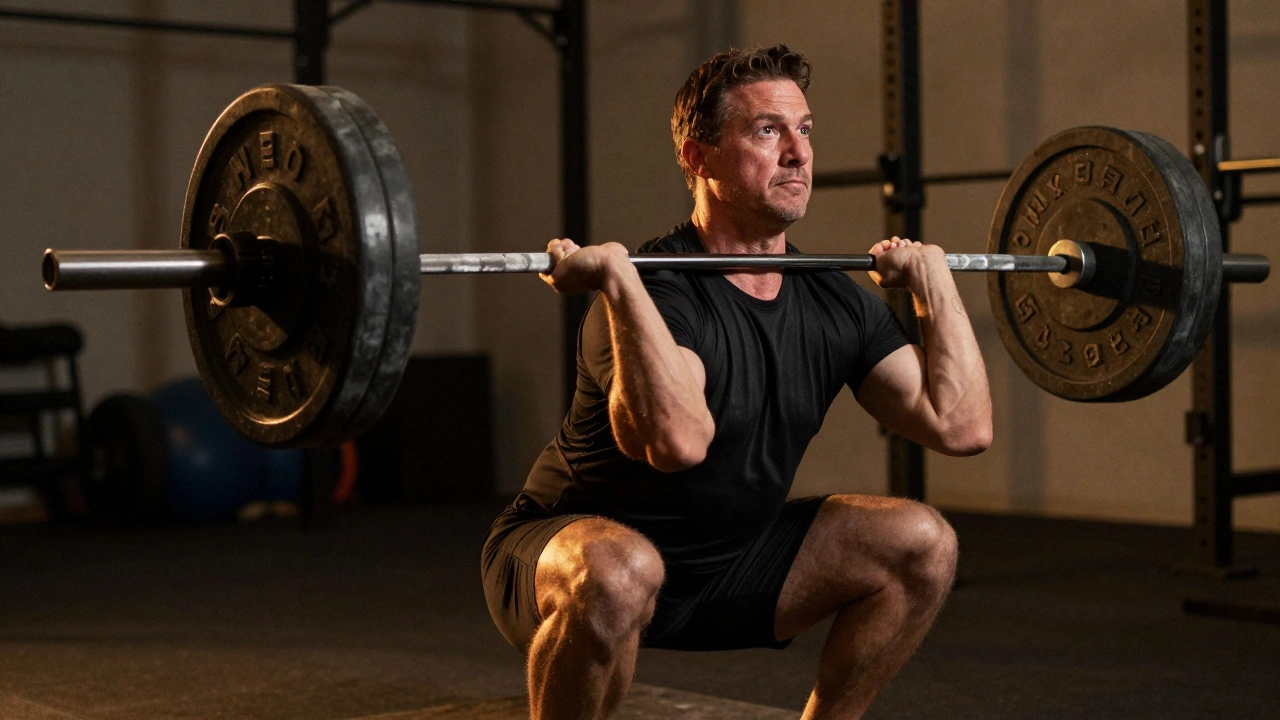
If you trained hard in your 20s but took a break, you have a secret weapon called Myonuclei. These are the nuclei in your muscle fibers that stay behind even after the muscle shrinks. When you return to the gym, your body doesn't have to build new nuclei from scratch; it just refills the existing ones. This is why some people "peak" in their 40s-they are combining the muscle memory of their youth with the financial stability to afford a better diet and a personal trainer.
Furthermore, Neuromuscular Efficiency is the ability of your brain to send a signal to your muscles to contract more forcefully. This improves with practice. A 35-year-old who has squatted for a decade will often outperform a 22-year-old with more raw muscle mass simply because their nervous system is more efficient at the movement.
Managing the Decline: Sarcopenia and How to Fight It
Eventually, biology wins. Starting around age 30 to 40, most humans experience Sarcopenia, the gradual loss of skeletal muscle mass and strength associated with aging. If you do nothing, you lose muscle every year. But here is the catch: resistance training can almost entirely offset this process.
To keep your peak plateaued for as long as possible, you need to shift your focus toward protein synthesis. As you age, you develop "anabolic resistance," meaning your muscles need more protein to trigger the same growth response they did when you were younger. Increasing your intake of leucine-rich proteins and focusing on compound movements like deadlifts and overhead presses ensures that your bones remain dense and your muscles remain functional.

Customizing Your Training for Your Current Age
Stop trying to follow a program designed for a 19-year-old athlete if you're a 38-year-old accountant. Your "peak" is relative to your lifestyle. Here is how to pivot your strategy based on where you are in the timeline:
- In your 20s: Push the volume. Your recovery is a superpower. This is the time to build a massive base of strength and lean mass. Focus on linear progression and increasing weight every week.
- In your 30s: Prioritize quality over quantity. Move toward periodization-cycling between heavy weeks and light weeks. Incorporate more mobility work to protect your joints from the wear and tear of your 20s.
- In your 40s and beyond: Focus on the "Minimum Effective Dose." Find the least amount of work required to maintain your muscle and strength. Prioritize sleep and hydration, as these become the primary drivers of your performance.
Can I actually get stronger after 40?
Absolutely. While the rate of gain is slower than it is for a teenager, older adults can still build significant muscle and strength. The key is emphasizing protein intake and focusing on progressive overload. Many "master's" athletes hit their all-time strength peaks in their 40s because they have better technique and more consistency.
Why do I feel weaker when I'm stressed or tired?
Strength isn't just about muscle; it's about the central nervous system (CNS). When you're stressed or sleep-deprived, your CNS cannot fire signals to your muscles as effectively. This is why your "gym peak" fluctuates daily. Recovery is just as important as the workout itself.
Does cardio kill my strength peak?
Not unless you're training for a marathon. Low-to-moderate intensity steady-state cardio can actually improve strength by increasing blood flow to muscles and speeding up recovery between sets. The "interference effect" only happens at extreme levels of endurance training.
Is it possible to peak in flexibility instead of strength?
Yes. Flexibility and mobility are skills. While joint laxity is often higher in youth, many people reach their peak flexibility in their 30s or 40s through dedicated practices like yoga or Pilates, regardless of their raw strength levels.
What is the most important nutrient for maintaining a peak age?
Protein is the most critical. Specifically, aiming for 1.6 to 2.2 grams of protein per kilogram of body weight helps combat sarcopenia and supports muscle repair as you age. Omega-3 fatty acids are also vital for keeping joint inflammation low.
Next Steps for Every Stage
If you're feeling stalled, don't assume you've passed your peak. Most people plateau because they stop changing their stimulus. If you've been doing the same three sets of ten for three years, you aren't fighting age-you're fighting boredom.
Try shifting your rep ranges. If you always go heavy, spend a month focusing on time-under-tension. If you've been doing high reps, try hitting some heavy triples. Regardless of your age, the body only adapts when it is forced to. Keep the challenge high, the recovery intentional, and you'll find that your "peak" is a plateau you can stay on for a long time.