Sports Equipment Material Explorer
Click on a material category below to reveal detailed insights about its composition, primary uses, and performance characteristics based on current industry standards.
Carbon Fiber
Titanium
Polymers
Foams
Textiles
Leather/Synth
Select a material above to view details.
You’ve probably wondered why a tennis racket costs $300 while another looks identical but costs $50. Or why your running shoes feel like clouds one day and bricks the next. The answer isn’t just branding or marketing hype-it’s chemistry. Specifically, it’s about what those items are made of. Sports equipment is no longer just wood, leather, and rubber. It’s a complex mix of advanced polymers, metals, and composites designed to do very specific jobs: store energy, reduce weight, or absorb shock.
If you’re buying gear for yourself or your team, knowing the material helps you predict performance and lifespan. You don’t need a PhD in materials science to understand this. You just need to know which substances do what. Here is a breakdown of the specific materials dominating modern sports gear, from the court to the field.
The Rise of Carbon Fiber Composites
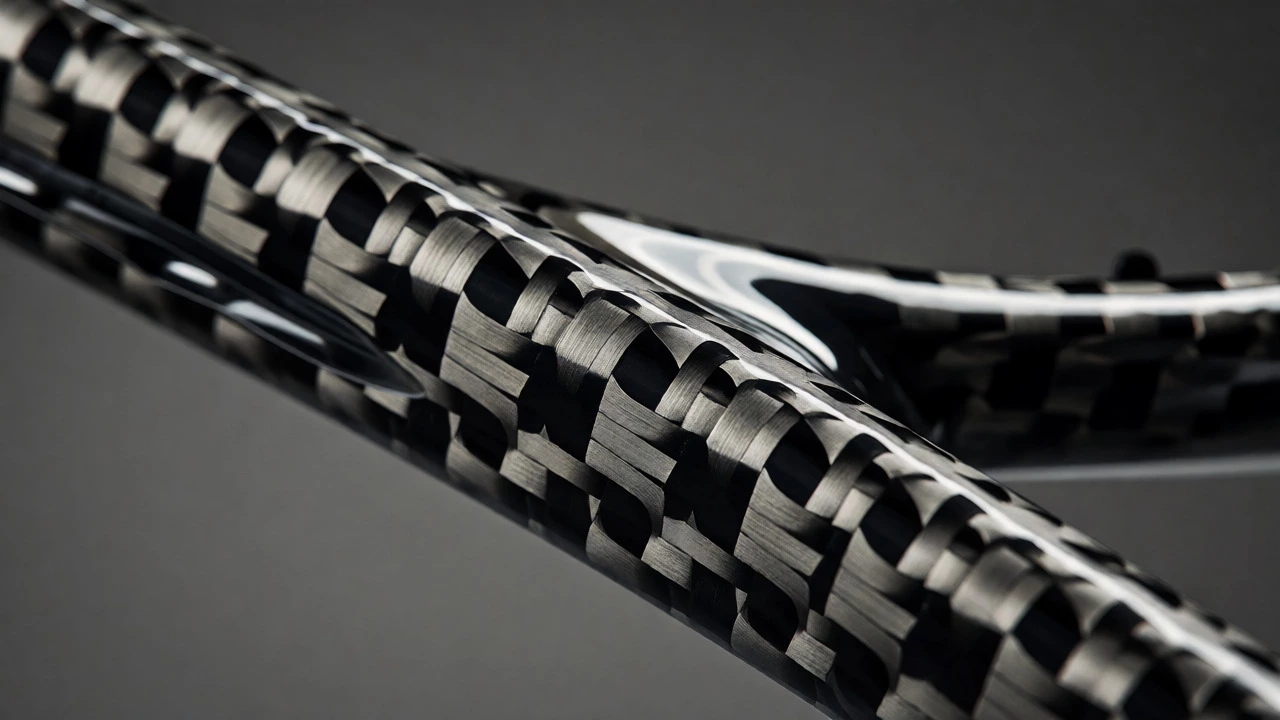
If there is one material that changed sports more than any other in the last 30 years, it’s carbon fiber. This isn't just "plastic"; it’s a composite material where thin strands of carbon atoms are woven together and hardened with resin. The result? Incredible stiffness-to-weight ratio.
Think about cycling. Aluminum frames were the gold standard for decades. But carbon fiber allows manufacturers to shape tubes aerodynamically and dampen road vibrations without adding mass. In tennis rackets, carbon fiber replaces the heavy graphite or aluminum of the past. It stores energy when you swing and releases it instantly upon impact, giving players more power with less effort.
But it’s not magic. Carbon fiber is brittle under certain stresses. If you slam a carbon-framed bike into a curb, it might crack rather than dent like aluminum would. That’s why high-end gear often uses hybrid constructions-carbon for stiffness, reinforced with Kevlar or fiberglass at stress points to prevent shattering.
Metals: Titanium, Steel, and Aluminum Alloys
Metal still matters, especially where durability and heat resistance are key. Titanium is the premium choice here. It’s lighter than steel, stronger than aluminum, and incredibly resistant to corrosion. You’ll find it in high-end golf clubs (drivers and irons), lacrosse heads, and some premium bicycle components.
Why pay extra for titanium? Because it has a unique property called "spring back." When you hit a golf ball with a titanium face, the metal flexes slightly and then snaps back faster than steel could, transferring more energy to the ball. This translates directly to distance.
On the other end of the spectrum is stainless steel. It’s heavy, cheap, and virtually indestructible. That’s why it dominates soccer goalposts, basketball hoops, and outdoor gym equipment. You aren’t trying to optimize swing weight with a goalpost; you’re trying to make sure it doesn’t rust away after two rainy seasons.
Aluminum alloys sit in the middle. They are lightweight, affordable, and easy to machine. Most mid-range baseball bats, hockey sticks, and entry-level bicycles use aluminum. It’s a reliable workhorse, even if it doesn’t offer the elite performance of carbon or titanium.
Polymers and Plastics: The Invisible Heroes
Most people ignore plastics, but they are everywhere in sports gear. We aren’t talking about cheap toy plastic. We mean engineered thermoplastics like polycarbonate, ABS, and polyurethane.
Polycarbonate is the clear shield on your football helmet visor or the lens in your safety glasses. It is exceptionally tough against impact but can scratch easily, so coatings are essential.
ABS (Acrylonitrile Butadiene Styrene) is rigid and tough. It’s used in the hard shells of ski boots, snowboard bindings, and protective shin guards. It protects your bones by distributing force over a wider area rather than letting it concentrate on one spot.
Polyurethane is versatile. It can be soft and flexible (like the grip tape on a skateboard) or hard and durable (like the wheels on inline skates). Its ability to resist abrasion makes it perfect for surfaces that constantly rub against concrete or asphalt.
Foams and Cushioning Systems
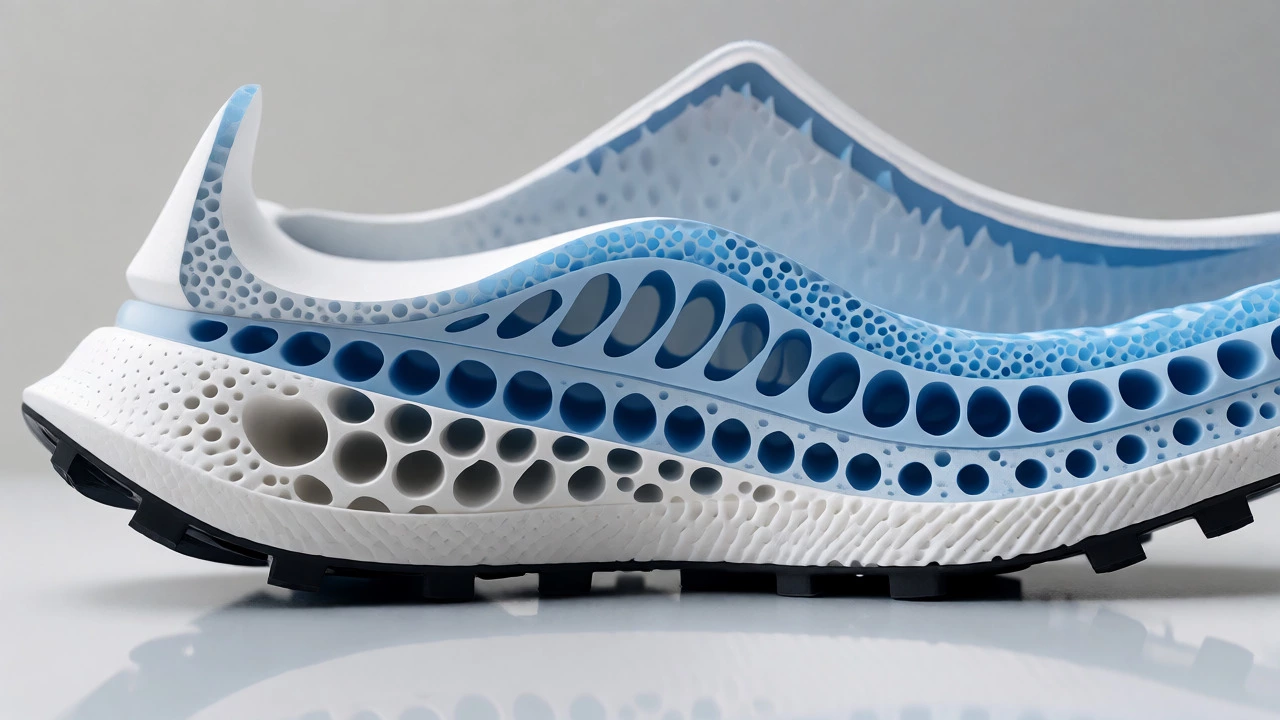
If you run, jump, or skate, you rely on foams. The industry has moved far beyond simple sponge rubber. Today, we use specialized foams like EVA (Ethylene-Vinyl Acetate) and TPU (Thermoplastic Polyurethane).
EVA is the standard for midsoles in running shoes. It’s light, provides decent cushioning, and is cost-effective. However, EVA compresses over time. After 300-500 miles, it loses its bounce, which is why runners replace shoes regularly.
Newer materials like TPU-based foams (often branded as Boost or similar names by major brands) are more resilient. They return more energy with each step and degrade slower than traditional EVA. This is why expensive running shoes often feel "bouncier" than budget ones-they use advanced polymer foams that maintain their structure longer.
For protective gear, like motorcycle helmets or American football pads, EPS (Expanded Polystyrene) is king. Think of it as dense styrofoam. It crushes permanently upon impact, absorbing the kinetic energy of a crash. Once crushed, it must be replaced because it won’t spring back. This is critical for safety standards in contact sports.
Textiles: From Cotton to Synthetic Performance Fabrics
Gone are the days of heavy cotton jerseys that soak up sweat and weigh you down. Modern sportswear relies on synthetic fibers like polyester, nylon, and spandex.
Polyester is hydrophobic, meaning it repels water. Instead of absorbing sweat, it wicks moisture away from your skin to the fabric’s surface, where it evaporates quickly. This keeps you cooler and prevents chafing.
Nylon adds strength and abrasion resistance. You’ll see it blended with polyester in hiking pants, climbing shorts, and swimwear. Spandex (also known as Lycra or elastane) provides stretch. Without it, tight-fitting compression gear or athletic leggings would restrict movement rather than support it.
Some high-performance fabrics now incorporate ceramic particles or phase-change materials to regulate temperature, but these are still niche compared to the ubiquitous polyester-spandex blends found in most gyms today.

Leather vs. Synthetic Leather in Ball Sports
Balls are fascinating case studies in material evolution. For centuries, balls were made from pig bladders covered in cowhide. Today, it’s mostly synthetic.
Natural leather offers superior feel and control, particularly in wet conditions. Soccer players who play in muddy fields often prefer full-grain leather balls because they remain softer and easier to kick. However, natural leather absorbs water, making the ball heavier and unpredictable unless treated heavily.
Synthetic leather (usually polyurethane or PVC) is the standard for professional matches now. It is waterproof, consistent in shape, and durable. FIFA-approved match balls are almost exclusively synthetic because they provide uniform flight characteristics regardless of weather.
Inside the ball, the bladder matters too. Latex bladders offer better air retention and softer touch but degrade faster. Butyl bladders hold air longer and are cheaper but feel harder. High-end basketballs and soccer balls often use latex for performance, accepting the trade-off of needing more frequent inflation.
| Material | Primary Use Case | Key Advantage | Main Drawback |
|---|---|---|---|
| Carbon Fiber | Tennis rackets, bikes, golf shafts | High stiffness, low weight | Brittle, expensive to repair |
| Titanium Alloy | Golf clubs, lacrosse heads | Lightweight, strong, corrosion-resistant | Very high cost |
| EVA Foam | Running shoe midsoles, yoga mats | Lightweight, good cushioning | Compresses over time |
| Polyester | Jerseys, shorts, socks | Moisture-wicking, durable | Can retain odors if not treated |
| Synthetic Leather | Soccer balls, basketballs, gloves | Waterproof, consistent shape | Less natural feel than real hide |
How to Choose Based on Material
So, how does this help you buy better gear? Start by asking what problem you are solving.
- Do you need speed? Look for carbon fiber or titanium. These materials minimize weight and maximize energy transfer.
- Do you need protection? Prioritize EPS foam for headgear and polycarbonate for face shields. Check for certification standards like ASTM or CE.
- Do you need comfort over long distances? Focus on the foam technology in footwear. TPU-based foams generally outlast EVA.
- Do you play in the rain? Avoid natural leather balls and opt for synthetic polyurethane covers. For clothing, ensure your polyester blend has a DWR (Durable Water Repellent) coating if needed.
Remember, material quality often correlates with price, but not always. A well-made aluminum bat can outperform a poorly constructed carbon one. Always check reviews for durability issues specific to the material type.
Why is carbon fiber so expensive for sports equipment?
Carbon fiber is costly due to the manufacturing process. Creating the raw carbon filaments requires high temperatures and precise control. Then, weaving them into sheets and curing them with resin in molds is labor-intensive and slow compared to stamping aluminum or molding plastic. The material itself is also expensive per kilogram.
Is synthetic leather worse than real leather for soccer balls?
Not necessarily. While real leather feels softer initially, it absorbs water, becoming heavy and irregular. Synthetic leather (usually polyurethane) is waterproof and maintains consistent shape and weight in all weather conditions. Professional leagues prefer synthetic for fairness and reliability, though some amateur players still prefer the tactile feedback of natural hide.
How long does EVA foam last in running shoes?
Typically, EVA foam begins to lose its resilience after 300 to 500 miles of running. Unlike new TPU-based foams, EVA does not recover its original shape fully after repeated compression. You will notice the shoes feeling flatter and providing less shock absorption, increasing injury risk.
Why do helmets use EPS foam instead of memory foam?
EPS (Expanded Polystyrene) is designed for single-impact events. It crushes permanently to absorb kinetic energy, protecting your brain from sudden deceleration. Memory foam springs back, which is great for comfort but poor for dissipating the massive energy of a crash. Once an EPS helmet takes a hard hit, it must be replaced because the foam cells are broken.
Are titanium golf clubs really better than steel?
Titanium allows for larger clubheads with thinner faces. This expands the "sweet spot," making off-center hits less punishing. It is also lighter, allowing designers to redistribute weight for higher launch angles. Steel is denser and provides more feedback, which some skilled players prefer for control, but titanium generally offers more forgiveness and distance for average golfers.