Deadlift Progression Calculator
Your Deadlift Progression
Start light - even 20kg works for beginners
Never exceed your current capacity - safety first
Weekly Progression Plan
Weekly Weight Targets
Key Tips
- Form First Correct
- Progression Rate 2.5-5kg weekly
- Heavy vs Moderate Alternate weeks
Enter your current and target weights to see your personalized progression plan
Remember: Form > Weight
There’s a myth floating around gyms that you need ten different machines, thirty exercises, and two hours a day to get a full-body workout. But what if one movement could hit every major muscle group - arms, legs, core, back, shoulders - all at once? It’s not magic. It’s physics. And it’s been used by soldiers, firefighters, and elite athletes for decades.
The Deadlift Isn’t Just for Strongmen
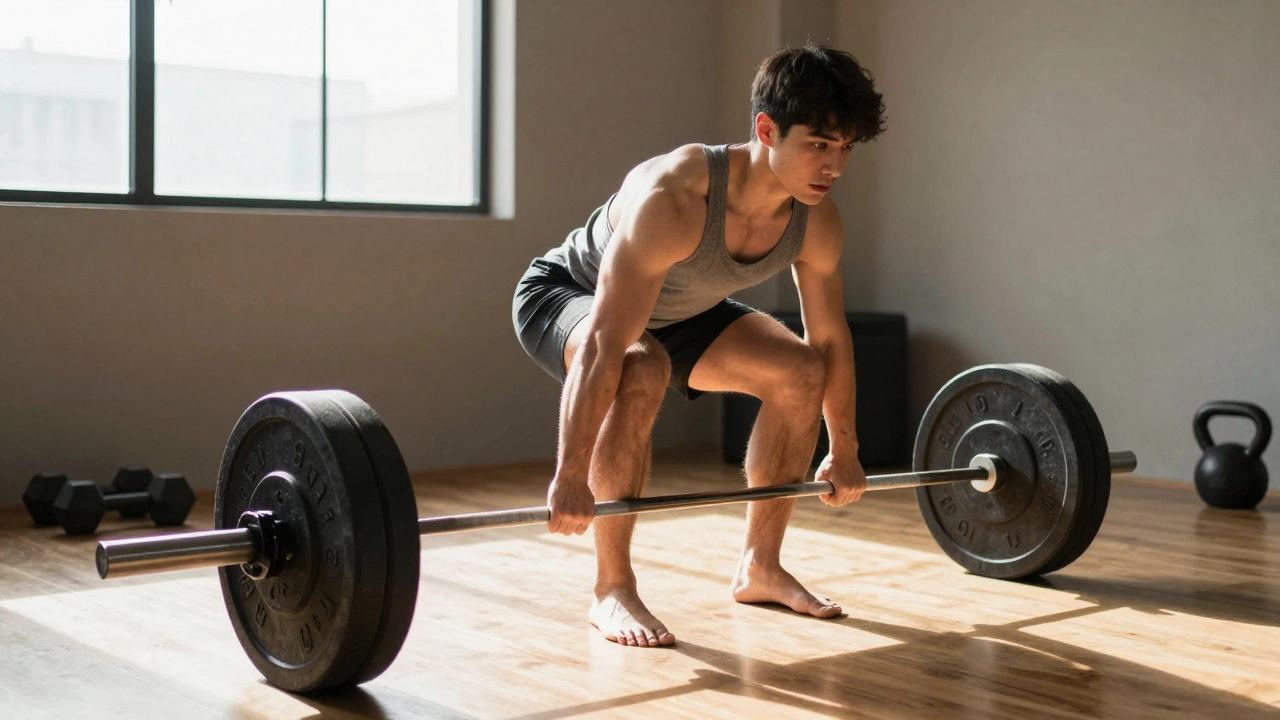
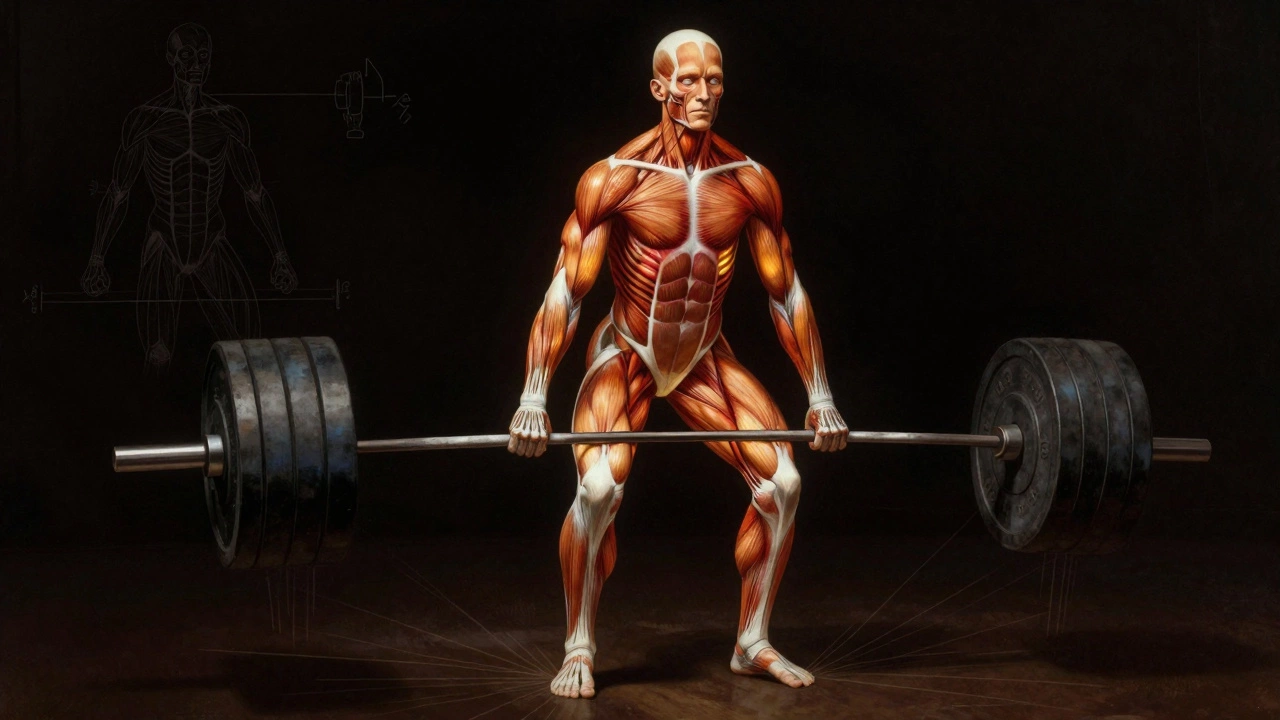
The deadlift is the closest thing we have to a universal full-body exercise. Not because it’s flashy. Not because it’s trendy. But because it forces your entire body to work together under load. When you pull a barbell off the floor, you’re not just lifting with your back. Your quads fire to extend your knees. Your glutes explode to drive your hips forward. Your lats lock your shoulders back. Your core tightens like a steel band to keep your spine stable. Your grip holds on - and if it fails, the weight drops. That’s not just strength. That’s integrated function.
Studies from the Journal of Strength and Conditioning Research show that the conventional deadlift activates more muscle groups than any other barbell lift, including the squat and bench press. It’s not just about the posterior chain. Your forearms, traps, rhomboids, hamstrings, calves, and even your neck stabilize during the lift. You’re not training muscles in isolation. You’re training your body to move as one unit.
Why Other Exercises Fall Short
People often ask: “What about burpees?” or “Aren’t kettlebell swings full-body?” Yes, they are - but only if you do them right. And most people don’t. Burpees are cardio with a side of strength. Kettlebell swings are powerful, but they’re primarily hip-dominant. They don’t challenge your upper back, grip, or spinal stability the same way a deadlift does.
Think of it this way: a squat works your legs and core. A pull-up works your back and arms. A push-up hits chest and shoulders. But none of them force your body to coordinate from toe to fingertip under heavy load. The deadlift does. It’s the only lift where you start with zero tension and build full-body tension before moving the weight. That’s why it’s used in military fitness tests and CrossFit competitions.
How to Do It Right - No Gym Required
You don’t need a fancy barbell or a 24/7 gym membership. A pair of dumbbells, a kettlebell, or even a heavy backpack filled with books will work. Here’s the simple version:
- Stand with feet hip-width apart, toes slightly turned out.
- Hinge at your hips, push your butt back, and bend your knees just enough to reach the weight.
- Keep your back flat. Chest up. Shoulders over the bar.
- Drive through your heels. Stand up by squeezing your glutes - don’t yank with your back.
- Lower the weight by pushing your hips back again. Let the bar glide down your shins.
Start light. Even 20 kilograms is enough to feel the burn. Focus on control. If your lower back rounds at any point, you’re too heavy. If you feel it in your arms, you’re pulling with your biceps - that’s wrong. The power comes from your legs and hips. Your arms are just hooks.
The Real Benefit Isn’t Muscle - It’s Movement
Most people train to look good. The deadlift trains you to live better. Picking up groceries. Lifting a child. Moving furniture. Getting out of a low chair. These are all deadlift variations. The exercise doesn’t just build strength. It builds resilience. It teaches your body how to generate force safely, which reduces injury risk in daily life.
A 2023 study tracking adults over 50 found that those who did deadlifts twice a week improved their ability to rise from a chair by 42% compared to those who only did walking or light resistance. That’s not just fitness. That’s independence.
How Often Should You Do It?
Once a week is enough for most people. Two times if you’re recovering from inactivity or building strength. But don’t go heavy every session. Alternate between heavy (3 sets of 5 reps) and moderate (3 sets of 8-10 reps) weeks. Use lighter loads to focus on perfect form. Your body doesn’t need to be sore to get stronger. It needs to be consistent.
Pair it with a simple routine: deadlift on Monday, walk 30 minutes on Tuesday, rest Wednesday, do mobility work Thursday, deadlift again Friday. That’s it. No need for machines. No need for supplements. Just movement.

What If You Can’t Do a Deadlift?
Not everyone can hinge properly. Not everyone has access to equipment. That’s okay. The Romanian deadlift (RDL) with dumbbells is a great alternative. Or try the trap bar deadlift - it’s easier on the lower back and more forgiving for beginners.
If you’re rehabbing an injury or just starting out, use a resistance band anchored to a sturdy post. Loop it around your feet, stand tall, and pull the band up by driving your hips forward. It won’t replace the barbell, but it teaches the hip hinge - the foundation of every good full-body movement.
The Bottom Line
There’s no single exercise that does everything. But if you had to pick one, the deadlift is the closest thing we’ve got. It’s not about lifting the heaviest weight. It’s about moving your body with control, power, and purpose. It’s the exercise that turns casual gym-goers into strong, capable people.
Start small. Stay consistent. Don’t chase the mirror. Chase function. Because when you can lift your own weight - and more - off the floor, you’re not just working out. You’re preparing for life.
Is the deadlift the only full-body exercise?
No, but it’s the most efficient. Other exercises like kettlebell swings, clean and jerks, and burpees also engage multiple muscle groups, but they don’t combine heavy loading, full-range movement, and full-body tension like the deadlift does. For building functional strength across the entire body, it’s unmatched.
Can I do deadlifts at home without a barbell?
Yes. Use dumbbells, kettlebells, or even a heavy backpack. The key is maintaining the hip hinge pattern. Place two dumbbells on the floor, stand between them, and lift them as you would a barbell. Keep your back flat and drive through your heels. It’s not ideal for heavy loads, but it’s perfect for learning the movement.
Why does my lower back hurt when I deadlift?
It’s usually because you’re rounding your spine or pulling with your back instead of your hips. The deadlift isn’t a back exercise - it’s a hip-hinge movement. Your back should stay neutral. If you feel pain, reduce the weight and focus on form. If pain continues, consult a physiotherapist. Never push through sharp pain.
How long does it take to see results from deadlifts?
You’ll notice improved posture and strength within 3-4 weeks if you do it twice a week. Muscle growth takes longer - around 8-12 weeks with consistent training and proper nutrition. But the real win? You’ll start lifting heavier groceries, climbing stairs easier, and feeling more confident moving your body.
Should beginners do deadlifts?
Absolutely - but start light. Beginners benefit the most from learning proper movement patterns. Deadlifts teach balance, coordination, and body awareness. Use bodyweight hip hinges first, then add light dumbbells. Don’t rush to heavy weights. Form is everything.