
Sport Qualification Checker
Is this activity a true sport?
Check all 5 non-negotiable elements of sports using the criteria below
Physical Exertion
Does it challenge the body with measurable physical effort?
Clear Rules
Does it have published, consistent, and enforceable rules?
Competition
Does it have defined outcomes with clear winners/losers?
Skill Development
Does it require practice to improve skills?
Official Recognition
Is it recognized by a governing body?
Results
Enter an activity name and check all criteria to see results
Think about your favorite sport. Maybe it’s soccer, tennis, or even parkour. Now ask yourself: what actually makes it a sport? Is it the gear? The competition? The sweat? The answer isn’t as simple as you think. Many people assume if it involves physical effort and a ball, it’s a sport. But that’s not enough. Not even close.
Let’s cut through the noise. Not every activity with rules and movement qualifies as a sport. There’s a clear line-and it’s drawn by five non-negotiable elements. Skip even one, and you’re not playing a sport. You’re playing a game, a hobby, or a performance. But not a sport.
1. Physical Exertion That Challenges the Body
Let’s start with the most obvious: movement. But not just any movement. A sport must demand real, measurable physical effort. Think heart rate spikes, muscle fatigue, endurance, and coordination under stress. You can’t just wave a paddle and call it a sport. You need to push your body past comfort.
Compare chess to tennis. Chess challenges the mind. Tennis challenges the body and the mind. That’s why chess is an intellectual competition, not a sport. It doesn’t meet the physical threshold. Meanwhile, badminton? Players cover over 10 kilometers in a single match. Their heart rates hit 85-90% of max. That’s not a stroll-it’s a workout with rules.
Even esports, despite their popularity, fail this test. No matter how intense the hand-eye coordination, the body isn’t being taxed. No sweat, no strain, no oxygen debt. That’s why organizations like the IOC still don’t recognize esports as a sport. It’s not about skill-it’s about physical demand.
2. A Clear, Consistent Set of Rules
Rules aren’t just there to keep things fair. They’re the backbone of structure. Without them, you can’t measure progress, judge outcomes, or compare performances. A sport needs rules that are:
- Published and accessible
- Applied uniformly
- Enforceable by neutral parties
Take dodgeball. It’s fun. But without standardized rules-court size, ball type, elimination method, number of players-it’s just a playground game. The World Dodgeball Federation changed that. They set global standards: 60cm balls, 18x9m courts, 3-out elimination. Now it’s a recognized sport in over 50 countries.
Compare that to pickup basketball. Same sport, right? But without official referees, consistent fouls, or standardized timing? It’s a social activity. The moment you step onto a court with a referee, a scoreboard, and a rulebook? You’ve crossed into sport territory.
3. Competition With a Defined Outcome
Here’s the deal: a sport must have a winner. Not a ‘good time,’ not a ‘personal best,’ not a ‘fun experience.’ A sport must produce a clear, objective result. Someone wins. Someone loses. Or at least, someone finishes first.
Running a 5K by yourself? That’s fitness. Running a 5K against 20 others with a clock and a finish line? That’s a sport. The difference is competition. It’s not about how hard you tried-it’s about how you ranked.
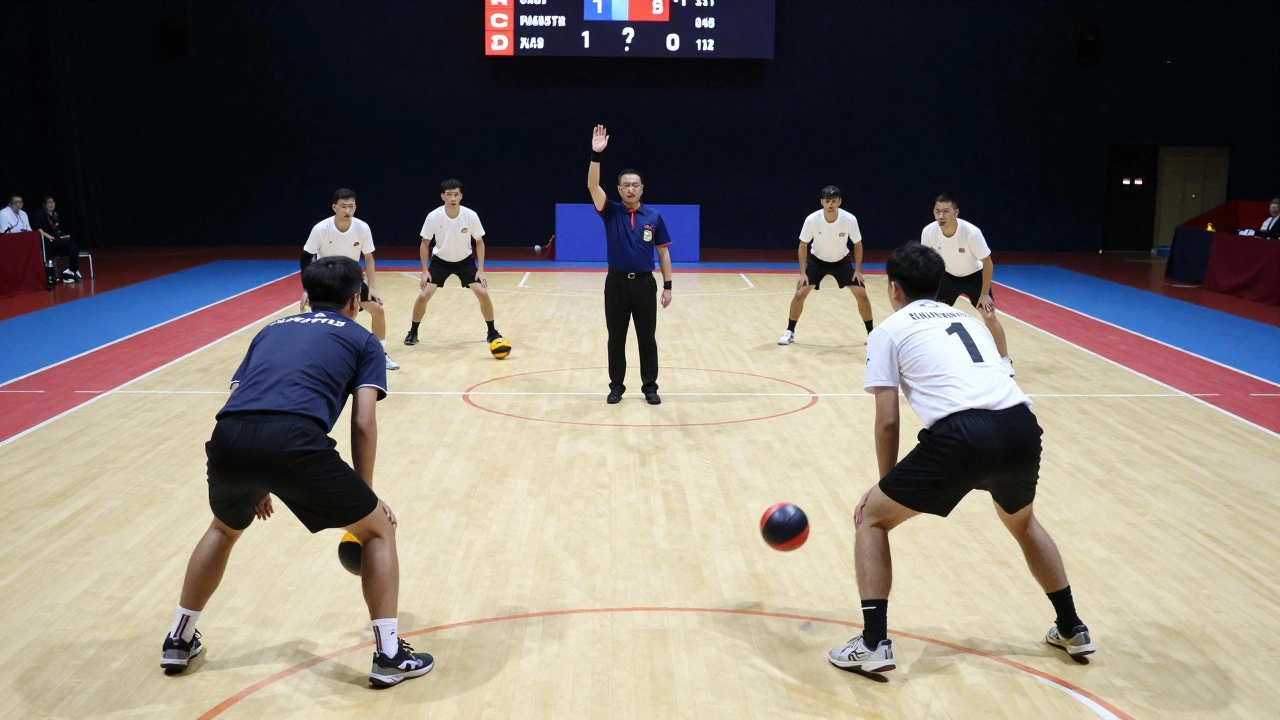
Even in solo sports like gymnastics or diving, there’s a scoring system. Judges assign points. The highest score wins. No ambiguity. No ‘you did great’ consolation prizes. That’s why figure skating is a sport and ice dancing at a holiday party isn’t.
4. Skill Development Through Practice
Can you learn to be better? If the answer is no, it’s not a sport. A sport must have techniques, strategies, and forms that improve with repetition. You don’t just show up and win. You train.
Archery is a perfect example. You can’t just pull a bow and hit the target. You need stance, breath control, anchor points, release timing. Years of practice. Same with golf swings, tennis serves, or even rock climbing grips. These aren’t luck-based. They’re refined through thousands of repetitions.
That’s why darts is a sport and beer pong isn’t. Darts has biomechanics, muscle memory, and competitive leagues. Beer pong? It’s about luck, laughter, and how well you can throw a cup. No skill ladder. No measurable progression. No training regimen.
5. Recognition by an Official Governing Body
This one’s often overlooked. But here’s the truth: if no organization recognizes it, it’s not officially a sport. It doesn’t matter how many people play it. If there’s no governing body, there’s no standardization, no international competition, no pathway to elite performance.
Consider ultimate frisbee. In the 1970s, it was just a college pastime. Then the World Flying Disc Federation formed. They created rules, sanctioned tournaments, and got it recognized by the International Olympic Committee as a potential Olympic sport. Now, it’s played in 80+ countries. That’s how you go from backyard game to real sport.
Meanwhile, petanque, kabaddi, and sepak takraw-all have international federations, world championships, and Olympic recognition bids. They’re sports. But if you invented a new game in your backyard with homemade rules and no governing body? You’ve got a fun idea. Not a sport.
What About Equipment?
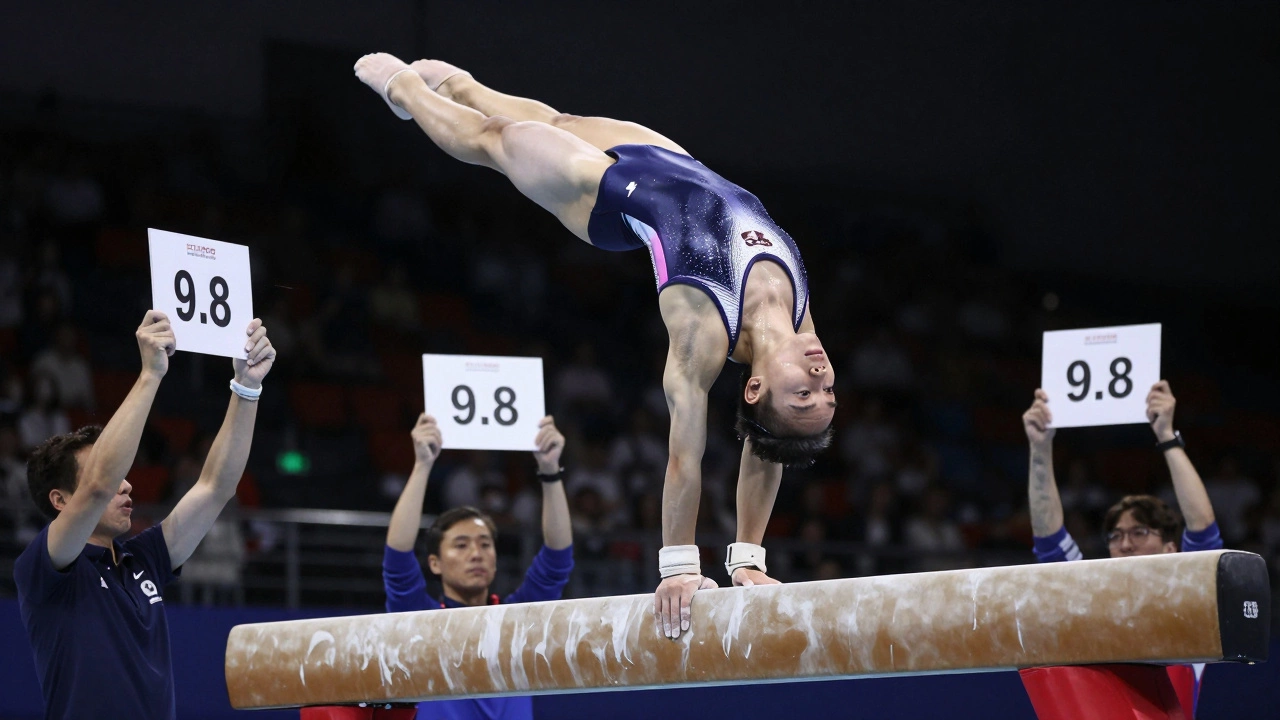
You asked about sports equipment. And yes, gear matters-but not because it defines a sport. It’s a tool, not a requirement. You can play soccer barefoot. You can run in flip-flops (though you shouldn’t). Equipment enhances performance, safety, and fairness. But it doesn’t create a sport.
Take fencing. Without a mask, jacket, and electric weapon, you’re not fencing. You’re swinging swords. The equipment is necessary for safety and scoring. But if you took away the rules, the competition, and the governing body? Even with all the gear, it’s just a costume party.
Same with tennis. A racket, balls, and net are essential for the game to function. But without a rulebook, a scoring system, and the ITF? You’ve got a backyard activity. Not a sport.
So equipment? It’s a support system. Not the foundation.
What Doesn’t Qualify?
Let’s clear up some common confusion:
- Chess: No physical exertion. Not a sport.
- Esports: High skill, zero physical demand. Not a sport.
- Dance sports: If judged like figure skating (e.g., ballroom), then yes-because they have rules, scoring, and federations.
- Yoga: Physical, but no competition or winner. It’s fitness, not sport.
- Parkour: Physical, skill-based, and has an international federation (World Freerunning & Parkour Federation). So yes-it’s a sport.
The line isn’t about how exciting or popular something is. It’s about structure. If it checks all five boxes, it’s a sport. If it misses one? It’s something else.
Final Thought: It’s Not About the Ball
There’s no magic checklist with ‘ball,’ ‘net,’ or ‘team.’ You can have a sport with no ball (fencing, rock climbing, rowing). You can have a ball with no sport (kickball on the sidewalk). The difference is in the framework: physical challenge, clear rules, competition, skill development, and official recognition.
Next time someone says, ‘Is this a sport?’ ask them: does it make you sweat? Does it have rules everyone agrees on? Is there a winner? Can you get better at it? Is there an organization behind it?
If the answer is yes to all five-you’re looking at a real sport. If not? You’re just having fun. And that’s okay too. But don’t call it a sport.
Is chess considered a sport?
No, chess is not considered a sport because it lacks physical exertion. While it requires intense mental skill and strategy, it doesn’t challenge the body in the way sports do-no increased heart rate, no muscle fatigue, no physical endurance. Organizations like the International Olympic Committee don’t classify it as a sport, though it’s recognized as a mind sport by some federations.
Can a sport exist without equipment?
Yes, absolutely. Many sports don’t require gear beyond clothing. Running, sprinting, wrestling, and gymnastics can all be practiced with no equipment at all. Equipment improves safety and performance, but it’s not what defines a sport. What matters is the physical challenge, rules, competition, skill development, and official recognition.
Why isn’t video gaming a sport?
Esports lacks physical exertion. While players show incredible hand-eye coordination and reaction speed, their bodies aren’t pushed beyond normal resting levels. No cardiovascular strain, no muscle fatigue, no endurance demands. That’s why major sports organizations don’t classify esports as a sport. It’s a competitive activity, but not a physical one.
Does a sport need to be in the Olympics?
No. Many recognized sports are never in the Olympics-like ultimate frisbee, kabaddi, or sepak takraw. Olympic inclusion is political and logistical, not a definition of sport. What matters is whether a sport has a global governing body, standardized rules, international competition, and official recognition from bodies like the Global Association of International Sports Federations (GAISF).
Is yoga a sport?
No, yoga isn’t a sport. While it demands physical skill and discipline, it lacks competition and a defined winner. There’s no scoring system, no official tournament structure, and no governing body that declares champions. It’s a fitness and wellness practice. Even competitive yoga events are rare and not widely recognized as sport-level competitions.
So if you’re wondering what makes a sport real-it’s not the gear. It’s the structure. The sweat. The rules. The competition. The years of practice. And the organization that says: yes, this counts.