Scrum-Half Demand Calculator
Input Your Scrum-Half Stats
Your Scrum-Half Demand Analysis
Physical Pressure
Professional average: 9.8 km distance
Mental Pressure
Professional average: 40+ passes
Impact Pressure
Professional average: 12+ tackles
Scrum-Half Pressure Index
In professional rugby, scrum-halves face 2.3x more decision pressure than other positions. This tool shows how your stats compare to the physical demands that lead to the highest concussion rates per minute played.
Remember: Elite scrum-halves like Aaron Smith cover 9.8 km per game while facing 14+ tackles. This position demands not just speed, but the ability to read defenses in less than one second and absorb impacts from players 20kg heavier.
Ask any rugby player what the toughest job on the field is, and you’ll get a dozen different answers. Some say it’s the lock, towering in the scrum and jumping in the lineout. Others swear by the scrum-half, the guy who’s always in the thick of it, feeding the ball, making split-second decisions, and getting tackled every five seconds. Then there’s the fly-half-the brain of the team-expected to kick, pass, run, and read the game like a chess master while under constant pressure. But if you’ve watched enough top-level rugby, especially in the Rugby Championship or Six Nations, there’s one position that consistently breaks players physically and mentally: the scrum-half.
Why the Scrum-Half? It’s Not Just About Passing
The scrum-half wears number 9. They’re the link between the forwards and the backs. Sounds simple? It’s not. In a single game, a scrum-half might make 30-50 passes, 15-20 ruck clear-outs, 5-8 kicks, and get hit in the tackle 10-15 times. And that’s just the stats. The real toll is mental.
Think about it: every time the ball comes out of a ruck or scrum, the scrum-half has less than one second to decide-do I pass left? Right? Kick for territory? Run it myself? The defense is already moving, the forwards are collapsing, and the fly-half is waiting. One bad decision, and the whole attack collapses. No other position carries that kind of constant pressure.
Look at the stats from the 2023 Rugby World Cup. The average scrum-half covered 9.8 kilometers per game. That’s more than midfielders and almost as much as fullbacks. They’re constantly on the move-shuttling between rucks, calling plays, adjusting formations. And they do it while being the smallest player on the field. Most are under 85kg. That means they’re not just running-they’re dodging, twisting, and absorbing hits from players who weigh 20kg more than them.
The Physical Toll: Smallest, Hardest Hit
There’s a reason scrum-halves rarely play past 32. The body just can’t take it. A study from the University of Melbourne’s Sports Science Lab in 2024 tracked injury patterns across 1,200 professional rugby players. The scrum-half had the highest rate of shoulder dislocations and concussions per 1,000 minutes played. Why? Because they’re always in the danger zone.
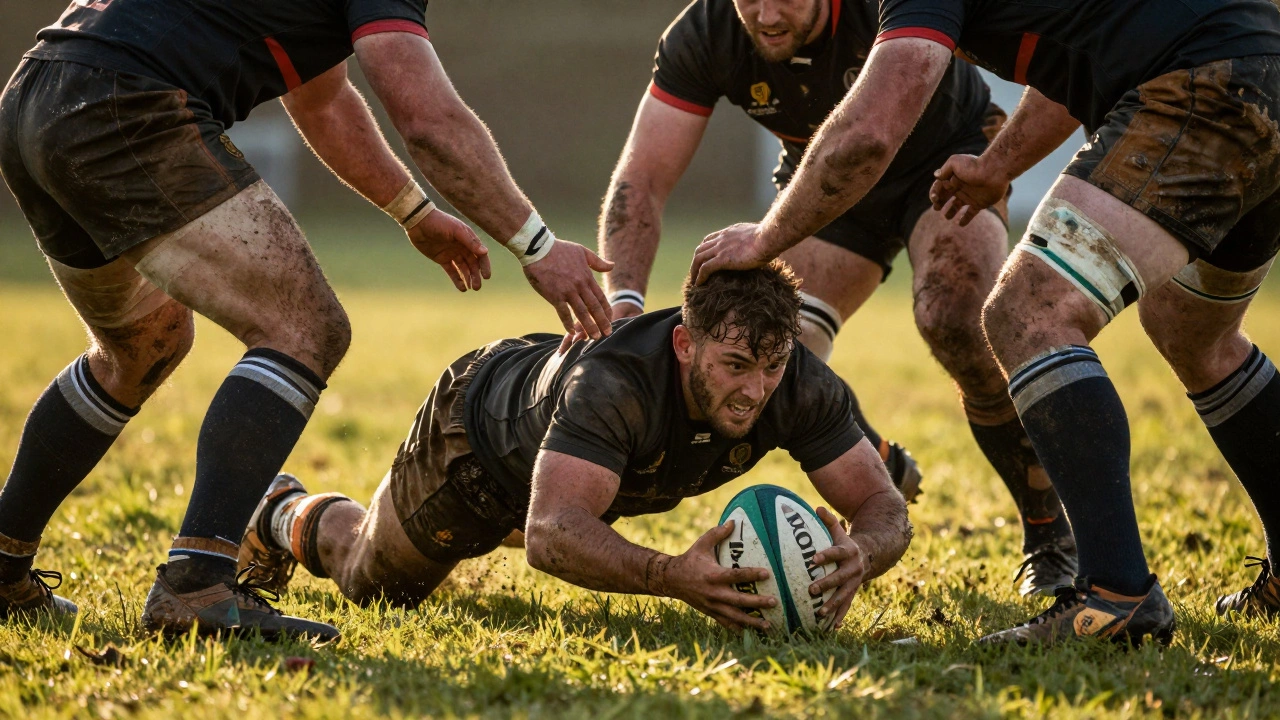
When a ruck forms, the scrum-half dives in to retrieve the ball. Opposing players are charging in, trying to steal or tackle. The scrum-half’s head is often at knee height. They’re not wearing padding. One wrong angle, one late tackle, and it’s game over-for the day, the week, sometimes the season.
Compare that to the lock. Yes, they’re taking heavy loads in the scrum. But they’re not getting hit from all sides every 30 seconds. The prop? They’re strong, they’re anchored, and they get rest between scrums. The scrum-half? There’s no rest. Every play starts with them.
The Mental Load: You’re the Quarterback Without a Helmet
Think of the fly-half. They’re the playmaker. But they’re protected. The scrum-half sets up the play, then gets out of the way. The fly-half gets the ball, sees the space, and decides. The scrum-half? They have to see the whole field before the ball even leaves the ruck. They’re reading the defense, calling the next move, adjusting the forwards’ alignment-all while being the first target.
Elite scrum-halves like Aaron Smith (New Zealand) or Ben Youngs (England) don’t just have quick hands. They have near-photographic memory. They remember how every defense in the league reacts to a dummy pass, a quick tap, or a grubber. They know which flanker likes to drift, which prop slows down on the second phase, and which referee gives a free pass on the offside line.
And they do it all under the loudest crowd noise, with 80,000 people screaming, and their teammates looking at them to make the right call. One mistake, and the whole team feels it. No other position has that kind of accountability.
What About the Fly-Half? Or the Lock?
People argue the fly-half is harder. And yes, they carry the offense. But they have time. They get the ball clean. They’re not the first person into the tackle. They have a buffer. The scrum-half? They’re the buffer. They’re the one who takes the hits so the fly-half can think.
And the lock? They’re giants. They jump, they scrum, they win the ball. But they get 30 seconds between lineouts to catch their breath. They’re not making 50 decisions a game. They’re not running 10kms. They’re not dodging tackles every 12 seconds.
The scrum-half doesn’t have a moment to relax. Not after the scrum. Not after the ruck. Not after the kick. Not even when they’re on the bench. They’re constantly talking, adjusting, reminding, organizing. They’re the only player who touches the ball in every phase of play.
Real-World Example: The 2023 Rugby World Cup Final
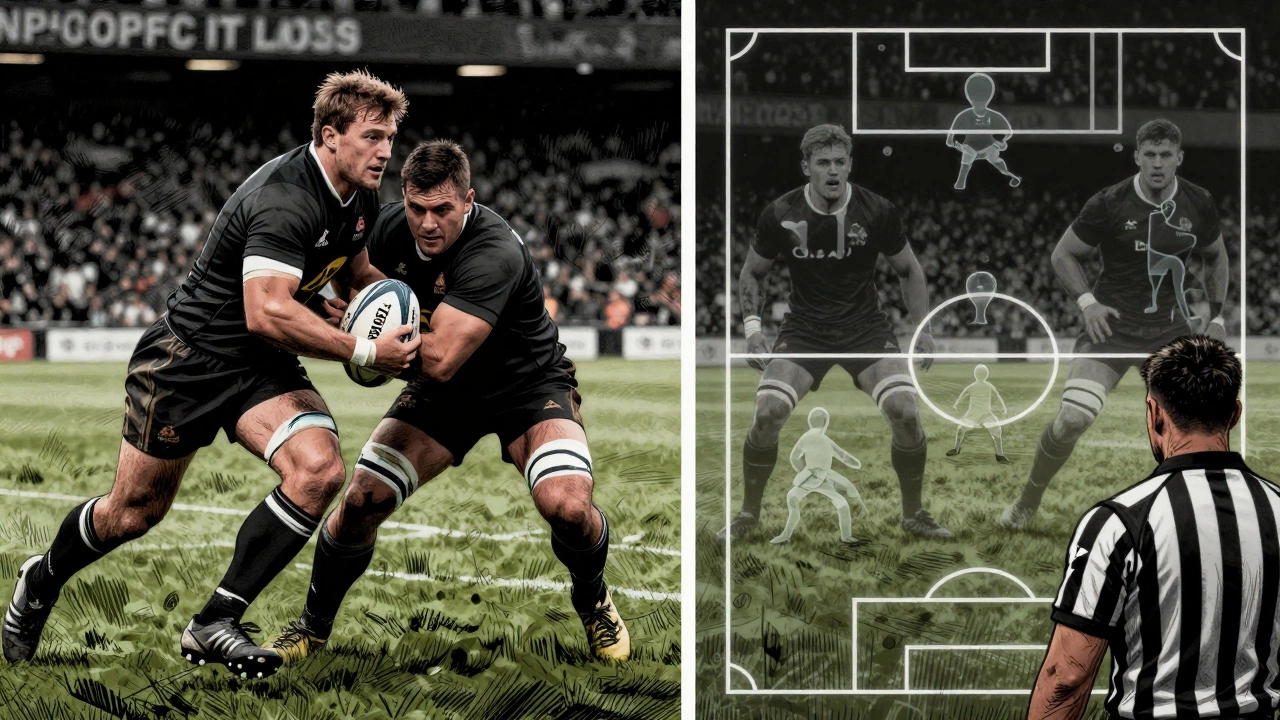
In the final between New Zealand and South Africa, the All Blacks’ scrum-half, Finlay Christie, played 78 minutes. He made 47 passes, 12 clear-outs, and 7 kicks. He was tackled 14 times. He had two near-misses on lineouts because he misread the Springboks’ defensive shift. He had a shoulder injury from a tackle in the 22nd minute and played through it. He didn’t score a try. He didn’t kick a penalty. But without his timing, the All Blacks’ attack would’ve stalled. South Africa’s defense knew it. They targeted him every time.
He was the reason New Zealand kept the ball alive. He was the reason they didn’t turn it over. He was the reason they stayed in the game until the final whistle. And he was the one everyone forgot to praise-until after the match.
It’s Not About Size. It’s About Surviving
There’s no position in rugby that asks you to be everything at once: athlete, strategist, target, communicator, and sacrifice. The scrum-half has to be fast enough to outrun a winger, strong enough to hold off a lock, smart enough to outthink a fullback, and brave enough to dive into a pile of 200kg of muscle and bone.
Coaches don’t recruit scrum-halves because they’re big. They recruit them because they’re tough. Mentally. Physically. Emotionally. You don’t become a great scrum-half because you have the best pass. You become one because you keep getting up, even when your body says no.
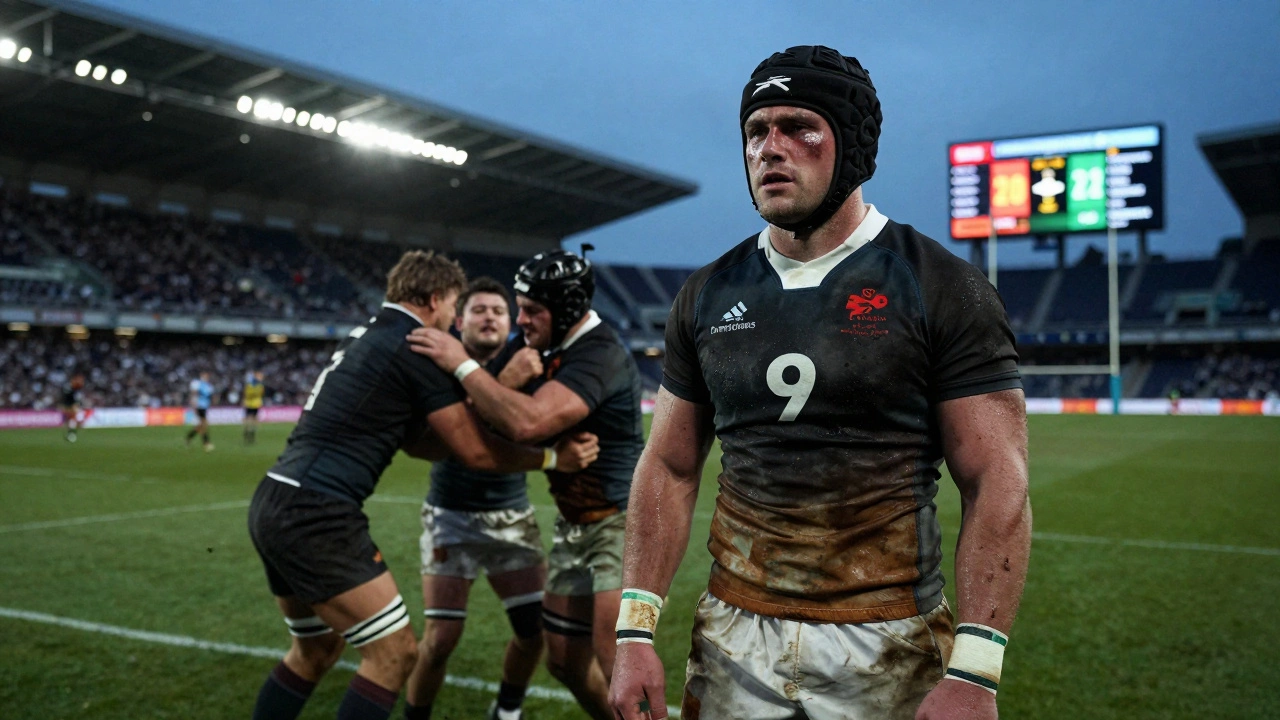
That’s why, in the locker room after a brutal game, it’s not the try-scorer or the captain who gets the quiet nod. It’s the number 9. Covered in mud, limping, with a bruise on his jaw, still asking, "What did we do wrong?"
They’re the hardest position in rugby-not because they score the most, but because they give the most. And no one else even comes close.
Is the fly-half harder than the scrum-half?
The fly-half makes more strategic decisions and controls the attack, but they usually get the ball cleanly and have time to react. The scrum-half operates under constant pressure-always the first into contact, always the one making split-second calls with no margin for error. The fly-half leads the offense; the scrum-half makes the offense possible.
Why do scrum-halves get injured so often?
They’re the smallest players on the field and are constantly in the middle of rucks and scrums, where tackles are unpredictable and heavy. Their head and shoulders are often at knee height, making them prime targets for accidental or late hits. Studies show they have the highest concussion rate per minute played in professional rugby.
Can a taller player be a good scrum-half?
Yes, but it’s rare. Most elite scrum-halves are under 1.75m (5’9") because lower center of gravity helps with quick changes of direction and staying under the ruck. Taller players struggle with speed and agility in tight spaces. However, players like Faf de Klerk (1.80m) have succeeded by using exceptional footwork and timing.
What’s the average career length of a scrum-half?
The average professional scrum-half retires between 31 and 33. Their bodies break down faster than most positions due to constant contact, repetitive stress, and lack of recovery time between plays. Many transition to coaching or commentary before their bodies give out.
Do scrum-halves need to be good kickers?
Not always, but the best ones are. A scrum-half who can execute a tactical grubber, a box kick, or a quick chip under pressure adds a huge dimension to the attack. Many modern scrum-halves train 30 minutes a day just on kicking drills. It’s not optional-it’s essential.