Sports Material Selector
Select your primary sport or activity to get personalized material recommendations based on durability, weight, and performance.
Recommended Materials For Your Needs
Ever wondered why your running shoes feel like clouds while your cricket helmet feels like a tank? It’s not magic. It’s material science. The stuff we wear and carry when we play sports has changed dramatically over the last few decades. We used to rely on heavy leather and basic cotton. Today, engineers are mixing polymers, metals, and even recycled ocean plastic to create gear that moves with you.
Understanding what your gear is made of helps you buy better, last longer, and perform safer. Whether you’re buying a new pair of trainers or looking for protective padding, knowing the ingredients matters. Let’s break down the most common materials found in modern sports equipment.
The Rise of Synthetic Fabrics
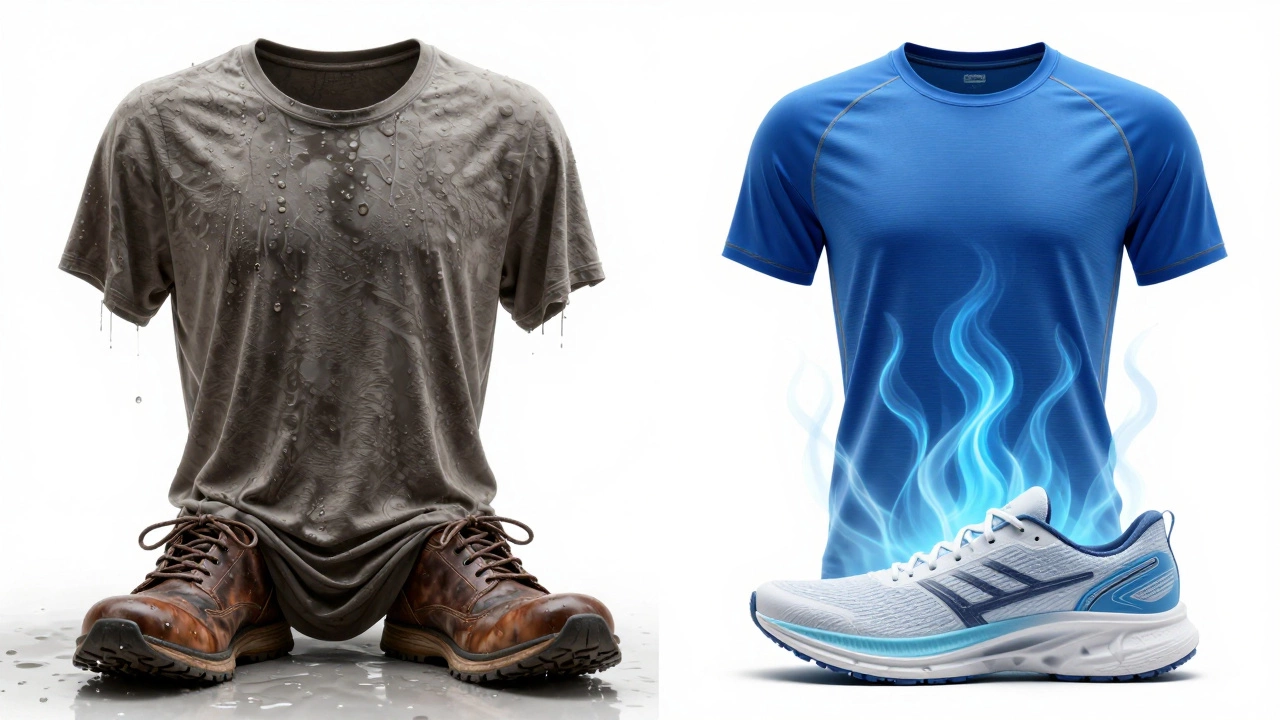
If you look at the tag inside your favorite t-shirt, you probably won’t see "cotton" anymore. You’ll likely see polyester, nylon, or spandex. These aren’t just cheap alternatives; they are engineered for performance. Polyester is a durable synthetic fabric known for its strength and resistance to shrinking and stretching. It became the backbone of athletic wear because it dries fast and holds its shape after hundreds of washes.
Natural fibers like cotton absorb sweat. That sounds good until you realize that wet cotton gets heavy, chafes your skin, and takes forever to dry. Polyester repels water. This property is called hydrophobicity. When combined with special weaving techniques, it creates moisture-wicking technology. The fabric pulls sweat away from your skin to the outer surface where it can evaporate. This keeps you cool during a high-intensity interval session or a long hike.
Nylon adds durability. It’s tougher than polyester and resists abrasion. You’ll find nylon in climbing harnesses, backpacks, and compression socks. Spandex (or elastane) provides stretch. Without it, your leggings would restrict your movement. With it, the fabric moves exactly as you do. Most modern activewear is a blend of these three: polyester for wicking, nylon for strength, and spandex for flexibility.
Hard Shells: Carbon Fiber and Composites
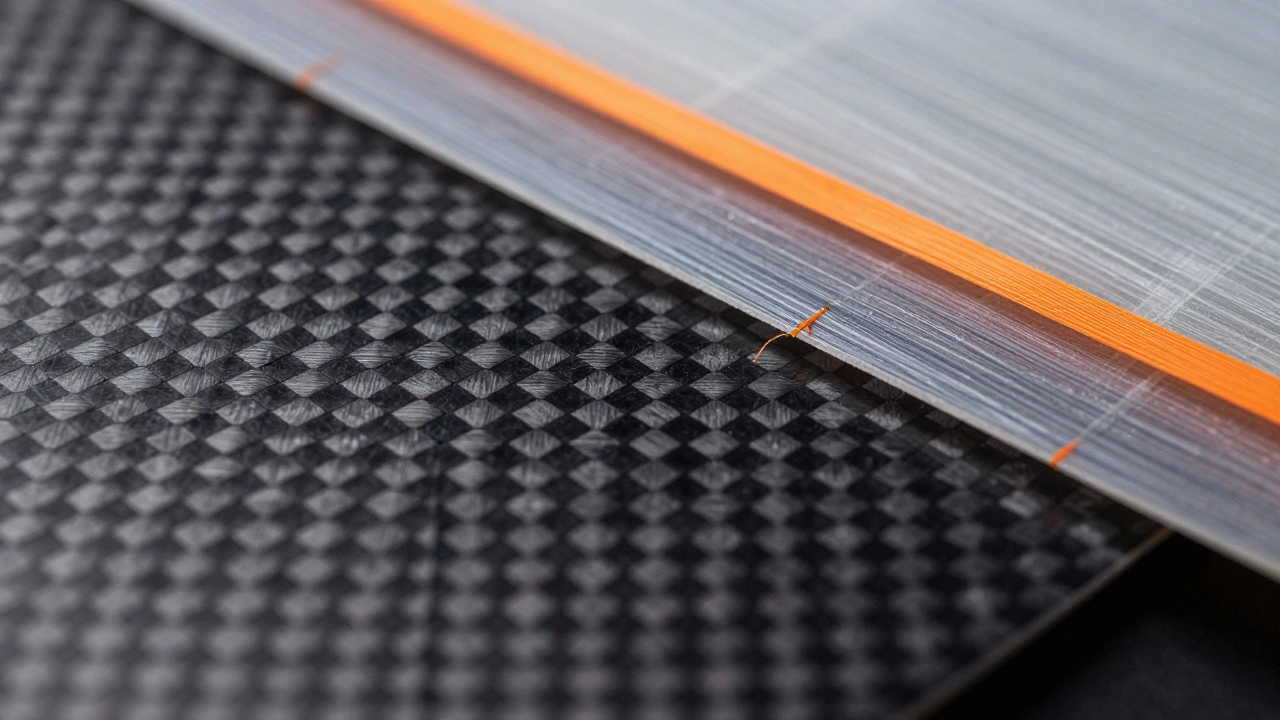
When speed and weight matter, soft fabrics don’t cut it. Think about a bicycle frame, a tennis racket, or a ski pole. Here, manufacturers turn to composites. The king of this category is Carbon Fiber is an extremely strong, lightweight material made of thin carbon filaments woven together and bonded with resin. It is widely used in high-performance cycling frames, golf clubs, and racing cars due to its high stiffness-to-weight ratio.
Carbon fiber isn’t just light; it’s stiff. Stiffness means energy transfer. When you pedal a bike with a carbon frame, almost all your power goes into moving forward rather than bending the frame. In a tennis racket, that stiffness translates to more control and power on every swing. However, carbon fiber is brittle. If you drop it on concrete, it might crack. That’s why it’s expensive and reserved for serious athletes.
Fiberglass is the cheaper cousin. It’s heavier and less stiff than carbon, but it’s flexible and tough. You’ll often find fiberglass mixed with carbon in mid-range gear. It offers a balance between performance and price. Kevlar is another composite player. Known for bulletproof vests, Kevlar is also used in motorcycle leathers and baseball bats. It absorbs impact energy incredibly well, making it ideal for safety gear.
| Material | Key Benefit | Common Use | Durability |
|---|---|---|---|
| Carbon Fiber | Lightweight & Stiff | Bike Frames, Rackets | High (but brittle) |
| Fiberglass | Flexible & Affordable | Skis, Mid-range Bikes | Medium |
| Kevlar | Impact Resistance | Moto Leathers, Helmets | Very High |
| Titanium | Corrosion Resistant | Golf Shafts, Trekking Poles | Extreme |
Protection: Foams and Plastics
Safety gear needs to do one thing: absorb shock. If you’re playing rugby, boxing, or riding a bike, you need padding that doesn’t bottom out. The industry standard for this is EVA Foam is Ethylene-Vinyl Acetate, a closed-cell foam that provides cushioning and insulation. It is commonly found in shoe midsoles, knee pads, and helmet liners.
EVA foam is versatile. You can make it soft for comfort or dense for protection. In running shoes, EVA foam compresses when you land, absorbing the impact force. Then it bounces back, helping propel you forward. But EVA degrades over time. After a year or two, it loses its bounce. That’s why old running shoes feel flat.
For harder impacts, like a punch to the face or a fall off a bike, manufacturers use plastics. Polycarbonate is the go-to for helmets. It’s a tough, transparent plastic that can bend without breaking. Inside the helmet, you’ll usually find expanded polystyrene (EPS). EPS is that brittle foam you see in packing peanuts. When you hit something, the EPS crushes. This crushing action absorbs the energy that would otherwise hit your skull. Once crushed, it’s done. That’s why you must replace a helmet after a significant impact.
Metals: Aluminum and Titanium
While composites get the glory, metals still have a place in sports gear. Aluminum is everywhere. It’s light, cheap, and easy to shape. You’ll find aluminum in entry-level bike frames, trekking poles, and lacrosse sticks. It’s strong enough for most recreational use but can fatigue over time. If you bend an aluminum pole too many times, it will eventually snap.
Titanium is the premium metal option. It’s lighter than steel and stronger than aluminum. Plus, it doesn’t rust. This makes it perfect for outdoor gear exposed to saltwater or rain. Golf shafts made of titanium offer a sweet spot that’s larger than steel ones, meaning off-center hits still travel far. Trekking poles made of titanium last a lifetime. The downside? Price. Titanium gear costs significantly more than aluminum.

Sustainability: Recycled and Bio-Based Materials
In 2026, sustainability isn’t just a buzzword; it’s a requirement for many brands. The fashion and sports industries are huge polluters. To combat this, companies are turning to recycled materials. Recycled polyester (rPET) is made from plastic bottles. It performs almost identically to virgin polyester but reduces waste. Many major sportswear brands now use rPET for their core ranges.
There’s also a move toward bio-based materials. Some companies are experimenting with foams derived from castor beans instead of petroleum. Others are using natural rubber for shoe soles. While these materials are promising, they sometimes lack the durability of synthetics. For example, natural rubber breaks down faster when exposed to ozone. But as technology improves, these eco-friendly options are becoming viable for everyday athletes.
How to Choose Based on Material
Knowing the materials helps you make smarter choices. Here is a quick guide:
- For Hot Weather: Look for 100% polyester or nylon blends with mesh panels. Avoid cotton.
- For Impact Sports: Check for multi-density foam. Soft foam on the outside for comfort, hard foam underneath for protection.
- For Weight-Sensitive Activities: Prioritize carbon fiber or titanium. Accept the higher price tag for the weight savings.
- For Durability: Nylon and Kevlar blends are best for bags and outerwear. They resist tears and abrasions.
Don’t be fooled by marketing terms like "advanced polymer." Usually, it’s just a fancy name for plastic. Read the composition label. If it says "polyester," you know it’s durable and wicking. If it says "spandex," you know it stretches. Simple labels mean transparent products.
Is polyester better than cotton for sports?
Yes, for active sports. Cotton absorbs sweat and stays wet, which can lead to chafing and overheating. Polyester wicks moisture away from the skin, keeping you dry and comfortable during exercise.
Why is carbon fiber so expensive?
Carbon fiber is expensive because the manufacturing process is complex and slow. It involves weaving thin carbon filaments and bonding them with resin under high heat and pressure. The result is a material that is incredibly strong yet very light, which justifies the cost for high-performance gear.
Do I need to replace my helmet if it hasn't been hit?
Most manufacturers recommend replacing helmets every 3-5 years. Even without impact, materials like EPS foam and adhesives degrade over time due to exposure to UV light, sweat, and temperature changes. This degradation reduces the helmet's ability to protect you.
What is the difference between EVA and ETPU foam?
EVA (Ethylene-Vinyl Acetate) is softer and lighter, commonly used in shoe midsoles. ETPU (Expanded Thermoplastic Polyurethane) is denser and more durable. ETPU is often used in trail running shoes and hiking boots where extra stability and longevity are needed.
Are recycled materials as good as new ones?
In most cases, yes. Recycled polyester (rPET) has similar performance characteristics to virgin polyester. It may take slightly longer to develop, but the end product is durable, wicking, and strong. The main benefit is environmental, reducing plastic waste in landfills and oceans.