Soccer Equipment Budget Calculator
Calculate Your Soccer Gear Budget
Estimated Cost:
Select equipment and size to see your total budget
When you think of soccer, you probably picture players sprinting down the field, kicking the ball, and scoring goals. But behind every great play is a set of gear that makes it all possible. Soccer equipment isn’t just about looking the part-it’s about safety, performance, and comfort. Whether you’re a kid just starting out or an adult playing in a weekend league, knowing what you need-and what you don’t-can make a big difference.
Core Soccer Equipment: The Must-Haves
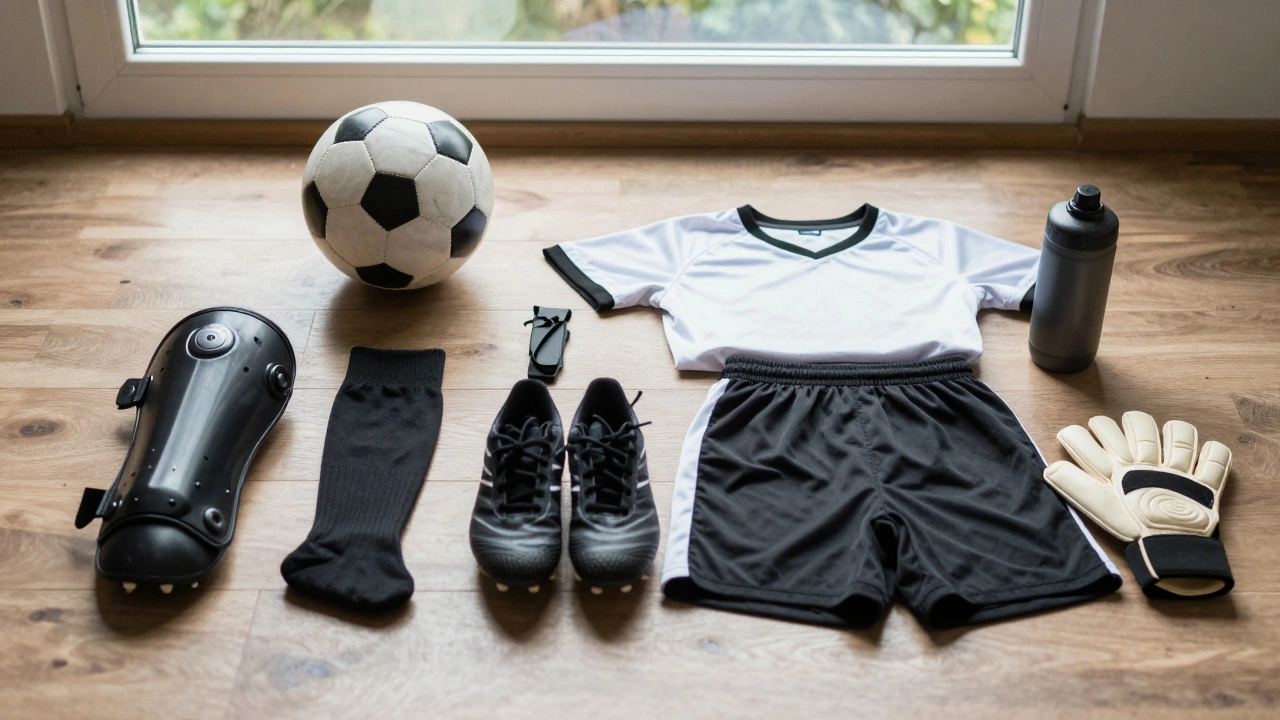
Every player, no matter the age or skill level, needs five basic pieces of equipment to play safely and legally. These aren’t optional. Referees check for them before every match.
- Soccer ball - Official match balls are size 5 for adults and older teens, size 4 for youth players under 13, and size 3 for kids under 8. A good ball has a synthetic leather cover, a butyl bladder for air retention, and is FIFA-approved if you’re playing in organized leagues.
- Soccer cleats - These aren’t just sneakers with spikes. Cleats are designed for grip on grass or turf. Firm ground (FG) cleats have molded studs for natural grass. Soft ground (SG) cleats have removable metal studs for muddy fields. Artificial turf (AG) cleats have shorter, rubber studs to prevent slipping. Wearing the wrong type can lead to injury or poor performance.
- Soccer shin guards - Required by law in nearly all organized play. They protect the shins from kicks, slides, and collisions. Look for ones that fit snugly under your socks and have a hard outer shell with cushioned padding inside. Many now come with adjustable straps for a secure fit.
- Soccer socks - These are longer than regular socks to hold shin guards in place. Most reach just below the knee. They’re made from moisture-wicking fabric to keep feet dry and reduce blisters. Some have extra padding around the ankle and heel.
- Soccer jersey and shorts - Jerseys are lightweight, breathable, and often have moisture-wicking technology. Shorts are loose-fitting and made from the same material. Team uniforms usually include numbers and names, but casual players can wear any color as long as it doesn’t clash with the opponent’s.
These five items form the foundation. Skip any one, and you won’t be allowed on the field.
Optional but Highly Recommended Gear
Beyond the basics, there’s gear that doesn’t make the official list-but every serious player uses it.
- Goalkeeper gloves - If you’re playing in goal, gloves are non-negotiable. They’re made with latex palms for grip and have finger protection to reduce impact. Pro gloves cost $50+, but decent ones for beginners start around $20. Look for gloves with a negative cut for better ball control.
- Compression shorts and sleeves - Many players wear compression gear under their shorts for muscle support and reduced fatigue. Compression sleeves help with circulation and protect against scrapes during sliding tackles.
- Soccer bag - A durable, ventilated bag keeps your gear organized. Look for one with separate compartments for cleats, wet clothes, and accessories. A waterproof bottom helps if you’re carrying muddy gear after rain.
- Water bottle and hydration system - Soccer is endurance sport. Players lose up to 2 liters of fluid in a 90-minute match. A 500ml to 1L bottle with a carabiner clip lets you hydrate on the sideline without stopping.
- Soccer training aids - Things like agility ladders, resistance bands, and small cones help with drills. Even if you’re not training alone, having these at home improves footwork and coordination.
What About Headgear and Mouthguards?
Headgear isn’t required, but it’s becoming more common. The FIFA-approved headgear looks like a soft headband and helps reduce impact from headers or collisions. It’s especially popular among female players and youth teams. Mouthguards aren’t mandatory in soccer, unlike in football or hockey-but they’re smart. A 2023 study from the British Journal of Sports Medicine found that players who wore mouthguards had 37% fewer dental injuries during contact situations. They’re cheap, easy to mold, and worth the investment.
What Not to Wear
Soccer has strict rules about what’s banned. You can’t wear:
- Jewelry-earrings, necklaces, bracelets, or rings. Even tape over them isn’t allowed. Referees will make you remove them.
- Hard-soled shoes or sandals-no exceptions. Even cleats with metal toe caps are illegal.
- Long-sleeve shirts under jerseys unless they’re the same color as the jersey.
- Tracksuits or hoodies on the field-only during warm-ups.
These rules exist for safety. A ring can cut a player’s face. A loose hoodie can get caught in a tackle. It’s not about style-it’s about preventing injuries.
Buying Soccer Gear on a Budget
You don’t need to spend hundreds to play well. Many players start with secondhand gear or entry-level brands like Adidas a German sportswear company founded in 1949, known for its soccer cleats and balls, and a major supplier to FIFA World Cup tournaments, Puma a German multinational corporation that designs and manufactures athletic and casual footwear, apparel, and accessories, and has been a long-time sponsor of national soccer teams, or Under Armour an American company that produces athletic apparel and footwear, with a strong focus on moisture-wicking fabrics and performance gear.
Here’s a realistic budget for a beginner:
| Item | Price Range (USD) | Notes |
|---|---|---|
| Soccer Ball (Size 5) | $15-$30 | Look for FIFA Approved stamp |
| Soccer Cleats | $30-$80 | Entry-level models work fine |
| Shin Guards | $10-$25 | Get adjustable straps |
| Soccer Socks | $8-$15 | Buy 2-3 pairs |
| Jersey & Shorts | $20-$40 | Often sold as a set |
| Goalkeeper Gloves (if needed) | $20-$50 | Start with a basic pair |
| Hydration Bottle | $5-$15 | Any durable water bottle works |
Total? Under $150. That’s less than a pair of high-end sneakers. And you’ll use this gear for years.
How Often Should You Replace Gear?
Some gear lasts longer than others.
- Cleats - Replace every 6-12 months if you play 2+ times a week. Signs: worn studs, cracked sole, or loose stitching.
- Shin guards - Last 2-3 years unless they crack or lose padding.
- Socks and jerseys - Wash after every use. Replace when fabric thins or seams unravel.
- Ball - A well-used ball loses shape after 6-8 months. If it doesn’t bounce true or leaks air, get a new one.
Don’t wait until gear falls apart. Worn-out cleats increase ankle injury risk. Loose shin guards don’t protect you. It’s cheaper to replace than to pay for a doctor’s visit.
Final Thoughts: Gear That Fits Your Game
Soccer equipment isn’t about buying the most expensive stuff. It’s about finding what works for your body, your field, and your level of play. A kid playing in the backyard doesn’t need $200 cleats. A competitive midfielder needs reliable gear that won’t fail under pressure.
Start with the basics. Upgrade as you improve. And always, always wear your shin guards.
Do I need special socks for soccer?
Yes. Regular athletic socks are too short and won’t hold shin guards in place. Soccer socks are designed to be longer-usually knee-high or mid-calf-and made with reinforced heels and toes to handle wear from cleats. They also wick sweat better than cotton socks, which can cause blisters. Look for socks labeled "soccer" or "football"-they’re made for the sport.
Can I wear running shoes to play soccer?
No. Running shoes have flat soles designed for pavement, not grass or turf. They lack the studs needed for traction, making you slip easily. That increases your risk of twisting an ankle or pulling a muscle. Referees will not allow you to play in running shoes. Always use proper soccer cleats for safety and performance.
Are expensive soccer balls worth it?
For casual play, no. A $25 ball performs almost as well as a $100 one. But if you’re playing on a competitive team, training regularly, or on artificial turf, a high-end ball matters. Premium balls have better air retention, truer flight, and water-resistant panels. Look for the FIFA Approved or Pro Quality stamp if you want consistent performance. For practice, a mid-range ball is fine.
What’s the difference between FG, AG, and SG cleats?
FG (Firm Ground) cleats have molded plastic studs for dry, natural grass. AG (Artificial Ground) cleats have shorter, rubber studs designed for synthetic turf. SG (Soft Ground) cleats have removable metal studs for muddy, wet fields. Using the wrong type reduces grip and can damage the field. If you play mostly on turf, get AG. If you play on grass, FG is best. SG is only for rainy seasons or muddy pitches.
Do I need a goalkeeper glove if I’m not a goalie?
No. Goalkeeper gloves are only necessary if you’re playing in goal. They’re designed for catching and punching the ball, not for regular play. Wearing them as an outfield player doesn’t help and can make ball control harder. Save your money and stick to basic cleats and shin guards.