
Boxing Terminology Decoder
Not sure whether to say "bout," "fight," or "match"? Select a scenario below to see the technically accurate term used by officials, promoters, and fans.
Select a scenario and click Decode to see the correct term.
Quick Reference Guide
| Term | Best Used When... | Avoid When... |
|---|---|---|
| Bout | Discussing records, judging, or official rules. | Trying to hype up casual fans (sounds too dry). |
| Fight | Describing action, emotion, or media headlines. | Filling out legal paperwork or scoring sheets. |
| Match/Event | Referring to the entire card or night's schedule. | Referring to a single 1v1 contest (confusing). |
| Contest | Amateur tournaments or multi-day events. | Professional title defenses (use Bout/Fight). |
You are watching a high-stakes event on pay-per-view. Two athletes circle each other, the bell rings, and the action begins. But what do you actually call this specific event? Is it a "fight"? A "match"? Or something else entirely? The answer depends on who you ask and where you are standing in the ring.
While casual fans often use these terms interchangeably, the boxing world has precise language for different scenarios. Understanding this vocabulary doesn't just make you sound smarter at the pub; it helps you grasp the structure of the sport itself. From the technical term bout to the colloquial "slugfest," each word carries specific weight regarding rules, duration, and intent.
The Official Term: Why It’s Called a Bout
If you read official commission reports or watch commentary from seasoned analysts, you will hear one word above all others: Bout. This is the standard, neutral term used by regulatory bodies like the Association of Boxing Commissions (ABC) and major sanctioning organizations like the WBC, WBA, IBF, and WBO.
Why "bout" instead of "fight"? Historically, a bout refers to a contest between two opponents, often implying a structured competition with defined rules and time limits. In fencing, horse racing, and boxing, the term persists because it emphasizes the regulated nature of the engagement. When a referee raises his hand before the first round, he isn't starting a brawl; he is starting a bout.
This distinction matters legally and technically. A "fight" can imply any physical altercation. A "bout" implies a sanctioned athletic contest under specific jurisdictional rules. If you are filling out paperwork for an amateur tournament or reading a post-fight ruling, you will almost always see the word bout. It signals that the activity was organized, supervised, and scored according to established protocols.
Fight vs. Match: Common Misconceptions
Here is where things get tricky for newcomers. Many people assume "match" is the correct term because we say "soccer match" or "tennis match." In boxing, however, "match" is rarely used to describe the individual contest between two boxers. Instead, a "match" usually refers to the entire card-the collection of bouts happening at one venue on one night.
Think of it this way: The main event is a bout. The undercard features several preliminary bouts. Together, they form the match or the event. If you tell a promoter you want to buy tickets for the "match," they might assume you mean the whole show. If you say you want to see the "main bout," everyone knows exactly which fight you care about.
| Term | Primary Usage Context | Connotation | Who Uses It? |
|---|---|---|---|
| Bout | Official records, scoring sheets, regulatory documents | Neutral, formal, regulated | Referees, Judges, Commission Officials |
| Fight | Media headlines, fan conversation, promotional material | Aggressive, emotional, exciting | Promoters, Fans, Commentators |
| Match | Team competitions (e.g., Olympic team events), entire event cards | Collective, structural | Event Organizers, Team Coaches |
The term "fight" dominates media coverage because it sells tickets. "The Fury vs. Usyk Fight" sounds more visceral than "The Fury vs. Usyk Bout." Promoters know that human brains respond to conflict-driven language. So while the rulebook says bout, the marquee says fight. Both are correct in their respective contexts, but mixing them up in formal settings can mark you as an outsider.
Specific Types of Bouts
Not all bouts are created equal. The name changes slightly depending on the stakes and the format. Knowing these variations helps you understand what you are watching when you tune into a Saturday night broadcast.
- Exhibition Bout: This is a non-competitive fight. Boxers wear larger gloves, and no official scorecards are kept. There is no winner declared unless there is a knockout (and even then, it's unofficial). These are often used for comeback attempts or charity events. Think of Mike Tyson's recent exhibitions-they were strictly for entertainment, not ranking points.
- Sanctioned Bout: This counts toward your professional record. It must follow strict guidelines set by a sanctioning body. If you lose, it goes on your permanent ledger. If you win, you gain rating points. Every title defense is a sanctioned bout.
- Title Bout: A specific type of sanctioned bout where a championship belt is on the line. These are typically scheduled for 12 rounds, whereas non-title fights are often capped at 10 rounds.
- Scrimmage: Not a public bout, but a practice fight. Boxers spar with controlled intensity to test strategies without risking injury or a public loss. This is internal team terminology, not public-facing.
You might also hear the term "grudge match." This isn't an official category, but it describes a bout driven by personal rivalry rather than just sporting merit. Think of the Ali-Frazier trilogy. Those were title bouts, yes, but the cultural weight came from the personal animosity. The label "grudge match" adds narrative spice, but the technical classification remains a title bout.

Amateur vs. Professional Naming Conventions
Does the naming convention change if the boxers are amateurs? Surprisingly, no. The International Boxing Association (IBA) and USA Boxing still refer to contests as bouts. However, the context differs. Amateur boxing often uses the term "contests" in broader organizational speak, especially in multi-day tournaments. You might see a schedule listing "Day 1 Contests," but once the fighters enter the ring, it is still referred to as a bout by the officials.
One key difference lies in the outcome description. In professional boxing, we talk about "wins" and "losses." In amateur boxing, particularly in Olympic formats, the focus is often on "advancing" or "being eliminated." The bout ends, and the athlete either moves to the next round of the tournament or goes home. The linguistic shift reflects the tournament structure versus the career-long accumulation of professional records.
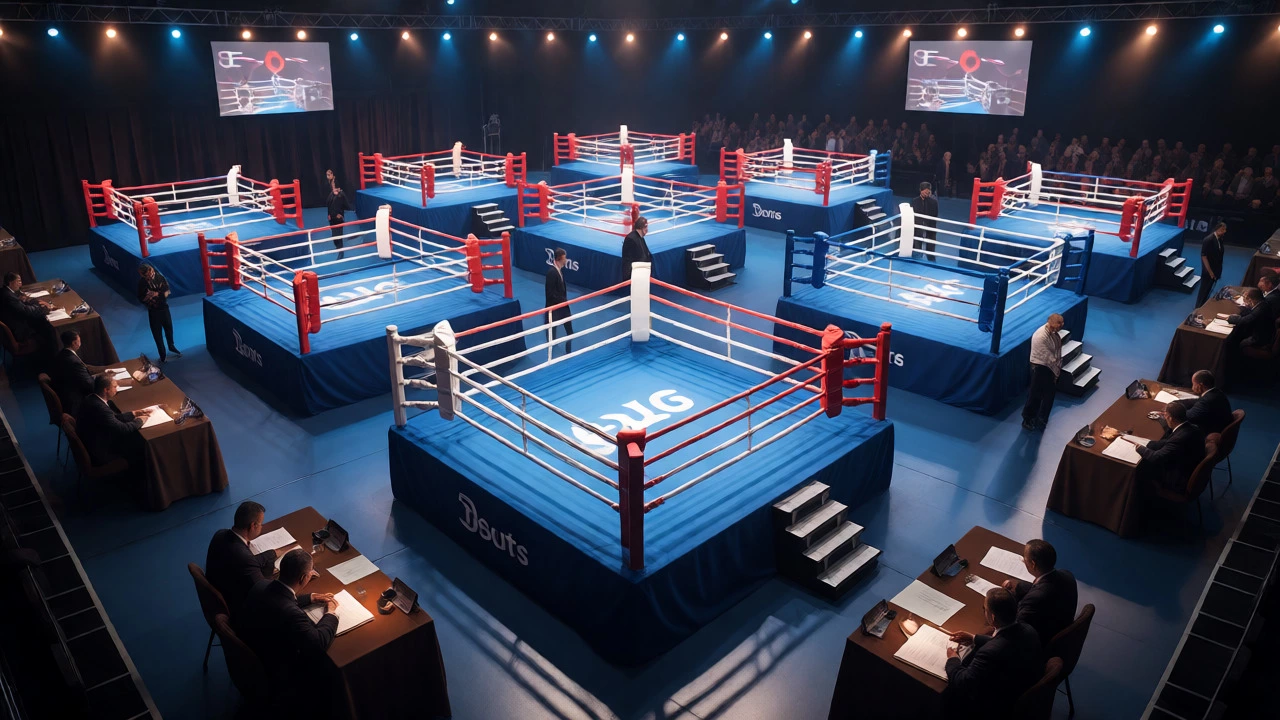
Furthermore, amateur bouts have distinct names based on gender and age categories. You won't just see "Bout 1." You will see "Men's Elite 57kg Quarterfinals." This specificity ensures clarity in crowded arenas where multiple bouts happen simultaneously across different rings.
Regional Slang and Historical Terms
Language evolves, and boxing has its share of colorful slang. Depending on where you are in the world, you might hear different terms for the same event.
In the United Kingdom, older generations sometimes refer to a boxing event as a "bill." This comes from the old days when promoters would print a "bill"-a poster listing the matches. "Going to the bill" meant attending the show. While less common now, you might still hear it in historic venues like the York Hall in London.
In Australia, where I am writing this from, the term "clash" is popular in media. "The Clash of the Titans" or "The Heavyweight Clash." It suggests two powerful forces meeting head-on. Similarly, "throwdown" is used in street-fighting contexts or informal gym culture, but rarely in professional press conferences.
Historically, bare-knuckle boxing bouts were often called "fights" or "encounters." The transition to gloved, regulated boxing solidified the use of "bout." As the sport became more codified in the late 19th century, the need for neutral, administrative language grew. "Fight" was too chaotic; "bout" was orderly.
How to Use the Right Term in Conversation
So, how should you speak about boxing? Here is a simple guide to sounding like an insider without being pedantic.
- Use "Fight" for excitement: When telling friends about a thrilling knockout, say, "Did you see that fight?" It conveys emotion and action.
- Use "Bout" for analysis: When discussing strategy, judging, or records, switch to "bout." Example: "That bout was close, but the judges favored the aggressor." This shows you understand the mechanics.
- Use "Event" or "Card" for the whole night: Don't say, "I watched three matches last night." Say, "I watched the whole card." It sounds more natural to boxing fans.
- Avoid "Game": Never call a boxing contest a game. Unlike basketball or football, boxing does not have a clock-based objective beyond survival and scoring within rounds. Calling it a game undermines the athletic rigor.
Remember, the goal is communication. If you are chatting with a hardcore boxing historian, using "bout" earns respect. If you are talking to someone who just watched a movie like Creed, "fight" feels more accessible. Context is king.
Why Terminology Matters for Betting and Fantasy Leagues
If you engage in sports betting or fantasy boxing, knowing the exact definition of a bout is crucial. Betting slips distinguish between "to win the bout" and "method of victory." A "draw" is a possible outcome in a bout, but some bets void if the bout ends in a draw. Understanding that a "technical decision" or "unanimous decision" are outcomes of a bout-not separate events-prevents costly misunderstandings.
Fantasy leagues also rely on bout-specific data. Points are awarded for knockdowns, landed punches, and round wins within a single bout. Confusing a bout with a match could lead to misinterpreting player performance stats. Always check the source: if the stat sheet says "Round 3 of 12," you are looking at bout-level data.
Is a boxing match the same as a boxing bout?
Not exactly. A bout refers to the individual contest between two boxers. A match (or card/event) refers to the entire gathering of multiple bouts held at one venue on one night. Using them interchangeably is common among fans but incorrect in official terminology.
Why do commentators say 'bout' instead of 'fight'?
Commentators use 'bout' because it is the official term recognized by boxing commissions and sanctioning bodies. It denotes a regulated, scored athletic contest. 'Fight' is more emotive and used for promotion, but 'bout' is the technical standard for describing the actual competition.
What is an exhibition bout?
An exhibition bout is a non-competitive boxing match. Fighters wear larger gloves, no official scorecards are kept, and the result does not count toward professional records. These are often used for comebacks, charity events, or training purposes.
Do amateur boxers call their contests bouts too?
Yes, amateur boxers and officials also use the term 'bout.' While organizations may refer to the overall tournament as a series of 'contests,' the individual ring action is still officially designated as a bout in scoring sheets and regulations.
Can a boxing bout end in a tie?
Yes, a bout can end in a draw. This happens when the judges' scorecards reflect an even split or unanimous agreement that neither fighter won decisively. Draws are relatively rare in modern professional boxing due to the 10-point must system, but they are possible.