Boxing Weight Class Calculator
Calculate Your Boxing Weight Class
Enter your weight to determine which boxing weight class you'd compete in according to professional boxing rules.
Your Weight Class
A boxing match isn’t just two people swinging at each other. It’s a highly structured, rule-bound contest that combines physical skill, strategy, and mental toughness. If you’ve ever watched one on TV and wondered what’s really going on inside that ring, here’s the breakdown-no fluff, just the facts.
What Exactly Is a Boxing Match?
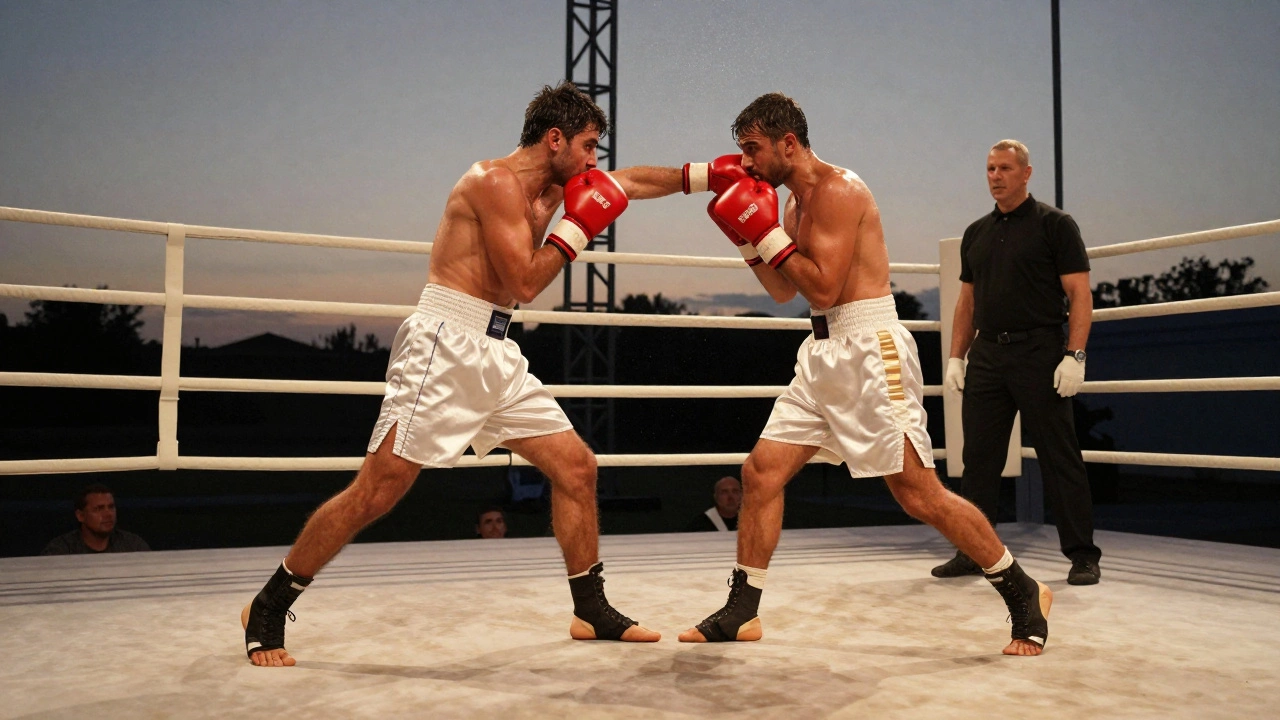
A boxing match is a one-on-one combat sport where two fighters, wearing padded gloves, try to land clean punches on each other’s head or body within a designated area called a ring. The goal isn’t to knock out the opponent right away-though that does happen-but to outscore them over a set number of rounds, or force them to quit or be unable to continue.
It’s not random brawling. Every movement, every punch, every step has meaning. Fighters train for years to master footwork, defense, timing, and endurance. A single match can last anywhere from three to twelve rounds, depending on the level and purpose of the fight.
The Ring and the Rules
The boxing ring is a square, usually 16 to 20 feet on each side, surrounded by ropes. The surface is covered with canvas stretched over a layer of padding. It’s not just a stage-it’s a controlled environment designed for safety and fairness.
Boxing matches follow the Marquess of Queensberry Rules, established in the late 1800s and still used today. These rules say:
- Boxers must wear gloves (minimum 8 ounces for professional fights, 10-12 for title bouts).
- Punches must be thrown with a closed fist, only to the front or side of the head and body.
- No hitting below the belt, no holding, no headbutting, no kicking, and no using the ropes to gain leverage.
- Each round lasts three minutes, with one minute of rest between rounds.
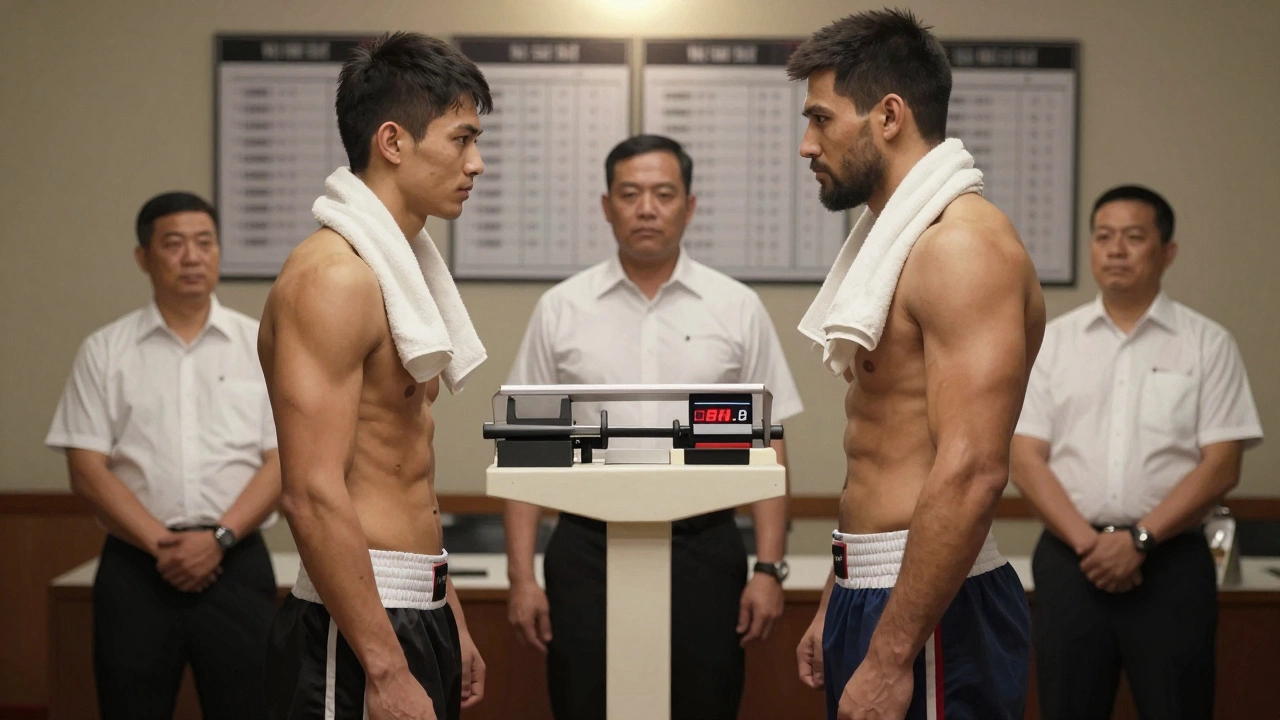
- Fighters must be weighed before the match to ensure they compete in the correct weight class.
Referees enforce these rules in real time. If a fighter breaks them, they get a warning. A second offense might mean point deductions. A third? Disqualification.
How a Match Unfolds: Rounds, Scoring, and Outcomes
Most professional boxing matches last 10 to 12 rounds. Amateur bouts are usually three rounds. Each round is exactly three minutes long. Fighters have one minute to recover between rounds, usually sitting on their stools while their corner team gives advice and treats cuts or swelling.
Scoring is done by three judges sitting around the ring. They use the 10-point must system:
- The winner of a round gets 10 points.
- The loser gets 9 or fewer, depending on how dominant the win was.
- If a round is even, both get 10.
- Knockdowns cost a fighter a point.
- Effective aggression, clean punching, ring control, and defense are all scored.
At the end of the final round, the judges add up their scores. The fighter with the most points wins. But scoring isn’t always the end of the story.
Ways a Boxing Match Can End
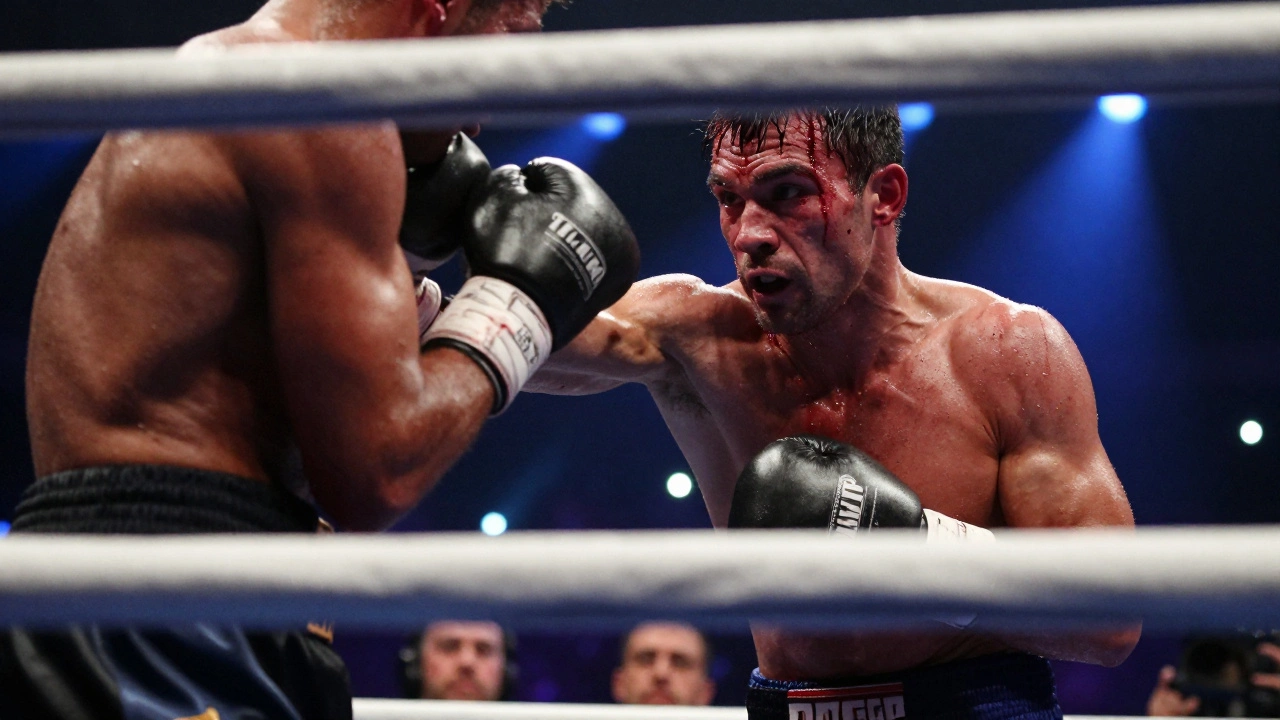
A match doesn’t always go the distance. Here are the six ways it can end:
- Knockout (KO) - One fighter is knocked down and can’t get up before the referee counts to ten.
- Technical Knockout (TKO) - The referee stops the fight because one fighter is taking too much punishment, even if they’re still standing.
- Decision - The judges’ scorecards determine the winner after all rounds are completed.
- Draw - Two judges score it even, or all three judges disagree enough that no clear winner emerges.
- Disqualification (DQ) - A fighter breaks the rules too many times or commits a foul like biting or low blows.
- Retirement - A fighter or their corner throws in the towel, or the fighter says they can’t continue.
It’s common to see a fighter’s corner throw in the towel during a TKO situation. It’s not surrender-it’s protection. A smart corner knows when to stop a fight before it turns into something dangerous.
Weight Classes Matter
Boxing doesn’t let a 200-pound heavyweight fight a 115-pound flyweight. That wouldn’t be fair-or safe. That’s why weight classes exist.
There are 17 official weight classes recognized by major boxing organizations like the WBC, WBA, IBF, and WBO. Here are the most common ones:
| Class Name | Weight Limit (lbs) | Weight Limit (kg) |
|---|---|---|
| Strawweight | 105 | 47.6 |
| Light Flyweight | 108 | 49.0 |
| Flyweight | 112 | 50.8 |
| Bantamweight | 118 | 53.5 |
| Featherweight | 126 | 57.2 |
| Lightweight | 135 | 61.2 |
| Welterweight | 147 | 66.7 |
| Light Middleweight | 154 | 69.9 |
| Middleweight | 160 | 72.6 |
| Super Middleweight | 168 | 76.2 |
| Light Heavyweight | 175 | 79.4 |
| Heavyweight | 200+ | 90.7+ |
Weight classes ensure that fighters compete against opponents of similar size. A mismatch in size can mean one fighter is simply too strong or too fast for the other. That’s why pre-fight weigh-ins are taken seriously-sometimes even hours before the fight.
Why Do People Watch Boxing Matches?
It’s not just about violence. People watch because boxing is raw, honest, and unpredictable. You see courage. You see discipline. You see someone pushing their body past limits most people never even imagine.
There’s a rhythm to it. The first round is often cautious-feeling each other out. The middle rounds are where strategy heats up: slipping punches, countering, cutting off the ring. The final rounds? That’s where heart takes over. Fighters who’ve been hit hard still throw punches. They keep moving. They fight for every second.
Some of the greatest boxing matches in history didn’t end with a knockout. They ended because one fighter simply refused to quit. That’s what makes boxing more than a sport. It’s a test of will.
Amateur vs. Professional Boxing
Not all boxing matches are the same. There’s a big difference between amateur and professional bouts.
Amateur boxing (like Olympic boxing) uses headgear, has three three-minute rounds, and scores points for any clean hit-even light ones. The goal is precision, not power. It’s often used as a stepping stone to pro fights.
Professional boxing removes headgear, uses heavier gloves, and allows more powerful punches. Fights last longer, and the scoring focuses on impact and damage, not just volume. Knockouts are more common, and the stakes are higher-titles, money, legacy.
The training is different too. Amateurs often train in gyms with coaches and teammates. Pros train in camps, sometimes for months, with personal trainers, nutritionists, and sparring partners who mimic their upcoming opponent.
What Makes a Great Boxing Match?
A great match doesn’t need a knockout. It needs tension. It needs two fighters who respect each other enough to give everything they’ve got.
Think about the 1980 fight between Sugar Ray Leonard and Thomas Hearns. They came in as champions. The first round was a blur of speed and power. By the 13th round, both were exhausted, bleeding, and still trading blows. Leonard won by TKO-but the real winner was the sport itself.
Great matches have:
- Two fighters who know each other’s style
- Adjustments made mid-fight
- Moments of surprise
- A story behind the fighters
It’s not just about who hits harder. It’s about who thinks faster, who recovers quicker, who refuses to look away.
Is boxing dangerous?
Yes, boxing carries risks-head trauma, concussions, long-term brain injury. That’s why medical checks are mandatory before and after fights, and why fighters are required to wear protective gear. Professional organizations have strict rules to minimize harm, but the sport’s nature means danger can’t be eliminated. That’s why fighters train smart, recover fully, and often retire early.
How long does a boxing match last?
Most professional matches last between 4 and 12 rounds, with each round being three minutes. That’s 12 to 36 minutes of fighting time, plus one-minute breaks between rounds. So a 12-round fight takes about 47 minutes total. Amateur bouts are usually three rounds-nine minutes of fighting.
Do boxers get paid if they lose?
Yes. Boxers are paid based on their contract, not the outcome. Even if they lose, they still get their guaranteed purse. Top fighters earn millions regardless of result. Lower-tier fighters might get a few thousand dollars just to show up. Winning can lead to bonuses, title shots, or bigger paydays later-but the base pay is locked in.
What’s the difference between a KO and a TKO?
A KO (knockout) happens when a fighter is knocked down and can’t rise before the referee counts to ten. A TKO (technical knockout) is when the referee stops the fight because one fighter is no longer defending themselves effectively-even if they’re still standing. A TKO can also happen if a fighter’s corner throws in the towel or if the ringside doctor says they can’t continue safely.
Can women compete in boxing matches?
Absolutely. Women’s boxing has been an official Olympic sport since 2012. Female fighters compete in the same weight classes and follow the same rules as men. Fighters like Claressa Shields, Katie Taylor, and Amanda Serrano have become global stars. The sport has grown rapidly, with more media coverage and better pay than ever before.
Final Thoughts
A boxing match is more than a fight. It’s a dance of aggression and control. A test of timing, endurance, and courage. You don’t need to love violence to appreciate it. You just need to understand what’s at stake-for the fighters, the fans, and the sport itself.