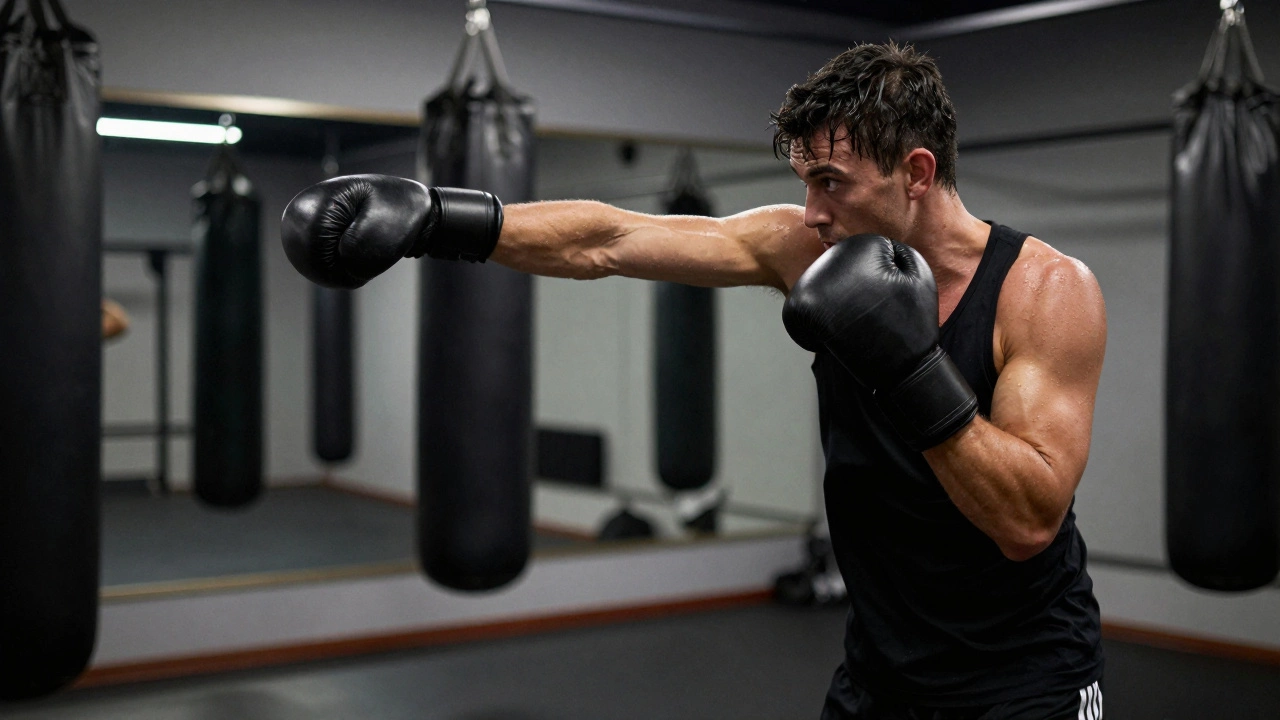
When you watch a boxing match, it looks like magic-fast hands, sharp hits, and fighters moving like they’re dancing. But behind every punch is a simple system. The numbers 1, 2, 3, 4, 5, 6 aren’t random. They’re the foundation of every boxer’s offense. Learn these six punches, and you’re not just watching the fight-you’re understanding it.
The Core Six: What Each Number Means
Boxers use numbers to label their most basic punches. It’s a shorthand that coaches use to teach quickly. These numbers don’t change across gyms. Whether you’re in Melbourne, Mexico City, or Moscow, 1 is always the jab. Here’s what each one is:
- 1 (Jab) - Your lead hand, straight out from the shoulder. Fast, light, used to measure distance and set up everything else.
- 2 (Cross) - Your power hand, thrown straight across your body. This is the punch that knocks people out. It starts from your chin and rotates your hips.
- 3 (Lead Hook) - A short, looping punch from your lead arm. You pivot your foot, twist your torso, and swing like a hammer. Targets the side of the head or body.
- 4 (Rear Hook) - Same motion as the lead hook, but with your power hand. More force, slower, riskier. Used when you’re close and the opponent’s guard is low.
- 5 (Lead Uppercut) - A rising punch from your lead hand. You drop your knee, drive up from your legs, and punch upward under the chin. Great for catching someone leaning in.
- 6 (Rear Uppercut) - The same upward motion, but with your back hand. More power, harder to throw cleanly. Often used as a counter when your opponent drops their guard.
These six punches are the alphabet of boxing. Everything else-combinations, feints, counters-builds on them. You don’t need 20 moves to be dangerous. Master these, and you’ve got 90% of what matters.
Why Numbers? Why Not Names?
Imagine a coach yelling, “Lead hook, rear uppercut, step back!” during a sparring round. It’s messy. Now say, “3, 6, 1.” Instant. Clear. No confusion.
The number system cuts through noise. It works because it’s tied to your stance. If you’re orthodox (left foot forward), 1 and 3 are your left hand. 2, 4, 5, 6 are your right. Southpaws flip them. But the logic stays the same.
Coaches use this system because it’s fast. You don’t have time to explain anatomy during a fight. You just say, “1-2-3,” and the boxer knows exactly what to do.
The Most Common Combinations
Knowing the punches is one thing. Putting them together is another. Here are the combos every boxer learns first:
- 1-2 - The jab-cross. The most basic, most used combo in boxing history. It’s not flashy, but it wins fights.
- 1-2-3 - Jab, cross, lead hook. Adds a body or head shot after the power punch. Keeps the opponent guessing.
- 1-2-5 - Jab, cross, lead uppercut. Perfect when your opponent drops their head after blocking the cross.
- 2-3-2 - Cross, lead hook, cross again. A power-heavy combo. Used to overwhelm someone who’s backing up.
- 1-6 - Jab, rear uppercut. A sneaky counter. You jab to draw their guard up, then slip under with the uppercut.
These aren’t just drills. They’re fight-ending sequences. Tyson used 1-2-3. Mayweather used 1-2 like a metronome. Even amateurs win with them because they’re simple, repeatable, and effective.
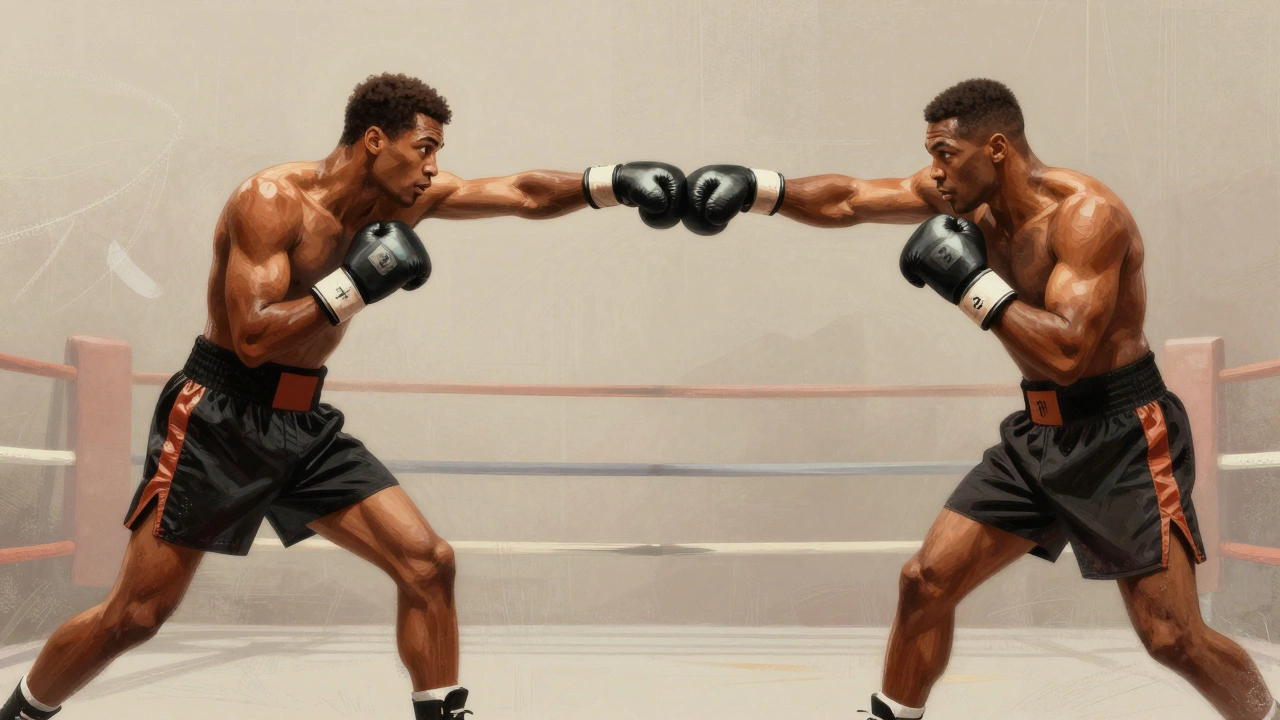
What About the Other Punches? Hooks, Uppercuts, and Body Shots
You might hear about “7” or “8” punches. That’s not standard. Some gyms use 7 for a body hook and 8 for a body uppercut, but it’s not universal. The six-number system is the global standard.
Body shots? They’re still covered by the same six. A lead hook to the ribs? That’s a 3. A rear uppercut to the solar plexus? That’s a 6. You don’t need new numbers-you just aim lower.
The key is targeting. A punch to the head and the same punch to the body are the same move. The difference is where you land it. That’s why coaches say, “Don’t just throw punches. Aim.”
Common Mistakes Beginners Make
Most new boxers think speed equals power. They throw 1-2-3 like they’re waving their arms. That’s not boxing. Here’s what goes wrong:
- Throwing the jab too hard - The jab isn’t a knockout punch. It’s a probe. If you lean into it, you lose balance and open yourself.
- Telegraphing the cross - Lifting your elbow before you throw it? That’s a red flag. Your hand should move straight, like a piston.
- Swinging hooks like baseball bats - Hooks aren’t wind-ups. They’re short, tight, and come from the shoulder, not the arm.
- Leaving the chin exposed - After a 1-2, your head should stay behind your glove. Don’t pop it up to celebrate.
Watch any pro fight. They don’t overextend. They don’t telegraph. They throw punches like they’re tapping a keyboard-fast, precise, and always ready to pull back.
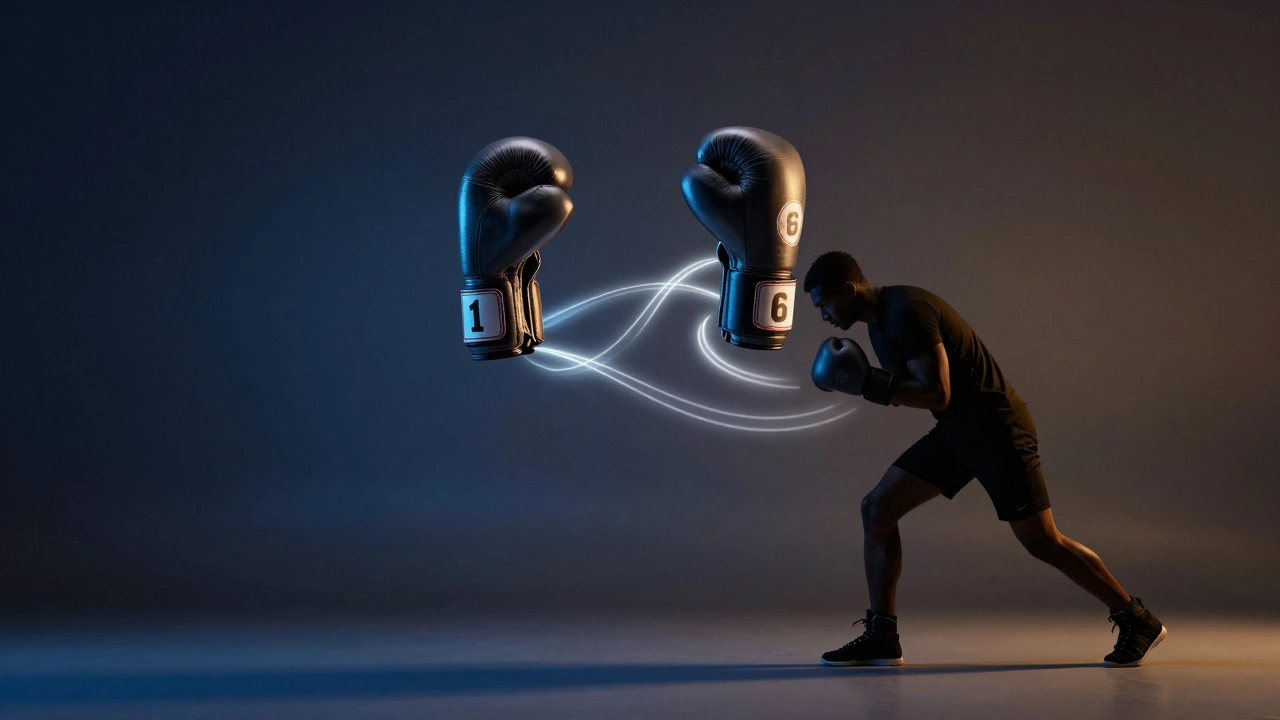
How to Practice These Punches
You can’t learn this by watching. You need to feel it.
- Shadowbox with numbers - Stand in front of a mirror. Say “1” as you throw the jab. Then “2.” Then “1-2-3.” Do 5 minutes straight. Focus on form, not speed.
- Use the heavy bag - Throw each punch alone. Hit the bag with just the jab for 30 seconds. Then just the cross. Then the 1-2 combo. Feel the difference in power.
- Use a partner for focus mitts - Have someone hold mitts and call out numbers. “1!” “3!” “1-2-6!” This builds reflexes.
- Record yourself - Film your shadowboxing. Watch for wasted movement. If your elbow flares on the cross, fix it. If your head moves forward on the hook, stop it.
Don’t rush. Spend a week on just the jab. Then a week on the cross. Then combine them. Real skill comes from repetition, not intensity.
Why This Matters Outside the Ring
These six punches aren’t just for fighters. They’re for anyone who wants to move with control. The jab teaches you to stay balanced. The cross teaches you to generate power from your core. The hooks and uppercuts teach you to rotate without falling over.
That’s why martial artists, personal trainers, and even actors learn them. It’s not about fighting. It’s about understanding how your body moves under pressure.
Boxing is often called the sweet science. That’s because it’s built on logic. Six punches. Infinite combinations. One simple rule: hit hard, stay safe.
Final Thought: You Don’t Need More Moves
There are dozens of fancy punches-spinning hooks, jumping uppercuts, backfists. But in a real fight? None of that matters if you can’t land a clean 1-2.
The best boxers in history didn’t have the most moves. They had the best execution of the basics. Mike Tyson didn’t throw 10 punches a second. He threw two-1 and 2-and made them count.
Start here. Master these six. Everything else comes later.
Are the 1, 2, 3, 4, 5, 6 punches the same for southpaws?
Yes, but they’re flipped. If you’re a southpaw (right foot forward), your right hand becomes your lead hand. So 1 and 3 are your right punches, and 2, 4, 5, 6 are your left. The system stays the same-only the hands switch sides.
Can you use these punches in MMA or self-defense?
Absolutely. These six punches are the foundation of striking in MMA and real-world self-defense. They’re legal, effective, and don’t require a lot of space. In a street situation, a clean 1-2 can end a confrontation fast. Just remember: in self-defense, you’re not trying to win a round-you’re trying to escape safely.
Why is the jab so important if it doesn’t knock people out?
The jab controls the fight. It keeps your opponent at distance, disrupts their rhythm, and sets up your power punches. Think of it like a doorstop-it doesn’t break the door, but it stops it from closing. Without the jab, your cross has no setup. Most fighters lose because they ignore the jab and just try to hit hard.
Do professional boxers use all six punches equally?
No. Most fighters rely heavily on 1 and 2. The hook and uppercut are used more situationally. A tall boxer might use the jab and cross 80% of the time. A brawler might throw more 3s and 6s. It depends on style, reach, and the opponent. But even the most aggressive fighters still use the jab to reset the fight.
How long does it take to learn these punches properly?
You can learn the movements in a few weeks. But mastering them? That takes months. It’s not about remembering the sequence-it’s about doing them without thinking. Most people spend 6 to 12 months just polishing the 1-2 combo before adding anything else. Quality beats speed every time.