Rugby Code Toughness Calculator
High frequency, high speed, minimal rest.
Toughness Score
Heavy loads, complex tactics, structural stress.
Toughness Score
-
Left: Low Frequency / Right: High Frequency (League favored)
-
Left: Lighter Hits / Right: Heavier Hits (Union favored)
-
Left: No Scrum Stress / Right: Heavy Scrum Stress (Union favored)
-
Left: Long Rest Periods / Right: No Rest (League favored)
Data Insights
| Metric | League | Union |
|---|---|---|
| Players per Team | 13 | 15 |
| Avg Tackles/Game | 20-30 | 15-25 |
| Live Ball Time | ~60 mins | ~45-50 mins |
| Primary Injury Risk | Concussion | Knee/Joint |
Ask a bloke from Sydney and a bloke from London which version of rugby is harder, and you'll get two completely different answers. It’s the classic sporting debate that gets heated in pubs from Manchester to Melbourne. Is it the relentless, high-speed collisions of Rugby League or the strategic, endurance-heavy grind of Rugby Union? The truth isn't black and white. Both codes demand brutal physicality, but they attack your body in very different ways. If you think one is soft, you haven't watched the other play for eighty minutes.
To figure out who really takes the bigger beating, we need to look past the tribalism. We have to break down the mechanics of the game, the type of hits players take, and the physiological toll on their bodies. This isn't just about who can bench press more; it's about sustained damage, recovery time, and the sheer volume of trauma absorbed during a match.
The Pace and Volume of Contact
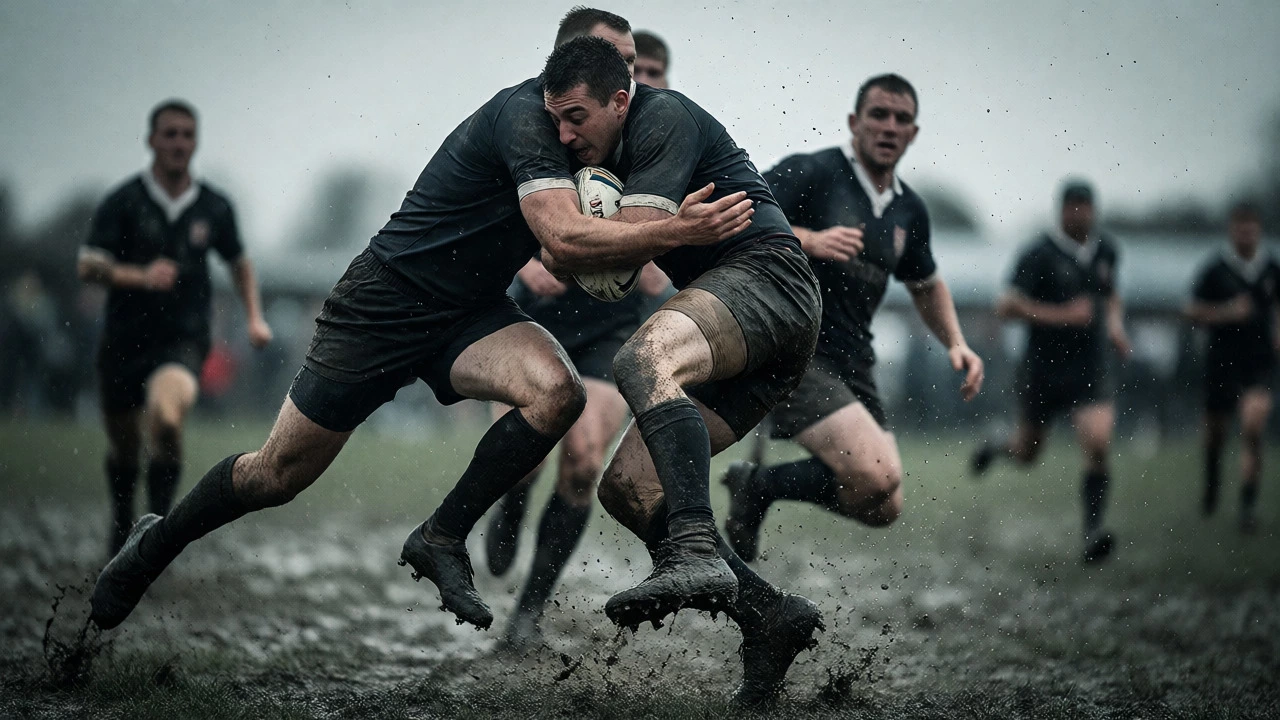
Rugby League is a game of constant motion. With thirteen players per side and fewer stoppages, the ball stays in play longer. This means defenders are under siege. A typical league player might make 20 to 30 tackles in a single match. That is a staggering number. Each tackle involves accelerating to full speed and slamming into another human being who is also moving at pace.
In contrast, Rugby Union features fifteen players. While there are more people on the field, the game has more structure and set pieces like scrums and lineouts. These stoppages give players brief moments to catch their breath. However, when the ball is live, the collisions in union are often heavier because the forwards-props and locks-are generally larger and carry more mass. The average impact force in a union tackle can be higher due to this increased body weight, even if the frequency of those tackles is slightly lower than in league.
So, is league tougher because you get hit more? Or is union tougher because each hit hurts more? Let's look at the data.
| Metric | Rugby League | Rugby Union |
|---|---|---|
| Players per team | 13 | 15 |
| Average Tackles per Player | 20-30 | 15-25 |
| Average Match Duration (Live Ball) | ~60 mins | ~45-50 mins |
| Primary Physical Demand | High-intensity intermittent sprinting | Mixed aerobic/anaerobic with heavy static loads |
| Common Injury Type | Concussion, shoulder dislocation | Knee ligament tears, neck strain |
The Scrum: A Different Kind of Torture
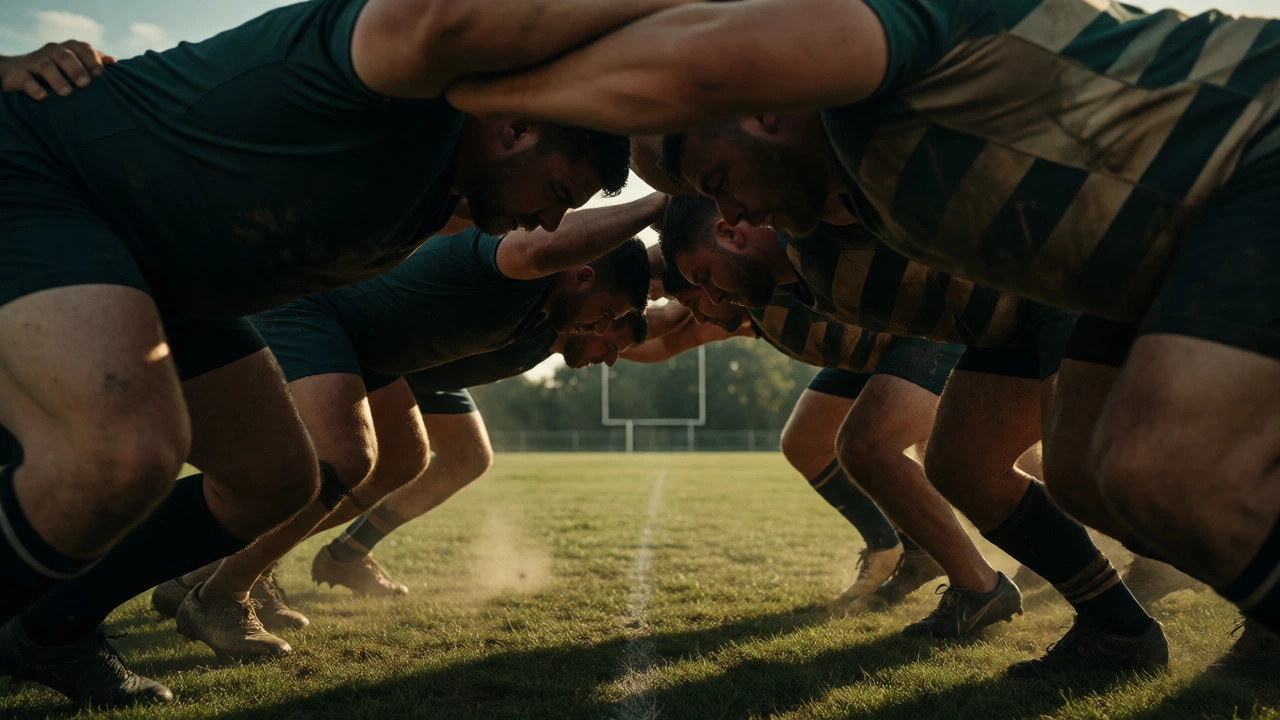
You cannot talk about toughness without addressing the scrum. In Rugby Union, the scrum is a central tactical weapon. Eight forwards bind together and push against eight opponents. The forces generated here are immense. Studies suggest that front-row props experience compressive loads on their spines equivalent to lifting several times their own body weight repeatedly. It’s not just a collision; it’s a sustained crush.
Rugby League uses a scrum too, but it’s largely ceremonial. Once the ball comes out, the contest is over. There is no pushing battle. This means league players avoid the chronic neck and back issues that plague many union forwards. If you define "toughness" as enduring structural stress on the spine, Union wins hands down. But if you define it by acute trauma from open-field hits, League takes the lead.
Endurance vs. Explosive Power
Physiologically, these games train different energy systems. A Rugby League player needs elite anaerobic capacity. They sprint, tackle, recover for ten seconds, and sprint again. It’s a heart-pounding ordeal. The lactate builds up fast, and you have to keep performing while your muscles scream. It’s a test of mental fortitude as much as physical strength.
Rugby Union requires a broader athletic base. You need the explosive power for a tackle, yes, but you also need the aerobic endurance to survive eighty minutes of mixed intensity. Union players often cover more total distance because of the wider field usage and the need to chase kicks and support breaks. However, the rest periods between intense bursts are longer. This allows for partial recovery, meaning the cumulative fatigue might feel less crushing than the relentless pressure cooker environment of League.
The Culture of Pain
There is an intangible element to toughness: culture. Rugby League has a reputation for being played in the mud, rain, and cold of Northern England and Australia. The pitches are often heavier, making every step harder and every fall more painful. The ethos in League clubs, particularly in the NRL and Super League, emphasizes resilience through repetition. You get knocked down, you get up, you do it again thirty times.
Rugby Union, especially in its professional era, has become highly specialized. Players are bigger, faster, and stronger. The introduction of laws protecting the head has changed how players tackle, but the sheer size of modern union athletes means that when they collide, it sounds like a car crash. The psychological aspect of facing a 120kg lock running at you is terrifying. Many players argue that the fear factor makes Union mentally tougher.
Injury Profiles: What Breaks?
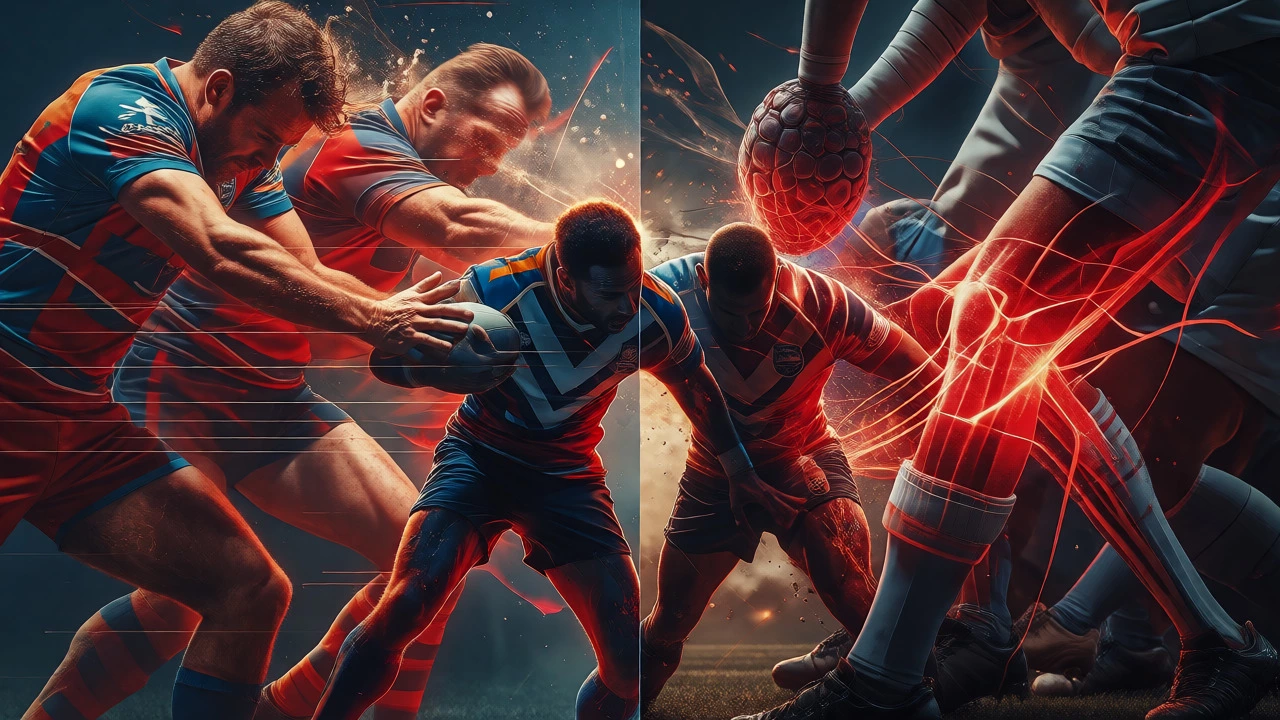
If you want to know which sport is tougher on the body long-term, look at the injury reports. Rugby League sees a higher incidence of concussions. Why? Because the game is faster, and heads are more likely to snap back during high-speed tackles. Shoulder injuries are also rampant because players use their arms aggressively to wrestle opponents to the ground.
Rugby Union suffers more from lower-body injuries. Knees take a massive hit. Anterior Cruciate Ligament (ACL) tears are common because of the sudden changes in direction required to evade defenders or secure a ruck. Ankle sprains are frequent due to the chaotic nature of breakdown contests. While League players might get their heads rattled more, Union players often walk away with joints that require surgery.
Verdict: It Depends on Your Definition
So, what is tougher? If toughness means surviving the highest volume of violent collisions with minimal rest, Rugby League is the winner. The continuous assault wears you down physically and mentally. You don't get time to hide.
But if toughness means withstanding extreme structural loads, managing complex tactical chaos, and dealing with heavier, more powerful opponents, Rugby Union edges ahead. The scrum alone adds a layer of physical torture that League simply doesn't have.
Ultimately, both codes produce some of the most resilient humans on the planet. Comparing them is like asking if getting punched repeatedly in the face is worse than being crushed by a hydraulic press. It depends on whether you value frequency or intensity. For the spectator, it’s a coin toss. For the player, it’s a badge of honor either way.
Which rugby code has more players on the field?
Rugby Union has 15 players per team, while Rugby League has 13. This difference significantly impacts the spacing of the field and the frequency of defensive engagements.
Is Rugby League more dangerous than Rugby Union?
Danger is subjective. Rugby League tends to have higher rates of concussion due to the high-speed, high-volume tackling. Rugby Union has higher rates of knee and joint injuries due to the dynamic nature of rucks and mauls. Both carry significant risks.
Why are Rugby Union scrums so tough?
Union scrums involve eight forwards pushing against eight opponents, creating massive compressive forces on the spine and neck. Unlike League scrums, which are uncontested after the ball emerges, Union scrums are a prolonged physical battle.
Do Rugby League players run more than Union players?
Not necessarily in total distance, but in intensity. League players perform more high-intensity sprints and tackles per minute. Union players may cover similar distances but with more low-intensity jogging and standing time between phases.
Which code is easier to learn?
Many beginners find Rugby League easier to grasp initially because there are fewer rules regarding offside and set pieces. However, mastering the timing of the tackle and pass in League is extremely difficult. Union requires understanding complex laws around the ruck and maul.