Yoga Class Finder for Beginners
Find Your Perfect Beginner Yoga Style
Answer 4 quick questions to discover which yoga style matches your needs and preferences.
Starting yoga can feel overwhelming. You walk into a studio, see people in fancy leggings doing poses you can’t even name, and wonder if you’re too stiff, too out of shape, or just not cut out for it. The truth? Yoga isn’t about flexibility-it’s about showing up. And the right class for you isn’t the one with the most advanced students. It’s the one that meets you where you are.
Know What Type of Yoga You’re Walking Into
Not all yoga is the same. The style you pick will shape your whole experience. If you’re new, avoid fast-paced or intense styles like Ashtanga or Power Yoga right away. These are great-but not for your first few weeks.Stick to these beginner-friendly styles:
- Hatha Yoga: Slow, gentle, focuses on basic poses and breathing. Perfect if you’ve never done yoga before.
- Yin Yoga: Long holds (3-5 minutes), targets deep connective tissues. Great if you’re stiff or want to relax.
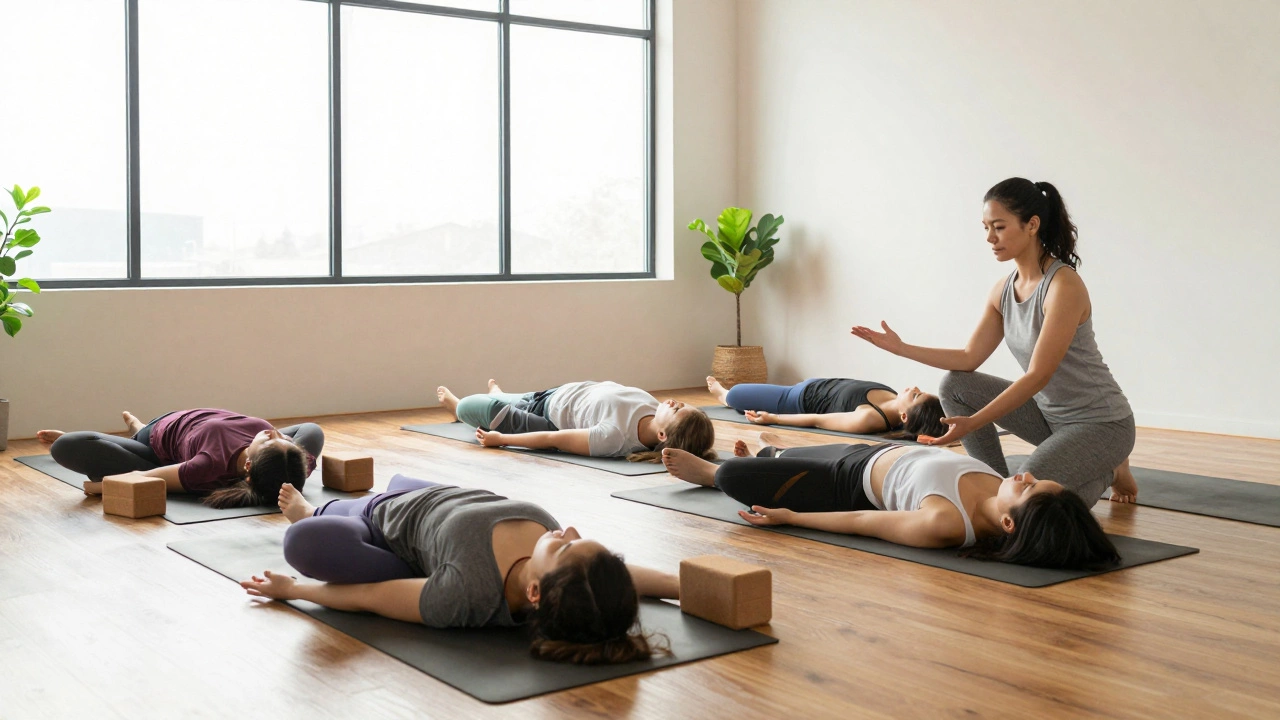
- Restorative Yoga: Uses props like bolsters and blankets. You lie down most of the time. Ideal for stress relief or recovery.
- Beginner Vinyasa: Slightly more movement than Hatha, but still taught at a slow pace. Good if you want to build strength without jumping into advanced flows.
Check the class title before signing up. If it says “All Levels” or “Beginner Friendly,” that’s your cue. Avoid anything labeled “Advanced,” “Flow,” or “Power” unless you’re told it’s modified for newcomers.
Look for Teachers Who Explain, Not Just Demonstrate
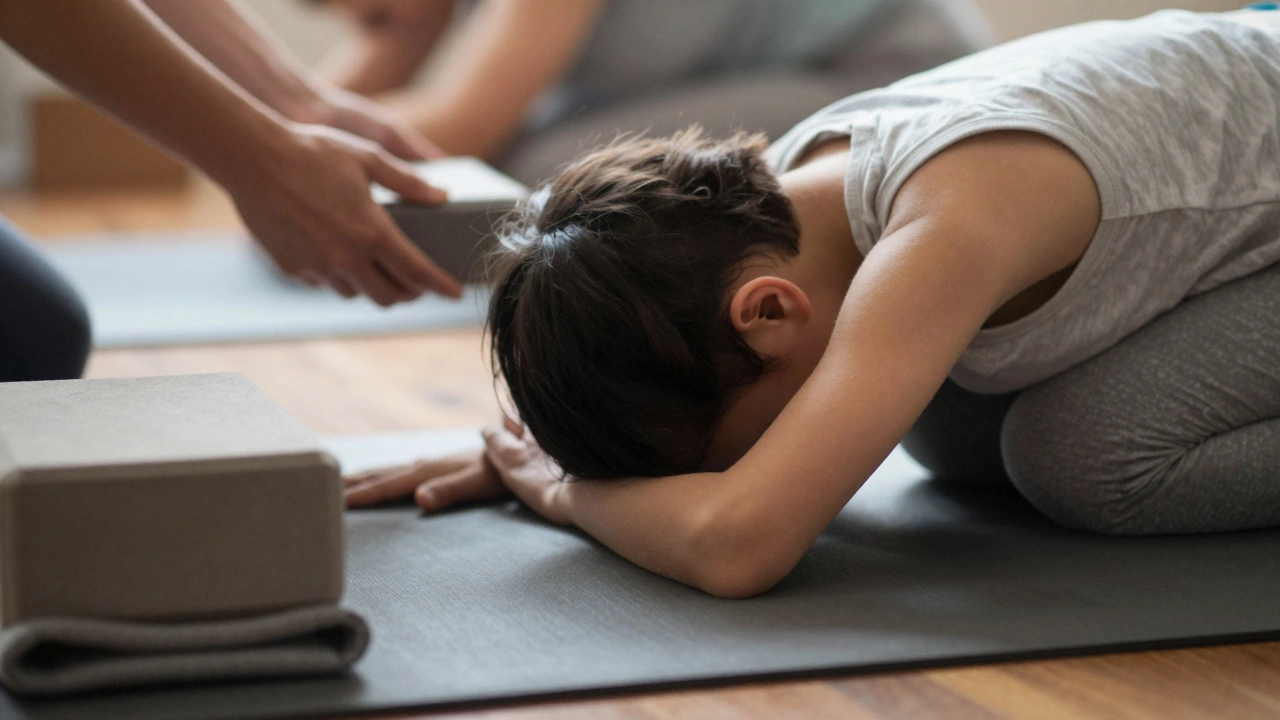
A good yoga teacher doesn’t just show you the pose-they tell you how to do it safely. Watch for these signs:- They offer modifications: “If your hamstrings are tight, bend your knees.”
- They walk around the room and give hands-on cues (with permission).
- They mention alignment: “Stack your shoulder over your wrist,” not just “Reach up.”
- They don’t push you into deep stretches. If someone forces you into a pose, walk out.
Ask the studio if they have teachers trained in beginner instruction. Some studios list teacher bios online. Look for words like “therapeutic,” “adaptive,” or “accessible.” These are code for “I know how to work with beginners.”
Size Matters: Smaller Classes Are Better
A class with 20+ people is fine if you’re experienced. For beginners? Too many distractions. You won’t get personal attention. You’ll feel lost. You might even get injured because no one noticed you were doing the pose wrong.Look for studios that cap beginner classes at 10-12 people. Some even offer “Intro to Yoga” workshops with just 6 students. These are gold. You’ll get feedback, ask questions, and actually learn how to breathe in a pose instead of just copying the person next to you.
Check class sizes on the studio’s website. If they don’t list it, call and ask. A studio that cares about beginners will tell you.
Try a Free or Low-Cost First Class
Most studios offer a free trial for new students. Use it. Don’t buy a 10-class pack before you’ve tried one. You might hate the studio’s vibe, the music, the smell, or the teacher’s tone. All of that matters more than the poses.Here’s what to notice during your first class:
- Did the teacher check in with you? Did they ask if you had injuries?
- Was the room warm? Too hot? Too cold?
- Did you feel rushed? Or did you have time to rest between poses?
- Did you leave feeling calmer-or more stressed?
Don’t judge your ability. Judge the experience. If you left thinking, “I’d do this again,” that’s the sign you found a good fit.
Check the Studio’s Vibe
Yoga isn’t just about movement. It’s about the space you’re in. Walk in before class. Notice:- Is the space clean? Are the mats washed? Do they smell like mildew?
- Are people friendly? Or do they act like they’re in a monastery?
- Is there a quiet area to sit before class? Or is it just a hallway with a water cooler?
- Do they offer props? Mats, blocks, straps? Or do you have to bring your own?
Some studios feel like a temple. Others feel like a gym with yoga mats. Neither is wrong-but you need to feel comfortable. If the atmosphere makes you anxious, you won’t stick with it.
Pro tip: Avoid studios that push crystals, incense, or spiritual chants if you’re not into it. Yoga is a physical practice. You don’t need to believe in chakras to benefit from it.
Watch Out for Red Flags
There are signs that a class isn’t right for beginners-even if it says “beginner friendly.” Watch for:- Teachers who say “just go with the flow” without explaining what that means.
- Classes that start late because the teacher is chatting with regulars.
- No warm-up or cool-down. Just jumping into poses.
- Teachers who compare students: “You’re doing better than last week!” or “Why aren’t you deeper in this pose?”
- They don’t offer modifications for common issues: bad knees, lower back pain, pregnancy, or stiff shoulders.
If you hear “yoga is about pushing past your limits,” run. Real yoga is about listening to your body-not forcing it.
What to Bring (And What to Skip)
You don’t need much to start:- Comfortable clothes: Something you can move in. No jeans. No tight leggings that dig in.
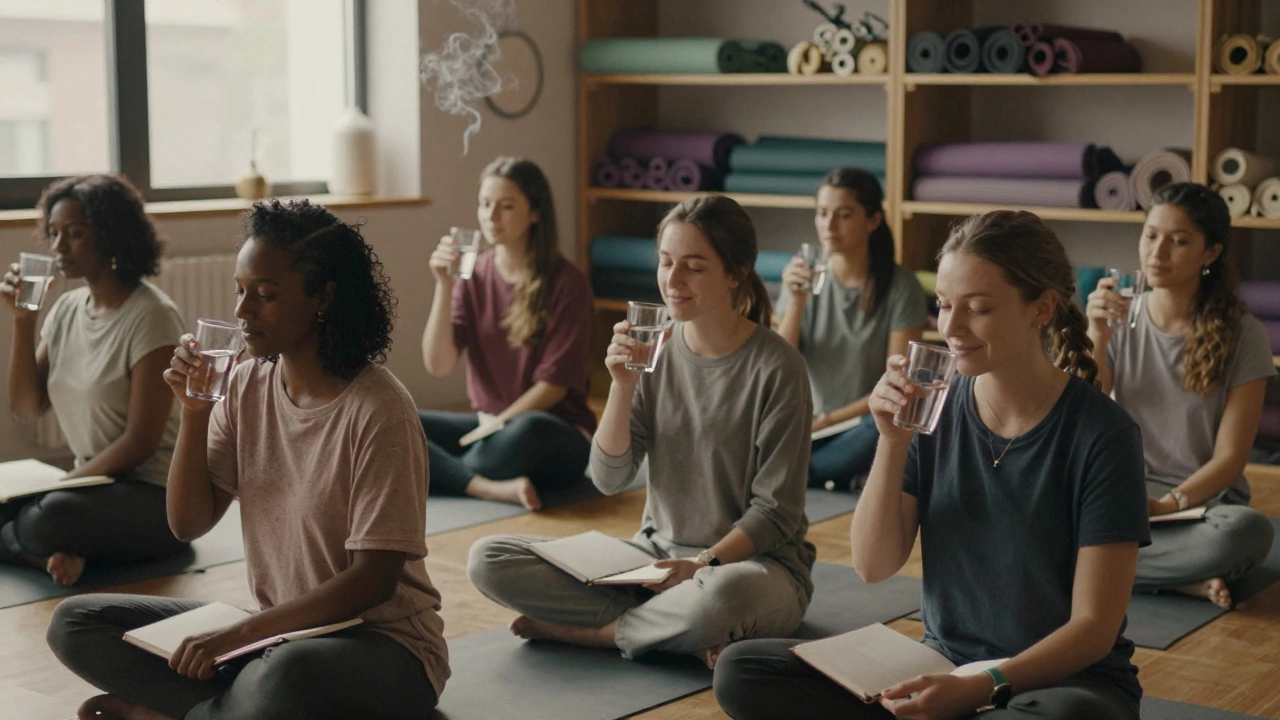
- A water bottle: Stay hydrated. Even if the class isn’t hot, you’ll sweat.
- A towel: For your mat if you sweat a lot.
- A mat: Most studios rent them for $1-$2. But if you plan to keep going, buy one. Look for non-slip, 5mm thick.
Don’t bring:
- Your phone (leave it in your bag or car).
- Strong perfume or cologne.
- Expectations. You won’t be good at this on day one. That’s okay.
Start Slow-Don’t Rush
Your first goal isn’t to touch your toes. It’s to show up. Once a week. Then twice. Then you’ll notice you sleep better. You breathe deeper. You don’t snap at your partner after work.Most beginners quit because they expect instant results. Yoga doesn’t work like that. It’s a slow rewiring of your nervous system. You’ll feel changes in weeks, not days.
Try this: Commit to three classes over two weeks. No more, no less. See how you feel after. If you’re still not sure, try a different studio. There’s no one-size-fits-all in yoga. What works for your friend might not work for you. And that’s fine.
Online Classes? Yes-But Only If They’re Beginner-Focused
If you’re shy, busy, or live far from studios, online yoga is a great option. But not all apps or YouTube videos are made for beginners.Look for instructors who:
- Teach with clear, slow cues
- Offer seated or chair options
- Don’t assume you know Sanskrit terms
- Give time to rest
Recommended free options: Yoga with Adriene (YouTube), Down Dog app (free trial), or the “Beginner Yoga” playlist on Insight Timer. Avoid anything with titles like “20-Minute Yoga for Advanced Students” or “Yoga to Burn 500 Calories.”
What Happens After the First Class?
You’ll probably feel sore. Maybe a little dizzy. Maybe you cried. That’s normal. Yoga unlocks tension you didn’t know you were holding.After your first class, do this:
- Drink water.
- Write down one thing you liked about the class.
- Write down one thing you’d change next time.
Don’t compare yourself to others. Don’t check your phone for selfies. Just sit quietly for five minutes. Let your body settle.
Yoga isn’t about becoming someone else. It’s about remembering who you are when you’re not rushing, performing, or trying to prove something. The right class will help you find that.
Can I do yoga if I’m not flexible?
Absolutely. Yoga isn’t about how far you can stretch-it’s about how aware you are of your body. Many people start yoga because they’re stiff. That’s why beginner classes exist. You’ll get more flexible over time, but flexibility isn’t the goal. Calm, strength, and breath control are.
How often should I go to yoga as a beginner?
Once a week is enough to start. If you feel good after, try twice. Don’t push yourself to go every day. Rest days help your body adjust. After a month, you’ll naturally want to go more often. Let your body guide you.
Is yoga safe if I have back pain?
Yes-but only if you choose the right class. Avoid deep forward bends or twists at first. Stick to Hatha or Restorative yoga. Tell your teacher about your back pain before class. They’ll give you safe modifications. Many people with chronic back pain find yoga helps more than pills or physical therapy.
Do I need to be religious to do yoga?
No. Yoga started in ancient India and has spiritual roots, but modern yoga studios in places like Melbourne focus on movement and breath. You can practice yoga without chanting, burning incense, or believing in energy channels. It’s physical therapy with a mindful twist.
What if I can’t do a pose?
That’s normal. Every single person in that class-even the ones who look like they’ve been doing it for years-can’t do every pose. Use blocks, bend your knees, skip the pose, or rest in child’s pose. Yoga isn’t a test. It’s practice. Showing up is the only requirement.