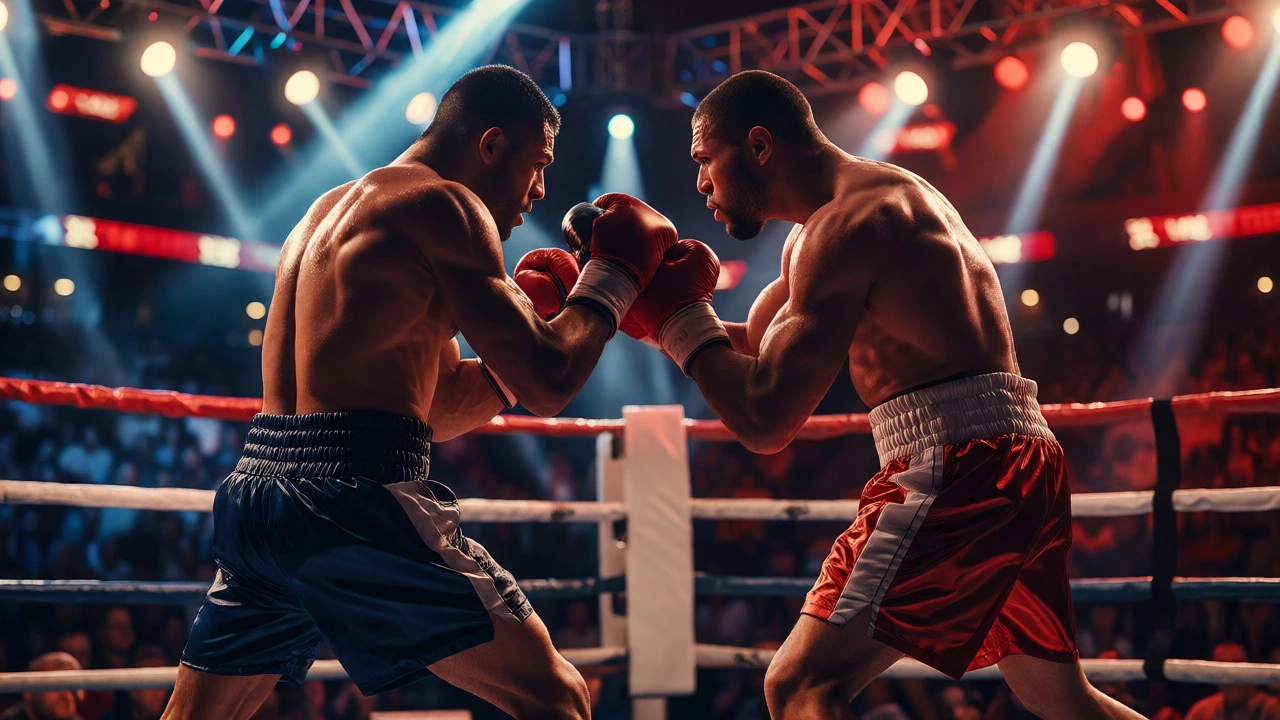
Boxing Match Duration Calculator
Estimate how long a boxing match lasts by selecting the bout type. This tool calculates active fighting time versus total scheduled time.
Match Analysis
You’re sitting on the edge of your seat, watching two fighters circle each other. The bell rings. They clash. Then silence. You check your watch: how much time is left? This is the most common confusion for new fans. People ask, "How many matches are in a boxing match?" But that’s a trick question. There is only one match. What you’re actually asking is: how many rounds make up that single contest?
The answer isn’t a single number. It depends entirely on who is fighting and what they are fighting for. A local club fighter might box for three minutes total. A world champion defending their belt might box for thirty-six minutes of actual action, spread over nearly two hours of event time. Let’s break down exactly how this works, so you never have to guess when the final bell will ring.
The Short Answer: It Depends on the Level
If you are watching a standard professional boxing main event today, it is almost always scheduled for 12 rounds. Each round lasts three minutes, with one minute of rest between them. That means the maximum active fighting time is 36 minutes. However, if the fight ends early by knockout or technical decision, the match could last just seconds.
Amateur boxing, which includes the Olympics, operates differently. Since 2016, Olympic men’s bouts are three rounds long, while women’s bouts are also three rounds (previously four). These rounds are shorter-often two minutes in some amateur jurisdictions-to prioritize speed and scoring over endurance. If you are watching a preliminary card at a major Vegas casino, those fights are usually four or six rounds. These are prospects building their records, not yet ready for the grueling twelve-round test.
Why Do Professional Fights Have 12 Rounds?
You might wonder why we stopped at twelve. In the late 19th century, bare-knuckle and early gloved fights had no limit. Fighters would go until one quit or died. It was brutal. The introduction of the Marquess of Queensberry Rules in the 1860s standardized three-minute rounds with one-minute breaks. But the cap on rounds came later.
In 1982, after Ray Mancini fought Duk Koo Kim, resulting in Kim’s tragic death from brain trauma after a fifteen-round war, major commissions like the WBC and IBF reduced title fights from fifteen to twelve rounds. The logic was safety. Fifteen rounds pushed human physiological limits too far, increasing the risk of severe injury without significantly improving the spectacle. Twelve rounds became the global standard for championship bouts, balancing drama with athlete welfare.
Breaking Down the Round Structure
To understand the flow of a fight, you need to know the anatomy of a round. It is not just three minutes of chaos. It is a structured period of engagement.
- The Bell: Signals the start and end. Fighters must return to their corners immediately after the bell. Ignoring it can lead to point deductions.
- The Work Rate: Most fighters aim to land significant punches throughout all three minutes. Standing still for more than ten seconds can result in warnings from the referee.
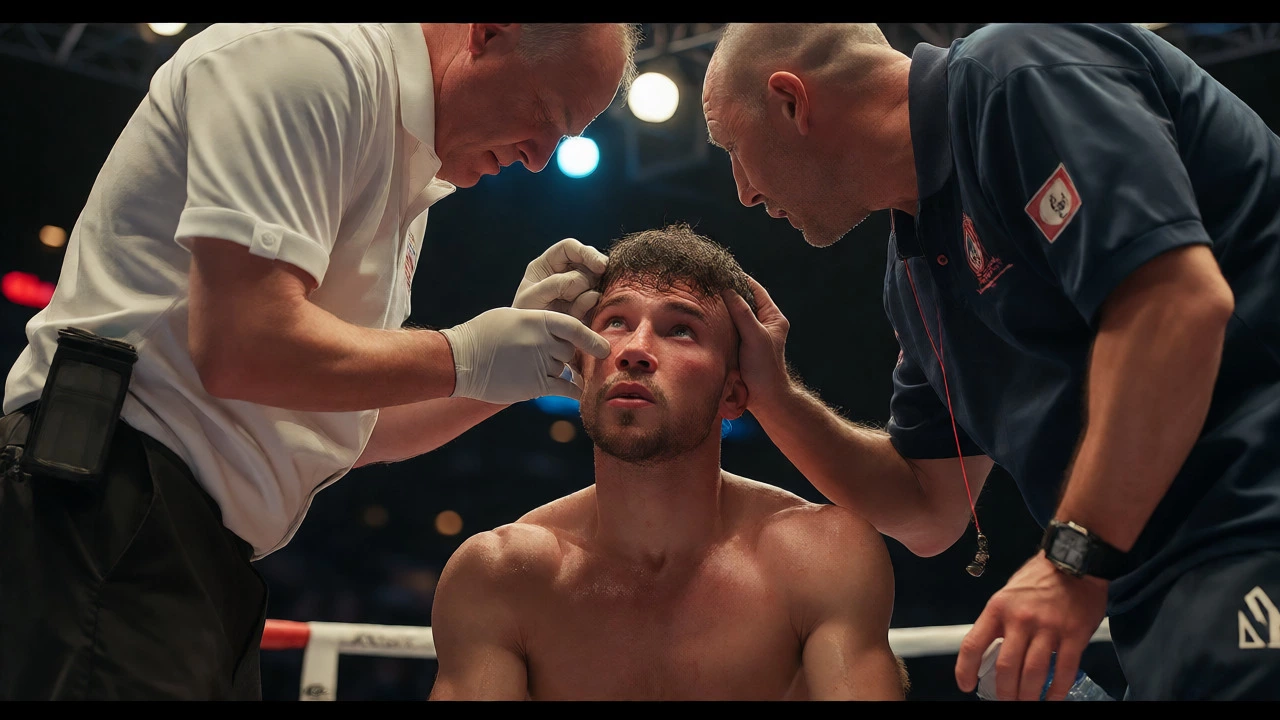
- The Rest Period: Exactly sixty seconds. This is crucial. Coaches give instructions, cutmen stop bleeding, and water is provided. No outside advice is allowed during the round itself.
- The Scorecards: Judges score each round independently. A round is won by effective aggression, clean punching, defense, and ring generalship. Ties are rare but possible; if a round is tied, it counts as 10-10.
This structure creates the rhythm of the sport. The first few rounds are often about feeling out the opponent. The middle rounds see tactical adjustments. The final rounds are where conditioning fails or triumphs. If a fighter gasses out in round eight of a twelve-round fight, they lose points simply because they cannot defend themselves effectively.
How Long Does the Whole Event Last?
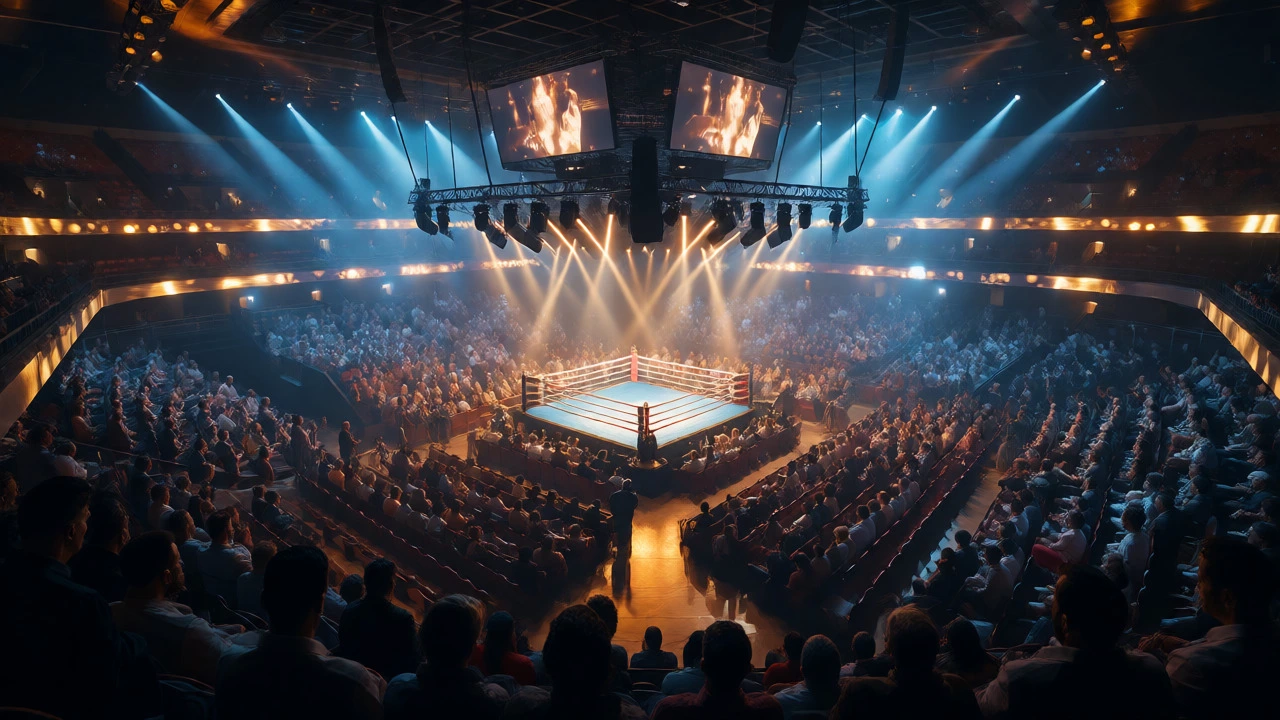
This is where casual viewers get confused. When you buy a ticket to a boxing card, you aren't just buying a 36-minute fight. You are buying an evening. A typical major boxing event runs from 4:00 PM to 11:00 PM local time.
| Segment | Number of Bouts | Approximate Time |
|---|---|---|
| Preliminaries | 4-6 fights (4-6 rounds) | 2-3 hours |
| Main Card | 3-4 fights (10-12 rounds) | 2-3 hours |
| Intermissions & Ceremonies | N/A | 30-60 minutes |
| Total Event Duration | N/A | 7-9 hours |
Most of this time is waiting. Between fights, there are walkouts, introductions, and commercial breaks. The actual fighting time across a whole card might only total two hours. The rest is ceremony and logistics. If you are streaming the event, you can skip the prelims if you only care about the main event. But be warned: sometimes the best fights happen on the undercard.
What About Knockouts and Early Endings?
A boxing match does not always go the distance. Statistically, about 50% of professional fights end before the final bell. This happens via Knockout (KO) or Technical Knockout (TKO).
A KO occurs when a fighter is knocked down and cannot rise within ten seconds. A TKO happens when the referee stops the fight because a fighter is taking excessive punishment and cannot intelligently defend themselves. Sometimes, a corner throws in the towel, signaling surrender. In these cases, the "number of rounds" becomes irrelevant. The match ended in round three, or round seven. The scheduled length was just a ceiling, not a guarantee.
There is also the Disqualification. If a fighter commits a foul-like hitting below the belt or using headbutts intentionally-they can be disqualified, ending the match instantly regardless of the round count.
Special Formats: Exhibition and Catchweight
Not every fight follows the standard rules. Exhibitions, like the recent high-profile bouts between celebrities or retired champions, often have different structures. For example, the Jake Paul vs. Mike Tyson exhibition in 2024 was eight rounds of two minutes each. This reduces fatigue and allows older athletes to perform safely.
Catchweight fights, where fighters agree to a specific weight rather than a standard division, still follow standard round rules unless otherwise negotiated. However, non-title bouts between top contenders might be scheduled for ten rounds instead of twelve. This is a compromise. Ten rounds is hard enough to prove skill but less risky than a full championship distance.
Common Misconceptions About Fight Length
Let’s clear up a few myths. First, TV broadcasts do not dictate the round count. Commissions do. Second, a "draw" does not mean the fight was short. It means the judges scored the rounds evenly. Third, standing eight counts (where the ref counts a fighter even if they aren't knocked down) are rarely used in modern pro boxing but are common in amateur and Olympic styles. This affects pacing, making amateurs move more and trade less power.
Another myth: longer fights are always better. Not necessarily. A one-sided twelve-round fight can be boring. A thrilling six-round brawl can be more entertaining than a tactical twelve-round chess match. The quality of competition matters more than the quantity of rounds.
Key Takeaways for Fans
- Pro Title Fights: 12 rounds x 3 minutes.
- Pro Non-Title Main Events: Often 10 rounds x 3 minutes.
- Pro Undercard: Usually 4 or 6 rounds x 3 minutes.
- Olympic/Amateur: 3 rounds x 2 or 3 minutes (varies by jurisdiction).
- Early Ends: ~50% of fights end by KO/TKO before the scheduled rounds finish.
Next time you watch a fight, don’t just look at the clock. Look at the round number displayed on screen. It tells you the strategy. If it’s round 11 of 12, the fighter behind on points needs a knockout. If it’s round 2 of 4, they are just getting started. Understanding the round structure transforms you from a passive viewer into an analyst of the sport.
How long is a professional boxing round?
In professional boxing, each round lasts exactly three minutes, followed by a one-minute rest period between rounds.
Why did boxing change from 15 to 12 rounds?
Major boxing commissions reduced championship fights from 15 to 12 rounds in the mid-1980s primarily for fighter safety, reducing the risk of severe brain trauma and exhaustion.
How many rounds are in an Olympic boxing match?
As of the 2020 Tokyo Games and continuing into Paris 2024, Olympic boxing matches consist of three rounds for both men and women, typically lasting three minutes each in recent formats, though historical amateur rules varied.
Can a boxing match end before all rounds are completed?
Yes, approximately half of all professional boxing matches end early due to a knockout (KO), technical knockout (TKO), disqualification, or corner retirement.
Are all professional boxing fights 12 rounds?
No. Only championship title fights are mandated to be 12 rounds. Lower-level professional bouts are often scheduled for 4, 6, or 8 rounds depending on the fighters' experience levels.