Rugby History: How the Game Evolved and Why It Still Matters Today
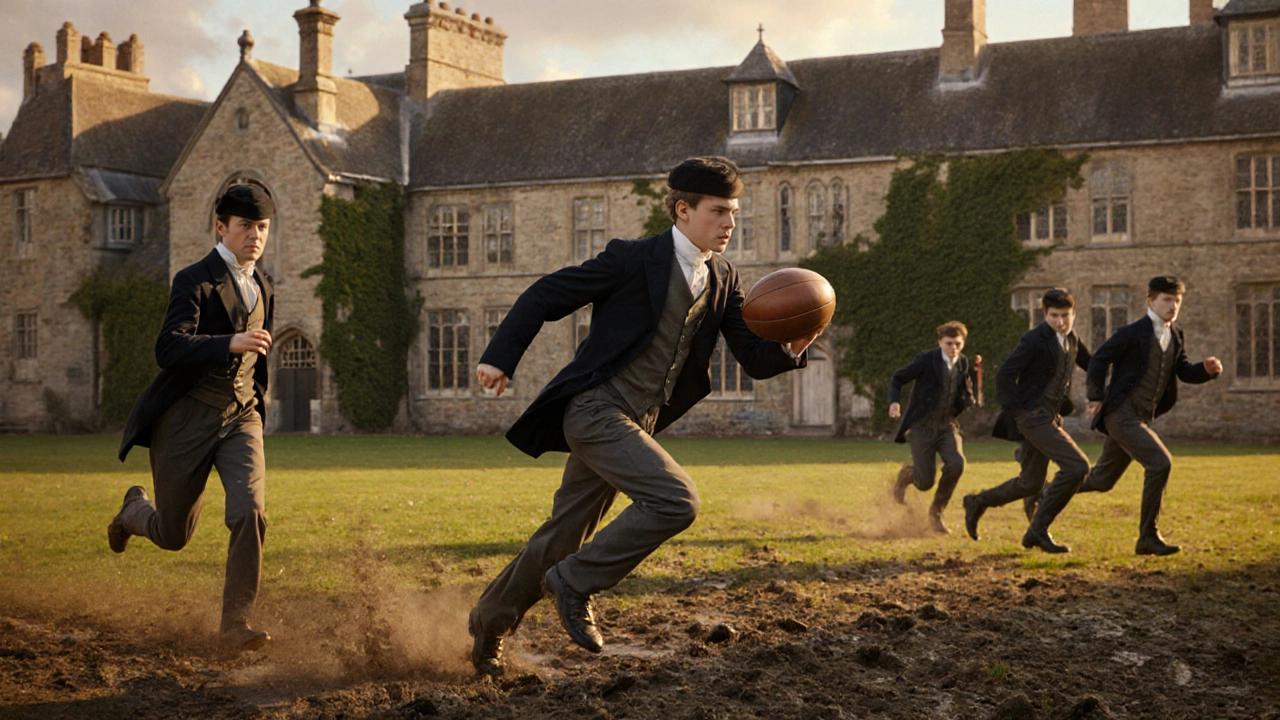
When you think of rugby, a full-contact team sport with origins in 19th-century England that splits into two main codes: rugby union and rugby league. Also known as rugby football, it’s not just a game—it’s a cultural anchor in places like Wales, New Zealand, and the north of England. Unlike football, which spread through clubs and leagues, rugby grew out of schools. The story starts in 1823 at Rugby School, where legend says William Webb Ellis picked up the ball and ran with it during a football match. Whether it’s true or not, the act stuck. By the 1870s, clubs across England were playing by similar rules, but disagreements over payments to players and how the game should be run began to split the sport.
That split became official in 1895, when 22 clubs from northern England broke away from the Rugby Football Union to form the Rugby League, a professional code that simplified rules, removed the ruck, and focused on faster play. This was a big deal—these players were working-class men who needed to be paid for missing work to play. The original union, now called Rugby Union, stayed amateur until 1995, clinging to tradition even as the world changed around it. The divide still matters today: union dominates in the south of England, Wales, and the southern hemisphere, while league rules the roost in Yorkshire, Lancashire, and parts of Australia and Papua New Guinea. You can’t understand modern rugby without knowing this split—it shaped the way the game is played, watched, and even funded.
What’s surprising is how much rugby has held onto its identity. While other sports turned into corporate spectacles, rugby kept its community roots. Local clubs still run the show in towns like Pontypridd, Halifax, and Dunedin. The rugby history you see on TV—the big tournaments, the All Blacks’ haka, the Six Nations—is built on decades of grassroots play. Even today, the game’s most famous moments aren’t always the tries or tackles—they’re the post-match singalongs, the shared pints, the old-school coaching that never needed a video replay. The sport survived because people cared more about belonging than broadcast deals.
And it’s still growing. Women’s rugby exploded in the last 20 years. Youth programs are popping up in cities that never had a team. The rules keep adjusting—try counts, sin bins, video referrals—but the core hasn’t changed. You still need grit, teamwork, and a willingness to get knocked down and get back up. If you’ve ever watched a match and wondered why people get so emotional, it’s not just about winning. It’s about carrying forward a legacy that started with a boy picking up a ball in a schoolyard—and never putting it down.
Below, you’ll find posts that dig into the details: how Brits actually talk about the game, what those weird terms mean, why matches go past 80 minutes, and how the sport’s structure still reflects its 19th-century roots. Whether you’re new to rugby or you’ve been watching since the 90s, there’s something here that connects you to its real story.