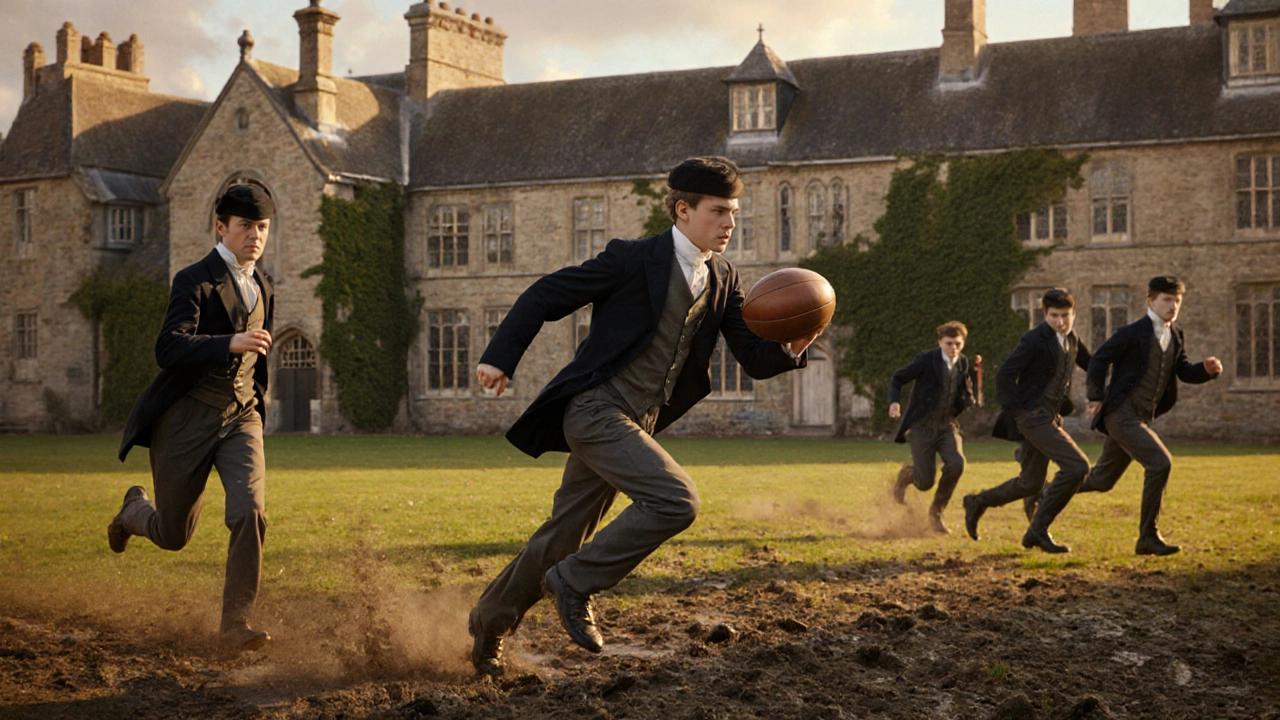
Origin of rugby: How the game started and why it still matters
When we talk about the origin of rugby, the birth of a sport that split into two major codes and spread across continents. Also known as rugby football, it began not in a polished stadium but on a muddy school field in England, where a boy named William Webb Ellis picked up the ball during a football match and ran with it—according to legend, anyway. Whether true or not, that moment became the symbolic starting point for a game that would evolve into something entirely different from soccer or American football. The real story is less about one heroic act and more about how rules were slowly written, changed, and fought over by clubs, schools, and regions trying to define what the game should be.
The rugby union, the original and more widely played version of the game. Also known as union rugby, it stayed true to its amateur roots longer than most expected, even as professionalism crept in during the 1990s. Meanwhile, the rugby league, a version born from a pay dispute in northern England. Also known as league rugby, it broke away in 1895 because players wanted compensation for missing work to play. This split created two distinct sports: one with 15 players and set-piece-heavy play, the other with 13 players and faster, more open flow. Both still exist today, with union dominating the UK and global tournaments, while league holds strong in parts of Australia, New Zealand, and northern England. The differences aren’t just in rules—they’re in culture, identity, and even how fans see themselves. In the UK, you don’t just support a team—you support a side of a deep-rooted divide.
Today, the origin of rugby isn’t just history. It’s alive in every lineout, every scrum, every tackle that still carries the weight of those early matches. The slang, the rituals, the way players communicate on the field—all of it traces back to those 19th-century schoolyards. And while modern rugby has become a global spectacle with multi-million-pound contracts and televised finals, the heart of the game hasn’t changed: it’s still about grit, teamwork, and a stubborn refusal to let the ball go. That’s why you’ll find stories about rugby’s roots in posts about rugby slang, why Brits call it one thing or another, and how lifts in the lineout evolved from basic teamwork into precision maneuvers. This collection doesn’t just list facts—it shows how the past still shapes every match played today.
Below, you’ll find real answers about how rugby is played, how it’s talked about, and why people still care. Whether you’re curious about the split between union and league, the terms used in different countries, or how the game’s physical demands shaped modern training, you’ll find it here—not as a textbook, but as stories from people who live it.